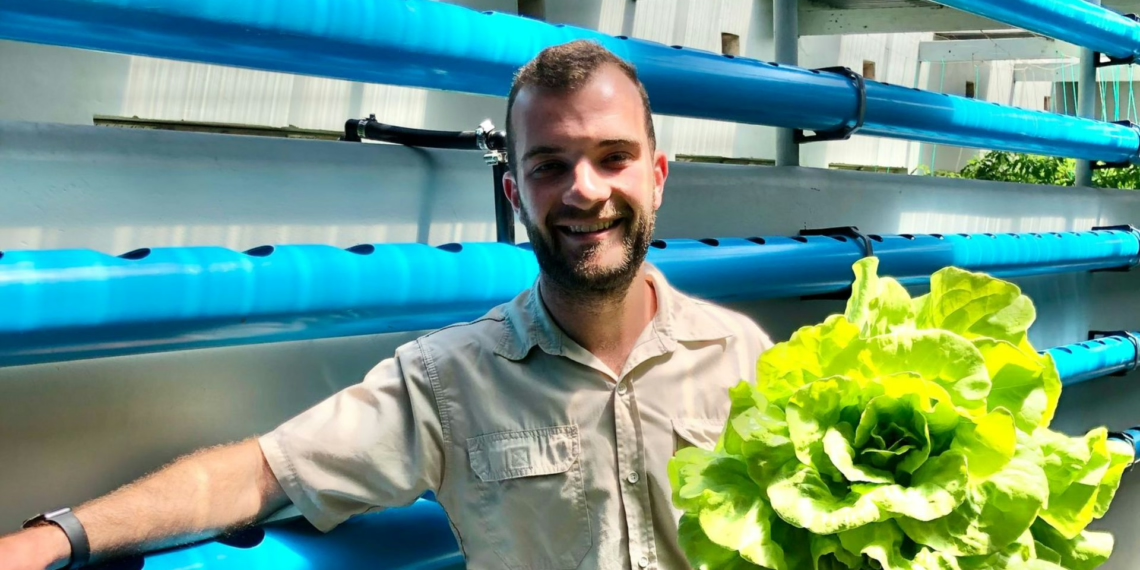
Michael James Nunes, better known as MJ, never imagined his passion for aquaponics would take him on a 1 600-kilometre journey across South Africa to make his farming dream a reality. It was all worth it because today he is living out his biggest aquaponics dreams and it all started with a R10 000 investment.
Growing up in Modimolle, Limpopo, Nunes always felt a pull towards agriculture from a young age.
When it was time for higher education, his poor matric results threatened to end his agricultural aspirations. Rejection letters stacked up, but he refused to accept defeat.
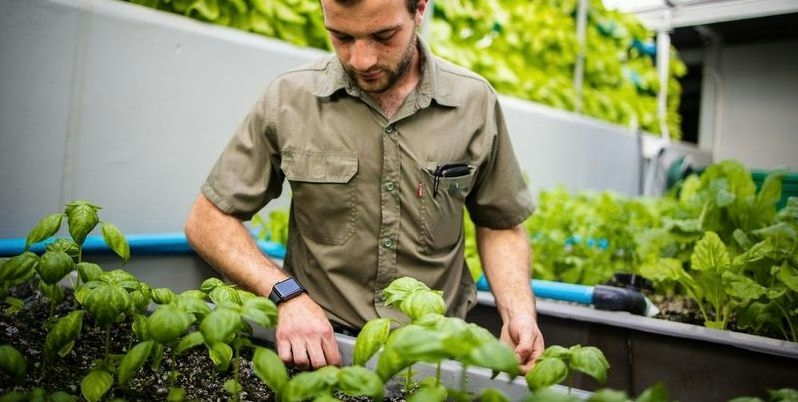
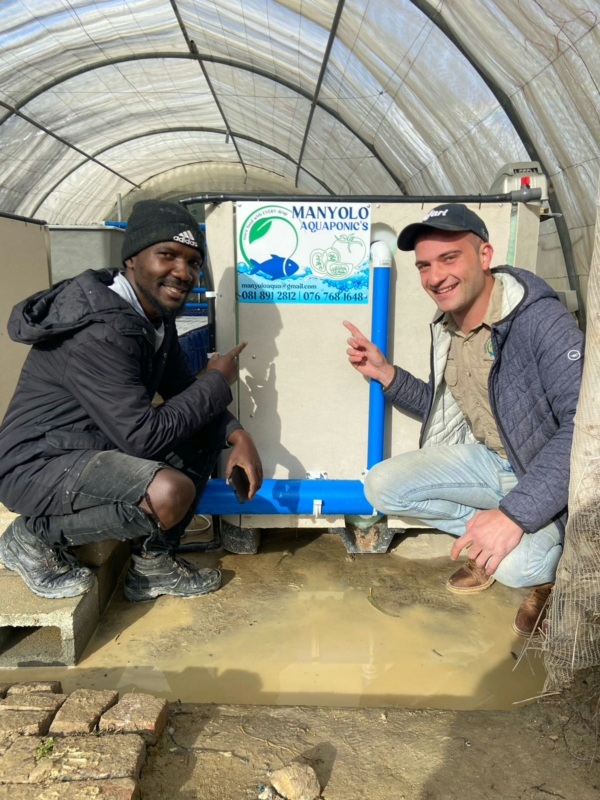
Nunes discovered Boland College’s farm management programme and, with little financial support, drove to Cape Town to study for three years. In his second year, curiosity about sustainable food sparked his aquaponics journey. Despite limited resources, his hands-on approach turned small-scale experiments into a growing business. After graduating, he secured a warehouse in Worcester, where he built a commercial aquaponics system on the second floor.
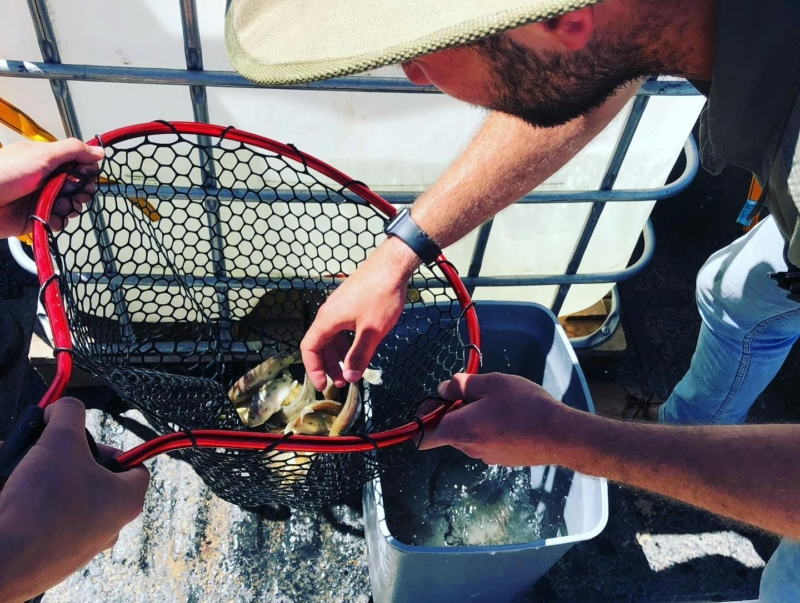
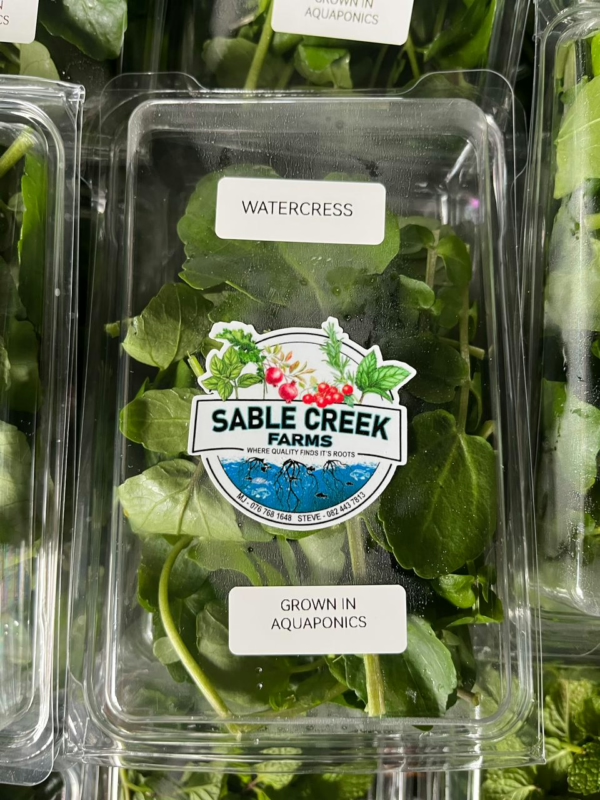
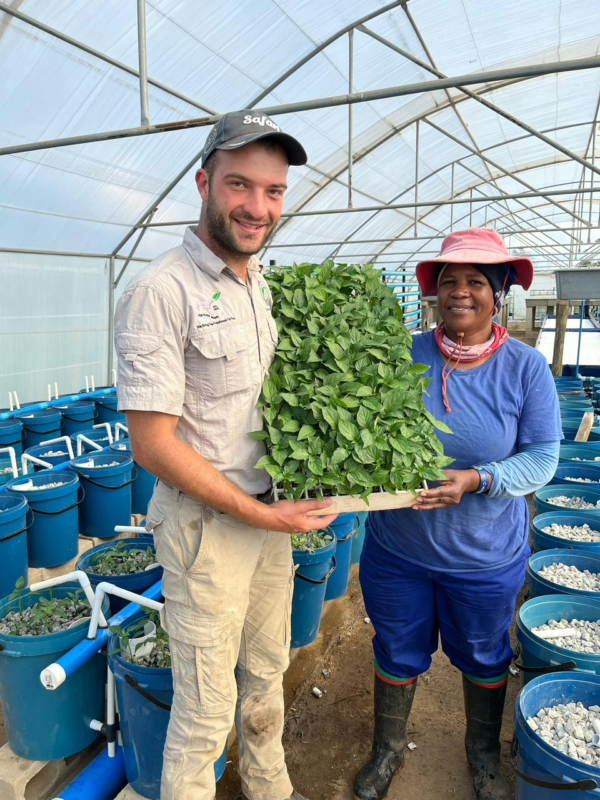
Today, Nunes is the co-founder of Sable Creek Farms operating on 80 hectares of land, with one hectare dedicated to commercial aquaponics. The farm also houses a Mozambique tilapia hatchery of 8 000 fish, supplying local farmers, aquaponics enthusiasts, and commercial growers.
“My journey into aquaponics started with a simple question: how can we produce food efficiently while conserving resources? I wanted a system that works with nature, not against it.”

Related stories
- Luvo gets township communities hooked on aquaponics
- Mpumalanga agripreneurs lead aquaponics charge into Africa
- Tapping into tilapia farming a prime opportunity in aquaculture
Building big dreams on a R10 000 budget
Beyond aquaponics, the farm embraces diversification to boost resilience and sustainability. It features free-range laying chickens, a small fruit orchard spanning two hectares with stone fruits, quinces, figs, and citrus, and a pomegranate plantation of about three hectares.
The farm also hosts a variety of game, enhancing its ecological balance.
“We supply restaurants with fresh produce. If they order, we harvest and take everything to them, depending on what they order – whether it’s eggs or produce.”
He successfully ran the system for five years before receiving an unexpected call that would change his trajectory.
“I received a call from people in Polokwane that said to me they just bought four greenhouses and to come and install an aquaponics system for them. I said yes,” shares Nunes.
Initially, the plan was a temporary installation project. However, after completing the setup, the client requested that he stay on permanently. Seizing the opportunity, Nunes co-founded Sable Creek Farms, where he now serves as a director and business owner.
Empowering backyard and small-scale growers
Nunes also established Daybreak Fresh, the marketing and distribution arm of the business. Daybreak Fresh not only sources products from Sable Creek Farms but also works with small-scale and backyard farmers, buying their produce and supplying it to restaurants.
“We try to cut out the fresh produce market and buy directly from the farmer. It doesn’t matter what size the farmer is – commercial, small, or backyard. If they have produce, we negotiate a price, pick it up, and sell it to restaurants.”
Like any innovative venture, aquaponics presents its own set of challenges. Load shedding remains a significant hurdle, but an even bigger obstacle is consumer awareness and market acceptance.
“Aquaponics is so new, people aren’t used to it. But once they understand how it works and its benefits, the challenges become smaller.”
Another difficulty is competing with the shelf life of chemically grown produce. “Aquaponics produce doesn’t last four weeks on a shelf like chemically treated food. Lettuce should last a week and a half, not four weeks, because there are no chemicals involved.”
Despite these challenges, Nunes is committed to raising awareness about the benefits of chemical-free farming. “The only way to overcome this is by educating people about the health benefits of chemical-free produce. Your health is actually your most valuable asset,” he believes.
Turning townships into aquaponics hotspots
Looking ahead, Sable Creek Farms and Daybreak Fresh aim to expand their operations and promote aquaponics on a larger scale. Nunes envisions working with the government to introduce aquaponics in informal settlements.
“We’d like to work with the government to grow this into bigger areas of the country. If we all work together, unemployment could be a thing of the past,” he says.
To further their impact, Nunes and his team are also laying the groundwork for the Planting Hope Foundation, an initiative aimed at empowering unemployed individuals and those in informal settlements.
The foundation plans to provide seeds to individuals, buy back their harvest, and use the produce to create meals for those in need. This aligns with his passion for aquaponics, which offers a groundbreaking approach to water conservation.
“Water scarcity is a major issue in South Africa. Aquaponics uses up to 90% less water than traditional farming. That’s huge,” he notes.
Beyond water conservation, he sees it as a way to empower communities. “I believe small-scale farmers can adopt this system and thrive. It’s not just about large-scale commercial operations; it’s about making food production accessible.”
Nunes’s advice to any new farmer or agripreneur is to “never give up, be humble, keep your head small and keep your feet on the ground and you’ll achieve. You’ll move mountains.”
READ NEXT: Women agripreneurs take the stage at Brics+ agriculture summit
Sign up for Mzansi Today: Your daily take on the news and happenings from the agriculture value chain.