Saturday, September 5, 2026
SUBSCRIBE
22 GLOBAL MEDIA AWARDS
Food For Mzansi
  • News
  • Changemakers
  • Lifestyle
  • Farmer’s Inside Track
  • Food for Thought
No Result
View All Result
  • News
  • Changemakers
  • Lifestyle
  • Farmer’s Inside Track
  • Food for Thought
No Result
View All Result
Food For Mzansi
No Result
View All Result
in News

Neglected conservation law threatens SA’s farmland

Agricultural experts are raising the alarm about the ineffectiveness of the Conservation of Agricultural Resources Act (Cara). The law is meant to protect land and water, but many farmers, especially new entrants, don't know their legal obligations

by Patricia Tembo
21st August 2025
An ex senior official in the Eastern Cape department of agriculture, land reform and rural development has been found guilty of fraud of more than R2.6m.Supplied/Food For Mzansi

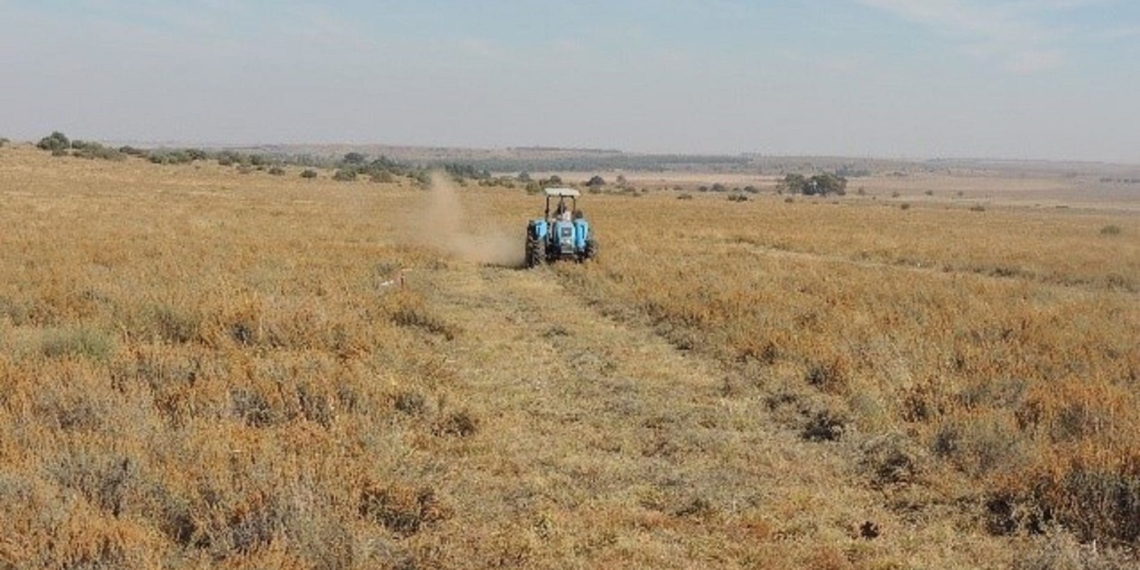
Despite being a crucial piece of legislation since 1983, South Africa’s Conservation of Agricultural Resources Act (Cara) is failing to protect the land it was designed to protect. Photo: Supplied/Food For Mzansi

Share on FacebookShare on TwitterShare on WhatsApp

Despite being a cornerstone of South African agricultural legislation since 1983, farmers say limited awareness and poor enforcement of the Conservation of Agricultural Resources Act (Cara) threaten its effectiveness. This is especially true among new-era and small-scale producers.

Administered by the national department of agriculture, Cara was designed to ensure the long-term conservation of natural agricultural resources. Its provisions are intended to maintain the production potential of land, prevent erosion, protect water sources and vegetation, and control the spread of weeds and invasive plants.

Yet, many land users are unaware of their legal responsibilities. According to the act, these include prohibitions against cultivating virgin soil or land with a slope steeper than 12% without written permission and obligations to prevent erosion and salination on cultivated or irrigated land.

Gauteng crop farmer Nhlalwenhle Rapodile has added his voice to the growing concern around Cara’s lack of implementation and education.

“The act was introduced to control the utilisation of natural resources in South Africa. The government should really bring more awareness to the policy because the majority of farmers, especially new entrant farmers, implement farming practices that are detrimental to the soil or pollute the water and ultimately ruin the vegetation.”


Related stories
  • KZN invests in tech to tackle hunger and climate change
  • Conservation agriculture for livestock farming
  • No-till success: How conservation agriculture restored a failing farm

Education about agricultural law is key

Rapodile pointed out that poor water management has driven up farmers’ costs when municipalities are forced to repair contaminated or mismanaged water systems.

According to Rapodile, the inaccessibility of Cara has created serious knowledge gaps among producers. He noted that trends in fertiliser sales and supermarket supplies further reflect widespread non-compliance with the act’s environmental objectives.

“The government is also not doing enough in spreading awareness about the act and the importance of farmers and agripreneurs to be compliant. Farmers are really unaware of the regulations stipulated in the act to preserve the health of the land and the vegetation on land.”

Rapodile proposed that the government take lessons from the private sector on how to reach its audiences through digital platforms.

He believes the government should leverage platforms like social media and other accessible communication tools to better inform the public and farmers about farming laws.

Mother-daughter farmers cultivate heritage, not just crops

Making the law accessible

To close the gap in education, Rapodile recommended that the government host more frequent consultation workshops in various farming regions across South Africa. This would ensure that farmers have no reason to be uninformed about the law’s requirements.

“They should do them on a more regular basis in more farming areas across South Africa so that farmers don’t have an excuse of being miseducated about it,” he said.

Dikgang Molebatsi, a crop farmer and soil scientist from North West, echoed these sentiments and emphasised the need to strengthen extension services at the ground level.

“If they could integrate the Cara into agricultural training curricula and university programmes, it would ensure that young professional graduates will also have a strong understanding of sustainable farming laws,” he said.

He advocated for more targeted support at local levels, such as hosting workshops in rural and farming communities and partnering with agricultural cooperatives and community radio stations to expand the reach and impact of awareness campaigns. 

To make Cara more practical and user-friendly, Molebatsi proposed simplifying the law’s language and translating it into more South African languages. “This will actually make the Cara accessible in multiple languages and in simplified formats, which will also bridge the gap between the policy and the practice as well,” he said.

Moyahabo Manthata, assistant director of natural resources at Limpopo’s department of agriculture and rural development, highlighted the provincial government’s current approach.

“The province does not enforce compliance but goes out on awareness campaigns. The monitoring is the number of awareness campaigns conducted,” he said.

However, he acknowledged that enforcement remains weak, with major constraints including the land tenure system, competition for land use, and limited institutional capacity.

READ NEXT: China opens doors to five South African stone fruits

Sign-up for the latest agricultural news delivered straight to your inbox every day with Mzansi Today!

Patricia Tembo

Patricia Tembo is motivated by her passion for sustainable agriculture. Registered with the South African Council for Natural Scientific Professions (SACNASP), she uses her academic background in agriculture to provide credibility and technical depth to her journalism. When not in immersed in the world of agriculture, she is engaged in outdoor activities and her creative pursuits.

Tags: Agricultural lawsCommercialising farmerConservation agricultureInform me
News

Aucamp outlines strategy for biosecurity, trade, and infrastructure

by Tiisetso Manoko
2nd September 2026

In an exclusive interview with Food For Mzansi, agriculture minister Willie Aucamp outlines his vision to accelerate the AAMP, tackle...

Read moreDetails
Tobias Doyer, CEO of Grain SA. Photo: Supplied/Grain SA Facebook

Rising costs, climate risk push Swartland wheat farmers to the brink

2nd September 2026
Sick spuds: No need to panic as SA’s potatoes are banned in Zim

Potato turning point ahead as onions double in price year-on-year

1st September 2026
Early calf care: Key growth targets every cattle farmer must track

Early calf care: Key growth targets every cattle farmer must track

1st September 2026

How to align your farming cycles with long-term financial success

1st September 2026

Mamelodi farmers learn how to test soil with just a bottle and spade

Water rights alone won’t fix inequality in SA commercial farming

Honoured roots: A father’s legacy, a daughter’s farming dream

Rising costs, climate risk push Swartland wheat farmers to the brink

Foot-and-mouth crisis hits SA dairy industry with R1-billion loss

Join Food For Mzansi's WhatsApp channel for the latest updates!

JOIN NOW!
Next Post
La Motte master baker rises to new heights and heads to Germany

La Motte master baker rises to new heights and heads to Germany

THE NEW FACE OF SOUTH AFRICAN AGRICULTURE

With 21 global awards in the first six years of its existence, Food For Mzansi is much more than an agriculture publication. It is a movement, unashamedly saluting the unsung heroes of South African agriculture. We believe in the power of agriculture to promote nation building and social cohesion by telling stories that are often overlooked by broader society.

Honoured roots: A father’s legacy, a daughter’s farming dream

Gauteng farmers urged to harness massive urban market

Foot-and-mouth crisis hits SA dairy industry with R1-billion loss

Tough times, hardy cattle: Why Mzansi farmers are choosing Nguni

Dragon fruit thrives in KZN valley despite tough national season

Government hikes sugar import price, but industry warns of gap

  • Awards & Global Impact
  • Our Story
  • Contact Us
  • Cookie Policy
  • Privacy Policy
  • Copyright

Contact us
Office: +27 21 879 1824
News: info@foodformzansi.co.za
Advertising: sales@foodformzansi.co.za

Contact us
Office: +27 21 879 1824
News: info@foodformzansi.co.za
Advertising: sales@foodformzansi.co.za

  • Awards & Global Impact
  • Our Story
  • Contact Us
  • Cookie Policy
  • Privacy Policy
  • Copyright

Chat Options

I'm Lerato, your AI assistant!
No Result
View All Result
  • News
  • Changemakers
  • Lifestyle
  • Farmer’s Inside Track
  • Food for Thought

Copyright © 2024 Food for Mzansi

This website uses cookies. By continuing to use this website you are giving consent to cookies being used. Visit our Privacy and Cookie Policy.