Thursday, October 22, 2026
SUBSCRIBE
22 GLOBAL MEDIA AWARDS
Food For Mzansi
  • News
  • Changemakers
  • Lifestyle
  • Farmer’s Inside Track
  • Food for Thought
No Result
View All Result
  • News
  • Changemakers
  • Lifestyle
  • Farmer’s Inside Track
  • Food for Thought
No Result
View All Result
Food For Mzansi
No Result
View All Result
in News

New free-range meat guide helps small-scale farmers level up

by Duncan Masiwa
27th August 2020
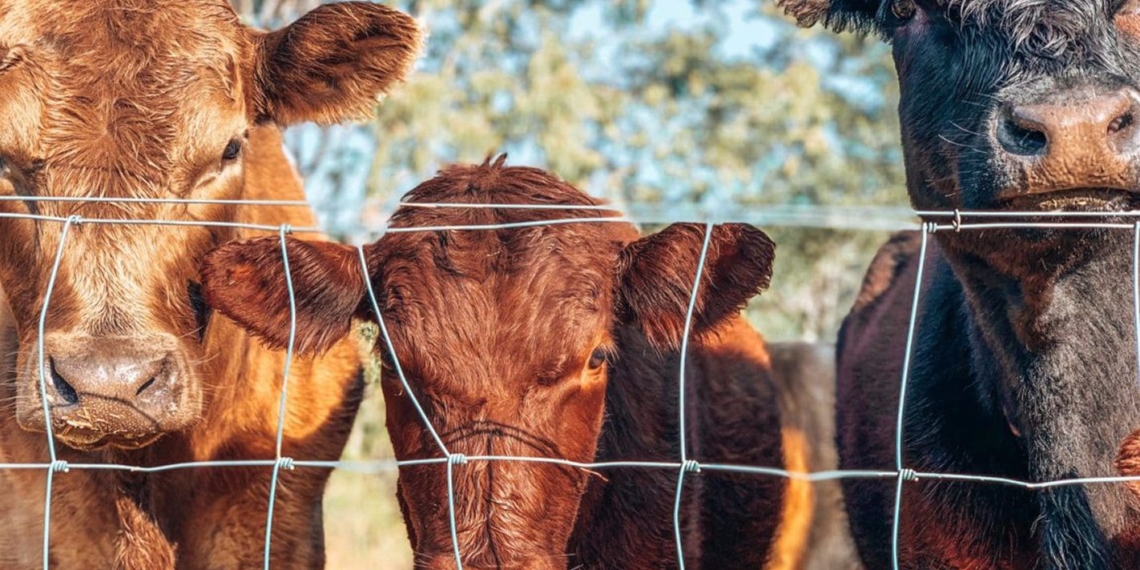
Thanks to the high value beef partnerships project, South African farmers will have a better chance at meeting exacting meat specifications. Photo: Pexels.

Beef prices, which have historically been sensitive to increases in the frequency and intensity of load shedding, have responded favourably to a surge in consumer demand. Photo: Supplied/Food For Mzansi

Share on FacebookShare on TwitterShare on WhatsApp

A new guide to the production of free-range beef is set to give smallholder farmers access to an exclusive and very valuable market, supplying one of the country’s major supermarket groups.

The manual titled “Demonstrate an Understanding of the Free-Range Beef Production Environment” and a related training programme is expected to give farmers a direct link to a very lucrative beef market in the country.

Developed by the High Value Beef Partnerships (High VBP) project, the manual seeks to aid South African farmers in meeting Woolworths’ exacting meat specifications.

The development was supported by the department of agriculture, land reform and rural development, the Agricultural Research Council, the National Agricultural Marketing Council and the Australian Centre for International Agricultural Research.

The leader of the project, Dr. Baldwin Nengovhela, said in a media statement: “The manual is available for public use and service providers can seek accreditation to be able to present it in support of the sector that want to support small or commercial farmers to meet this market specification.”

Dr Baldwin Nengovhela, high value beef partnerships project leader. Photo: LinkedIn.
Dr Baldwin Nengovhela. Photo: LinkedIn

High VBP has been on a mission since 2013 to prove that high-value free-range beef products can be developed from cattle from small smallholder farmers producing beef.

The agri-organisation approached mega-retailers who gave different specifications on their beef requirements.

“The project had interest in specifications that promised better prices when met and settled on supporting farmers to meet free-range beef (specifications) as branded by Woolworths South Africa,” Nengovhela states.

According to Nengovhela, the challenge was getting smallholder beef farmers to understand what is in the specifications, adopt it and alter practices to meet these specifications.

The solution was developing a training guide that incorporates all aspects of delivering beef to the retailer and then using it to recruit and train farmers, so that their animals can comply.

The learner guide is aligned with an industry standard (level 3 standard unit number 116647), which replaced feedlot practices with free range practices. Also, the manual is reviewed annually and is very specific to the two value chains supporting Woolworth with their free range beef.

Nengovhela added, “The language used, followed the agriculture sector education wording of AgriSETA which was considered critical to help scale the manual use.”

The manual can be downloaded on the project website www.highvbp.co.za

Duncan Masiwa

DUNCAN MASIWA is the assistant editor at Food For Mzansi, South Africa’s leading digital agriculture news publication. He cut his teeth in community newspapers, writing columns for Helderberg Gazette, a Media24 publication. Today, he leads a team of journalists who strive to set the agricultural news agenda. Besides being a journalist, he is also a television presenter, podcaster and performance poet who has shared stages with leading gospel artists.

Tags: Agricultural Research CouncilAgriSETADepartment of AgricultureLand Reform and Rural DevelopmentSmallholder farmersWoolworths
Becoming bankable: How to get your farm ready for finance
Farmer's Inside Track

Becoming bankable: How to get your farm ready for finance

by Patricia Tembo
20th October 2026

Incomplete applications, mixed personal expenses, and poor record-keeping frequently block farmers from securing capital. Experts share practical, essential steps every...

Read moreDetails

Fixing SA’s agricultural visa system to protect seasonal harvests

20th October 2026
‘Beware the dangers of illegal foot-and-mouth vaccines’

SA and Namibia reevaluate livestock trade after FMD outbreak

20th October 2026
Agda conference to tackle finance, market access and agri growth

Agda conference to tackle finance, market access and agri growth

19th October 2026

Reluctant farmer scales EC cabbage enterprise to supply Spar

19th October 2026

Reclaiming the kraal: Cultural heritage sparks a farming dream

By-laws vs. livelihoods: Barriers facing WC smallholder farmers

Why simple farm records beat complex systems

Promising early conditions predicted for 2027 SA wine harvest

Reality check: What SA agri interns really experience on the farm

Join Food For Mzansi's WhatsApp channel for the latest updates!

JOIN NOW!
Next Post
Grow your agribusiness: Under- and overcapitalisation

Grow your agribusiness: Under- and overcapitalisation

THE NEW FACE OF SOUTH AFRICAN AGRICULTURE

With 21 global awards in the first six years of its existence, Food For Mzansi is much more than an agriculture publication. It is a movement, unashamedly saluting the unsung heroes of South African agriculture. We believe in the power of agriculture to promote nation building and social cohesion by telling stories that are often overlooked by broader society.

Why simple farm records beat complex systems

Crowdfunding breathes new life into neglected Limpopo citrus farm

Mogogelo farmers receive packhouse and cold storage facilities

Godongwana unveils fuel relief and R10 billion El Niño buffer

Smart irrigation: Precision tools boost crop yields while cutting costs

By-laws vs. livelihoods: Barriers facing WC smallholder farmers

  • Awards & Global Impact
  • Our Story
  • Contact Us
  • Cookie Policy
  • Privacy Policy
  • Copyright

Contact us
Office: +27 21 879 1824
News: info@foodformzansi.co.za
Advertising: sales@foodformzansi.co.za

Contact us
Office: +27 21 879 1824
News: info@foodformzansi.co.za
Advertising: sales@foodformzansi.co.za

  • Awards & Global Impact
  • Our Story
  • Contact Us
  • Cookie Policy
  • Privacy Policy
  • Copyright

Chat Options

About this assistant

This feature generates automated answers summarised from Food For Mzansi articles. By using it, you are interacting with an AI system (provided by Google), not a human. AI can make mistakes. Please refer to the source articles for verification and citation purposes.

Our staff do not check or moderate Lerato’s answers in advance, but may review some later. Our journalists continue to write and edit all the articles Lerato uses as sources.

To estimate unique and returning web users, we store a random browser ID in this browser. WhatsApp users are counted by phone number. The same person using both channels may be counted twice.

I'm Lerato, your AI assistant!
No Result
View All Result
  • News
  • Changemakers
  • Lifestyle
  • Farmer’s Inside Track
  • Food for Thought

Copyright © 2026 Food for Mzansi