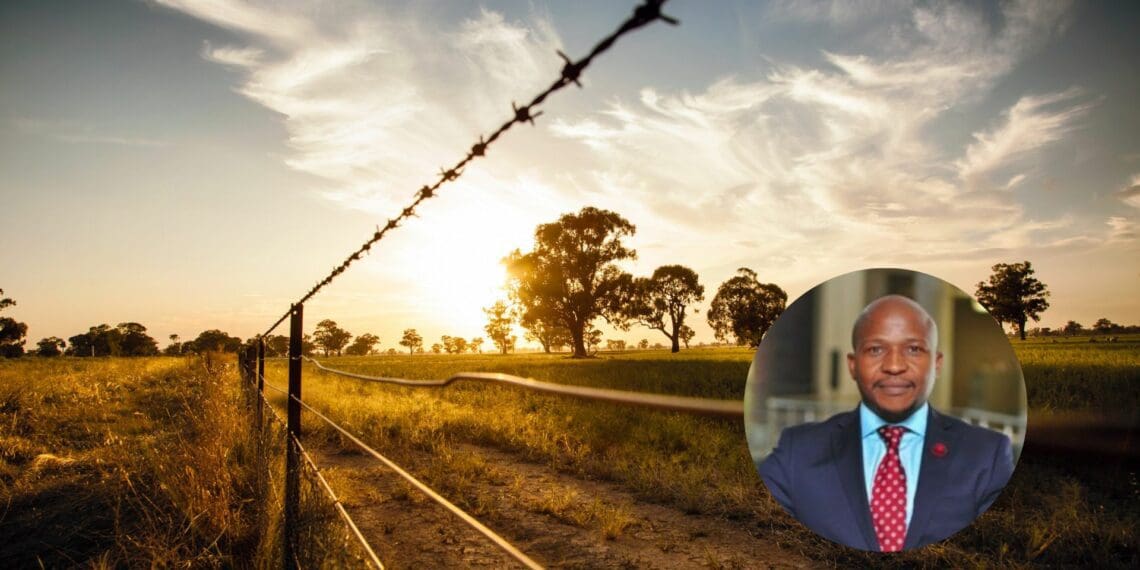
While access to finance remains a headache for newly-commercialising black farmers especially in South Africa, an expert says there might be a key reason why farmers often don’t make the cut when it comes to funding.
In an exclusive interview with Food For Mzansi journalist Tiisetso Manoko, Kgampi Bapela, the head of agro-processing and agriculture at Industrial Development Corporation (IDC), talks blended finance, commercialisation, bridging the gap between black and white farmers when it comes to access to finance, and so much more.
The partnership between the IDC and the department of agriculture, land reform and rural development has already assisted many small-scale farmers in reaching commercial status through the agri-industrial fund, he explains.
Since being implemented in June 2021, over R400 million has been spent on financing farmers across the country. And according to the IDC, this is way above their R200 million target per annum.
Tiisetso Manoko: How would you rate the success of the blended finance programme in achieving your objectives so far?
Kgampi Bapela: I think it has been a success. We are way ahead of our targets which is good because it shows that we are on the ground and working with farmers in trying to help them in reaching their goals.
It is exciting to see black ownership, commercialisation of black farmers, expanding of the business and creation of jobs being realised because of this finance.
So far, just over a R1 billion has been approved and we have already spent R400 million in just over a year since we started, so there is a lot of positive feedback to register on this.
The grants are based on pre-set qualifying criteria. What have been some of the key reasons why farmers don’t make the cut?
In most cases, it will have to be with the size of the farming production. For example, in poultry farming we need the farmer to produce a minimum of 200 000 chickens, for piggery we need a farmer to produce 300 sows per unit.
We also need to see a plan for expansion and see if the farmer can be commercially viable. Those who do not meet the criteria, we do motivate them and give them the support they need to be able to qualify.
Not every black farmer should be an emerging farmer. We need commercial farmers and that is what the fund is here to do.
Funding constraints facing black farmers and high barriers to enter commercial farming are two of the key reasons why farmers fail. Should government, the private sector and the banking sectors not improve their support to up-and-coming and newly commercialising black farmers?
Absolutely. From the government’s side, this initiative [supported by the IDC] is one of many to help farmers. We need the private and the banking sectors to come through and lend a helping hand.
From our experience, none of the farmers we have assisted would have survived if we did not come through for them. This is because, in most cases, they are financially constrained to take further debt in keeping their operations.
So, the private sector needs to come to the party. It is one thing to financially assist a farmer, but if they do not have a market it becomes challenging. Private sector needs to come and say, “How can we help?”
In Mzansi, what would you say are currently some of the key factors hindering access to agricultural finance?
It is many things, but mainly access to land, ability to meet the criteria, not having a plan for expansion and not having access to markets. Those are the critical factors that hinder many farmers to get access to agricultural finance.
Black farmers in the country still constitute more or less about 10% of the commercial output. How do we narrow the divide between black and white farmers in South Africa in terms of access to finance?
I think the very same type of we are helping in the form of blended finance, can help many farmers to really make it in the industry. Most of the farmers have the capabilities to make it in the commercial market, but they just need a boost, and they are financially stretched to take loans. Their balance sheet does not allow them to do that, so this form of help is what we need.
ALSO READ: Blended finance ‘key for new commercial farmers’
Sign up for Mzansi Today: Your daily take on the news and happenings from the agriculture value chain.