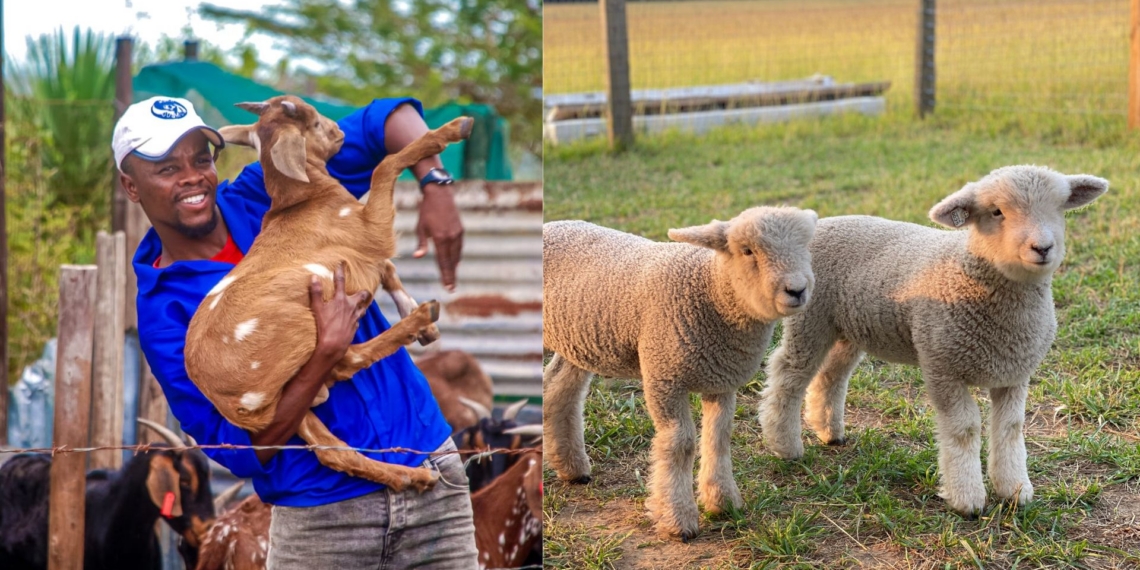
The arrival of newborn lambs and kids represents crucial business growth for livestock farmers, but diarrhoea can quickly devastate a kraal. From early symptom checks to keeping water troughs clean, taking proactive measures saves young lives.
Diarrhoea, or scours, is one of the most common causes of death in a newborn lamb or kid. Seasonally, it can start with one lamb or kid showing signs of diarrhoea, then spread through almost the whole kraal.
For farmers, knowing what to look for when an animal becomes sick is part of livestock management. Recognising the signs early can help farmers respond before a problem spreads and causes more losses.
Lessons from the goat kraal
With four years of experience in goat farming, Kwanda Biyela, founder of Kwanda Agribusiness from Empangeni, KwaZulu-Natal, has learned to pay close attention to the signs shown by young kids.
From his experience, diarrhoea can have different causes, and knowing when it occurs can help farmers understand what may be affecting the kid.
Biyela says farmers should assess what the animal has taken in, including water or other substances it may have had access to.

He explains that he first checks the type of diarrhoea before deciding on the required medication. If the problem persists or he comes across something unfamiliar, he calls a veterinarian for help.
For newborn kids, he recommends suitable housing with a lamp for warmth, good hygiene and keeping a close eye on their surroundings, particularly water sources that could expose them to contamination.
He also encourages farmers to keep colostrum by milking goats and freezing it for the next kidding season. His advice is simple: “Know your animals as you know your bank balance.”
Related stories
- Hardy goats and hard work are Njabulo’s recipe for success
- Goats, gumboots & grit: Zanele grows hope in Hammanskraal
- Ditlopo builds future with Boer goats and Brahmans
- Top farming highlights: From gourmet goats to digital reform
Keep scours at bay
Sihle Mntunje, an animal health technician with the Eastern Cape department of agriculture, says the arrival of lambs and kids is a time farmers look forward to, but scours, or diarrhoea, can quickly turn that excitement into a difficult period.
“The arrival of kids and lambs should be one of the most anticipated times of the year,” says Mntunje.
“You have planned your mating season, maintained the health and nutrition of the flock and herd and will be welcoming the arrival of new lambs and kids any day. Do not let the excitement of lambing and kidding get dampened by scours.”
Sihle Mntunje
He adds that scours remain a leading cause of death among newborn lambs and kids. According to Mntunje, poor sanitation, dirty bedding, contaminated equipment, infectious agents and nutritional factors can all contribute to the problem.

He advises farmers to reduce the risk by keeping pens, kraals, feeders and water buckets clean, ensuring ewes and does receive the required prenatal vaccinations, and giving newborns colostrum within their first 12 hours.
“If your newborn lamb or kid is not properly nursing, make sure it gets some frozen colostrum or milk replacer as soon as possible,” Mntunje says.
Where scours is suspected, farmers should act quickly to prevent dehydration and seek advice from a veterinarian.
Proactive measures to keep contamination out
Farmers must prevent diarrhoea before it becomes a problem, starting with the conditions in which newborn lambs and kids are kept, says Masixole Maswana, a production scientist at Tutimomo Agricultural Enterprise in Limpopo.
“Farmers are not meant to be reactionary but are meant to be proactive,” Maswana says, pointing to unclean kraals, dirty water troughs and animals sleeping in areas contaminated with faeces and urine as conditions that can increase infection risk.
Pregnant females should be separated from the rest of the herd so farmers can manage their feeding properly and support good colostrum production, he advises.
Maswana explains that this becomes particularly important when a ewe has multiple lambs, as the stronger or faster lamb may suckle first and leave less for the others.
“Once an animal lambs more than one lamb, the farmer must monitor suckling in order to ensure that all lambs have a fair chance.”
Maswana also advises farmers to clean kraals, water containers and equipment regularly, rather than simply adding fresh water to an unclean trough.

Prevention is key: Vaccinate before birth
Mntunje says farmers should think about prevention before birth, as diarrhoea comes with financial losses through poor weight gain, deaths and the cost of treatment and management.
He recommends vaccinating sheep and goats four to six weeks before lambing and kidding as part of the preparations for the new animals. Farmers should speak to their vet about vaccinations.
This preparation can help reduce the risk of losses once the lambs and kids arrive. Mntunje says prevention and control will always be better than waiting for diarrhoea to develop and then treating the animals.
Spotting the signs
Olwethu Laho, an animal scientist, farmer and owner of Tshitshi SC Farmers Store in Cofimvaba, Eastern Cape, says parasites and bacterial infections are among the causes of diarrhoea in young livestock.
He identifies coccidia, E. coli and worms as problems farmers should watch for, explaining that the symptoms can differ depending on the cause.
Coccidia are microscopic parasites that cause coccidiosis, a disease that damages the intestines. Laho explains that affected animals may develop diarrhoea, sometimes with blood in their droppings. They may also hunch over, puff up and appear uncomfortable.
He also mentions E. coli, a type of bacteria that can spread in environments with poor hygiene or contaminated water. Young animals can be vulnerable to infection, especially when their surroundings are not clean.
“When they are hungry, they put everything in their mouth, suck or peck at everything they can grab,” Laho explains. “That exposes them to these bacteria and parasites, because everything enters through the mouth.”

Worm infestations can also affect young animals. According to Laho, farmers may notice swollen bellies and loose droppings. In some cases, worms or rice-like material may be visible in the faeces.
He also explains that diarrhoea can vary in appearance, from watery droppings to darker faeces that may contain blood. These signs can help farmers recognise that an animal is unwell, but they cannot confirm the cause on their own.
Farmers should seek advice from a veterinarian or animal health technician to identify the problem and ensure the animal receives appropriate treatment.
READ NEXT: DIY first aid: Five ways to treat livestock injuries