More than four decades ago residents from Lawaaikamp in George in the Western Cape were faced with being forcefully removed from their homes in this shanty town.
Amongst these residents were 70-year-old vegetable farmer Esthur Sibawu and small-scale bee farmer Willem Lwack, aged 50, who both resisted being removed from the settlement in which they were born and raised.
Today, these resolute farmers farm successfully, with both owing a debt of gratitude to the intervention of the Support Centre for Land Change (SCLC), an organisation who stood in solidarity with many farmers and agriworkers like them.
“The memories of the removals still run fresh in my mind. Believe me, they’re not pleasant memories. They are painful ones. It saddens me that to this day some people still have to fight for their own land,” Sibawu says.
Clubbing pension money to start a garden

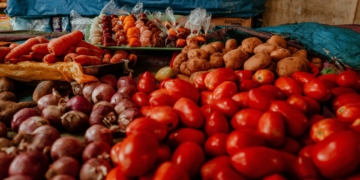
Sibawu started farming with five women in 2009. Their garden, named “Vuka-Vuka Garden”, produces potatoes, sweet potatoes, spinach, peaches and apricots on their one-hectare plot.
The garden, which is built on what was once a rubbish dump, is situated in one of the poorest neighbourhoods in George. They really struggled to get it up and running. “We started the garden with our pension money that we clubbed together. It wasn’t much, but it was enough to get us started. We bought our seedlings for cheap at Shoprite,” she says.
The women, however, realised that in order to continue feeding their community they needed help – urgently. So, in 2012 the women approached the Support Centre for Land Change for assistance.
Support Centre for Land Change
Previously known as Southern Cape Against Removals (SCAR), the organisation seeks to help communities with similar struggles and facilitates the process of land reform.
The SCLC was founded in 1987 by Angela Conway and focusses on labour, tenure and the human rights of farm and forestry workers and dwellers. They also assist small-scale farmers in getting access land and resources as well as supporting and uniting behind communities resisting land development threatening their homes, livelihoods, health and heritage.
Self-organised groups approach the SCLC for support and if it is in line with the organisation’s vision, the necessary backing is provided.
According to Rosa Linda, director of the SCLC, they realised that land reform was not addressing past injustices and that the need for their work extended beyond the Southern Cape. “It was decided that the Support Centre for Land Change needed to shift towards advancing land and agrarian transformation in the post-Apartheid South Africa,” she says.

The head of programmes at SCLC, Phumelelo Booysen says the organisations role is to support emerging farmers by enabling them to engage with government for resource mobilisation.
“We train farmers around lease agreements, especially those who farm on commonage land and provide technical support to the farmers. Furthermore, we encourage the use of sustainable farming methods in collaboration with other organisations,” Booysen explains.
Today they operate in three district municipalities in the Western Cape (Overberg, Garden Route, Central Karoo) and two district municipalities in the Eastern Cape (Chris Hani, Sarah Baartman).
Sibawu reckons that the organisation is a guardian angel. “They assisted us with seedlings and helped us secure our garden with a fence. Their assistance enables us to feed crèches, old age homes and homeless people in our community,” she explains.
Lwack’s Heidelberg honey
Willem Lwack, owner of the bee farming enterprise Lwack Honey, is another thankful recipient of the SCLC’s support. He says that many doors have opened for him since the organisation’s intervention.
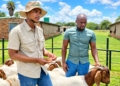
Lwack has been farming with bees for over ten years in Heidelberg, Western Cape. The bee farmer started with only four beehives in his backyard. He approached the SCLC for support in growing his business and they gave him a complete beekeeping body suit and additional inputs that he needed.

In 2014 the SCLC linked Lwack with the Western Cape Department of Agriculture, Forestry and Fisheries (DAFF), who assisted him with 200 beehives, a bakkie and containers.
In “Today, I have 480 hives spread throughout various commercial farms in and around Heidelberg. Apart from a number of stalls we sell to here in the Hessequa municipality, thanks to the SCLC’s assistance, we’ve also been able to establish a market in Cape Town,” he adds.
Field worker at the SCLC Ricardo Bhetsha explains that the needs of farm workers in the various municipalities often differ.
“Farm workers facing rights violations can approach the SCLC as part of walk-in support, but can also visit one of the twelve community advice office partners,” he explains.
Bhetsha says that other needs include access to land for livelihoods, improved living conditions for agriworkers, fair labour conditions, fair land use agreements on commonage and access to water. The organization also campaigns for development that does not deplete natural resources, alienate people from access to the sea or destroying the environment.
“We raise awareness if we are of the perception that communities are not informed of proposed development which might threaten their lives and livelihoods,” Bhetsha says.
The Support Centre for Land Change is not a capital and infrastructure support organisation, but it is their mission to link small-scale farmers and agriworkers with relevant departments. “As the SCLC, we will continue our task of supporting agribusinesses and agriworkers in order to avoid the realities of them being pushed back into poverty or being left without land,” Linda says.