Sunday, November 15, 2026
SUBSCRIBE
22 GLOBAL MEDIA AWARDS
Food For Mzansi
  • News
  • Changemakers
  • Lifestyle
  • Farmer’s Inside Track
  • Food for Thought
No Result
View All Result
  • News
  • Changemakers
  • Lifestyle
  • Farmer’s Inside Track
  • Food for Thought
No Result
View All Result
Food For Mzansi
No Result
View All Result
in Farmer's Inside Track

Podcast: How to prevent and reduce soil erosion

South African farmers have had a taste of things to come when it comes to extreme climate events as experienced across the country this week. Soil erosion is just one of the results from intense rainfalls and storms so it's important to know how to deal with this natural process while protecting productivity

by Vateka Halile
14th December 2022
Add FFM on Google
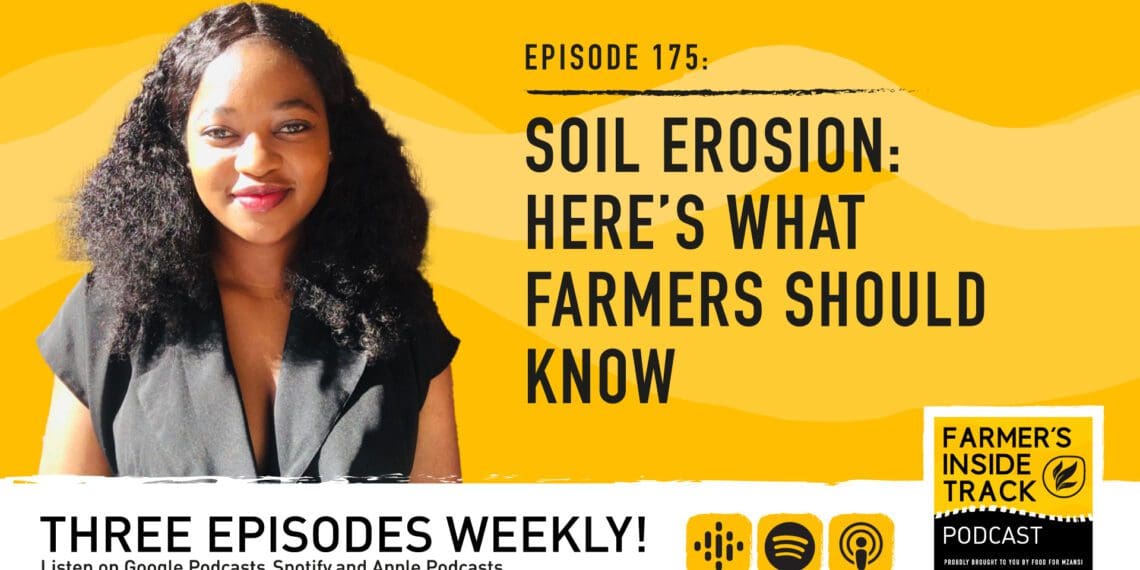
On this edition of Farmer's Inside Track, Onele Mduzulwana, an agronomist shares why maintaining healthy soil is key for Mzansi’s farmers to thrive. Photo: Food For Mzansi

On this edition of Farmer's Inside Track, Onele Mduzulwana, an agronomist shares why maintaining healthy soil is key for Mzansi’s farmers to thrive. Photo: Food For Mzansi

Share on FacebookShare on TwitterShare on WhatsApp

Maintaining healthy soil is critical for farmers to grow, yet soil erosion caused by natural forces like wind and water, has a negative influence on productivity. In this session of Farmer’s Inside Track, we discuss the causes of soil erosion and what farmers should know and grasp from the start.

Onele Mduzulwana, an agronomist with Daracorp NPO in Cullinan, Gauteng explains the effect of soil erosion on agriculture and what farmers can do to prevent land degradation.

Soil erosion, according to Mduzulwana, has a major and negative influence on farmers because once the nutritional layer of the soil is gone, very few plants can develop. As a result, the land becomes less productive for agriculture.

“Climate change is one of the leading causes of soil degradation in South Africa. Factors that do cause soil degradation include changes in temperature, or changes in rainfall intensity, windstorms and changes in the distribution and intensity of extreme weather events.”

She also says that when the rain changes, so do the plants along the rivers, therefore initiating degradation.

“Research still strongly suggests that 70% of South African land is affected by soil erosion. It hasn’t changed from the statistics from 2013.”

Mduzulwana emphasises that cover cropping can be used to reduce soil erosion. She advises farmers to plant trees and participate in agroforestry. “If you practice cover cropping, you slow down erosion.”

During the session, Mduzulwana discusses the following topics:

  • The best methods for cutting down trees;
  • The significance of crop rotation;
  • The effect of native crops on reducing soil erosion; and
  • Why creating dams around agricultural areas is crucial.

Want to know more? Listen to the full episode of Farmer’s Inside Track. 

Option 1: Click here to listen on Spotify (all mobile and other devices).

Option 2: Click here to listen on any Apple device. 

Option 3: Click here to listen on Google Podcast.

ALSO READ: Food security at stake as soil erosion sets in

Sign up for Farmer’s Inside Track: Join our exclusive platform for new entrants into farming and agri-business, with newsletters and podcasts.  
Add FFM on Google Follow FFM on Google News

Vateka Halile

Vateka Halile grew up in rural areas of Cofimvaba in the Eastern Cape. She was raised in a traditional family setting and found writing to be a source of comfort and escape. Vateka participated in an online citizen journalism course through Food For Mzansi, and her passion for health and medicine-related stories was born. Her dedication to community work and love for social justice and solidarity spaces is evident in her quality time with the community when she isn't working.

Tags: Climate changesoil erosion
Graphic for the Farmer's Inside Track podcast, featuring a smiling blond woman on a yellow background alongside logos for Food for Mzansi and RPO.
Advertorial

The first 1000 days: How red meat fuels early child brain development

by Lisakanya Venna
12th November 2026

PARTNER CONTENT: Stunting affects over 21% of South African children under five, but livestock farming holds a solution. In this...

Read moreDetails
The agricultural sector has called for new municipal council to involve farmers in economic and infrastructure development. Design: Food For Mzansi

Hung councils, fed-up farmers: Get your act together!

12th November 2026
A grocery store employee wearing a face mask holds two red apples next to a large display of fresh produce.

China tariff cut boosts Tru-Cape apple exports by 50%

12th November 2026
Intambanana Co-op: Farming together, growing together

Spinach prices surge 29% to lead weekly fresh produce gains

11th November 2026
A smiling Black woman holds a glass of red wine against a yellow podcast banner reading Farmer Mentor, A Food For Mzansi Podcast.

Mahalia Kotjane: Crafting quality wine from the soil up

11th November 2026

The first 1000 days: How red meat fuels early child brain development

Stop harvest fires: Simple machine checks save millions

Beyond Agoa: How SA can protect its agricultural export growth

Farm businesses urged to prepare as El Niño risks mount

China tariff cut boosts Tru-Cape apple exports by 50%

Join Food For Mzansi's WhatsApp channel for the latest updates!

JOIN NOW!
Next Post
The section of contention on the R30 in the Free State. Photo: Supplied/Food For Mzansi

Contractors to finally fix 'deadly' FS road

THE NEW FACE OF SOUTH AFRICAN AGRICULTURE

With 21 global awards in the first six years of its existence, Food For Mzansi is much more than an agriculture publication. It is a movement, unashamedly saluting the unsung heroes of South African agriculture. We believe in the power of agriculture to promote nation building and social cohesion by telling stories that are often overlooked by broader society.

KZN teacher champions school food gardens to fight child hunger

Citrus exports dip to 201 million cartons after bruising season

One backyard, many crops: Lessons from a Costa Rican farmer

Inside the SADC Plant Nutrition Symposium: Turning science into farm profit

A mother’s garden sparks a young farmer’s big tomato dream

Have your say: New animal identification rules open for comment

  • Awards & Global Impact
  • Our Story
  • Contact Us
  • Cookie Policy
  • Privacy Policy
  • Copyright

Contact us
Office: +27 21 879 1824
News: info@foodformzansi.co.za
Advertising: sales@foodformzansi.co.za

Contact us
Office: +27 21 879 1824
News: info@foodformzansi.co.za
Advertising: sales@foodformzansi.co.za

  • Awards & Global Impact
  • Our Story
  • Contact Us
  • Cookie Policy
  • Privacy Policy
  • Copyright

Chat Options

About this assistant

This feature generates automated answers summarised from Food For Mzansi articles. By using it, you are interacting with an AI system (provided by Google), not a human. AI can make mistakes. Please refer to the source articles for verification and citation purposes.

Our staff do not check or moderate Lerato’s answers in advance, but may review some later. Our journalists continue to write and edit all the articles Lerato uses as sources.

To estimate unique and returning web users, we store a random browser ID in this browser. WhatsApp users are counted by phone number. The same person using both channels may be counted twice.

I'm Lerato, your AI assistant!
No Result
View All Result
  • News
  • Changemakers
  • Lifestyle
  • Farmer’s Inside Track
  • Food for Thought

Copyright © 2026 Food for Mzansi