Tuesday, October 20, 2026
SUBSCRIBE
22 GLOBAL MEDIA AWARDS
Food For Mzansi
  • News
  • Changemakers
  • Lifestyle
  • Farmer’s Inside Track
  • Food for Thought
No Result
View All Result
  • News
  • Changemakers
  • Lifestyle
  • Farmer’s Inside Track
  • Food for Thought
No Result
View All Result
Food For Mzansi
No Result
View All Result
in Farmer's Inside Track

 Podcast: The 101 on artificial insemination

According to an agricultural consultant, artificial insemination is only used by between 3 and 4% of farmers in rural areas, mostly due to a lack of knowledge

by Octavia Avesca Spandiel
15th March 2023
Artificial Insemination

Dr Masindi Mphaphathi from the Agricultural Research Council, Ndumiso Gule from Gule Agricultural Consulting, and North West cattle farmer Ipeleng Kwadi-Seboni. Photo: Food For Mzansi

Share on FacebookShare on TwitterShare on WhatsApp

Livestock farmers, have you ever considered artificial insemination? Dr Masindi Mphaphathi from the Agricultural Research Council (ARC), Ndumiso Gule, a consultant for Gule agricultural consulting, and North West cattle farmer Ipeleng Kwadi-Seboni share some insights about this practice and how up-and-coming and communal farmers can benefit and save costs.

According to Mphaphathi, artificial insemination is when semen that was collected and reserved is placed in the female animal’s womb.

“Artificial insemination is the process whereby semen is collected by the males or collected by the females that were being reserved then deposited in the female womb of the animal. As males, you can either use fresh, direct or warm semen,” he explains.

There are a few ways to perform artificial insemination. “The difference between artificial and natural insemination is during artificial insemination you have to pass and penetrate the cervix and deposit the semen there,” Mphaphathi says. Whereas during the natural process, the sperm is left in the female cow’s vaginal wall and has to find its way to penetrate the cervix.

Lack of knowledge in rural areas

According to Gule, artificial insemination is often overlooked as a practice, primarily due to the lack of knowledge.

“Artificial insemination is hugely underused in the rural [areas], I would say if you look at KZN and the Eastern Cape. I would confidently  say that only 3 to 4% use artificial insemination,” he says.

He further notes that South Africa is still breaking ground to get farmers to use it. There are, however, small companies doing great work.

In this episode, the experts discuss:

  • Insights on the practices;
  • How farmers can benefit; and
  • How cost-effective it can be.

Want to know more? Listen to the full episode of Farmer’s Inside Track. 

Option 1: Click here to listen on Spotify (all mobile and other devices).

Option 2: Click here to listen on any Apple device. 

Option 3: Click here to listen on Google Podcast.

ALSO READ: Farmer 101: A guide on artificial insemination

Sign up for Farmer’s Inside Track: Join our exclusive platform for new entrants into farming and agri-business, with newsletters and podcasts.  
Octavia Avesca Spandiel

Raised by a close-knitted family who loves her deeply, Octavia believes in the philosophy of ‘I am because you are'. This former news and content editor for radio is now living her best life in the agricultural sector as a commercial journalist at Food For Mzansi. Her soft spot for poetry and passion for life, writing and traveling inspires her to write compelling stories. Apart from being an excellent writer, Octavia has an educational background in youth work and loves working with people. 

Tags: artificial inseminationLivestock
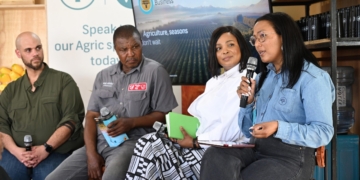
The panellists at FNB Business’s “Farming together” discussion at the Royal Show explored how market access, mentorship, financial discipline and strong commercial relationships can help farmers build sustainable businesses. Featured from the left are Bertram July (FNB’s distribution sales lead), commercial farmer Shakes Shabalala; Sandy Gumede (co-founder of Zulu Girl Wines), and Janis Robson (FNB’s head of development and SME business development). Photo: Food For Mzansi
News

FNB puts relationships at the heart of commercial farming

by Staff Reporter
17th October 2026

From buying a farm with cattle to building a wine brand from scratch, entrepreneurs shared how strong relationships, market access...

Read moreDetails
Agri Skills Transfer students gain hands-on experience at the institution’s Cullinan Farm Training Centre, where agricultural theory meets the realities of commercial production. Photo: Supplied/Food For Mzansi

Build your future in agriculture with Agri Skills Transfer

17th October 2026
Durbanville Hills tastes sweet success at Michelangelo Awards

Promising early conditions predicted for 2027 SA wine harvest

17th October 2026

Reclaiming the kraal: Cultural heritage sparks a farming dream

16th October 2026

How animal welfare and human rights shape food security

16th October 2026

Farmers urge urgent support for resilient local supply chains

Ramaphosa: Title deeds and blended finance key to farming growth

Smart soil and strong networks drive Kopana Holdings’ success

Promising early conditions predicted for 2027 SA wine harvest

Farmworkers rally against rising evictions and housing insecurity

Join Food For Mzansi's WhatsApp channel for the latest updates!

JOIN NOW!
Next Post
Director of Source BI, Juan Winter and the director of RedSun Hortitech, Mark Hassenkamp discussing the future of food production and agri-tech. Photo: Supplied/Food For Mzansi

Africa Agri Tech: Data plus tech rule the roost

THE NEW FACE OF SOUTH AFRICAN AGRICULTURE

With 21 global awards in the first six years of its existence, Food For Mzansi is much more than an agriculture publication. It is a movement, unashamedly saluting the unsung heroes of South African agriculture. We believe in the power of agriculture to promote nation building and social cohesion by telling stories that are often overlooked by broader society.

Fixing SA’s agricultural visa system to protect seasonal harvests

SA and Namibia reevaluate livestock trade after FMD outbreak

Agda conference to tackle finance, market access and agri growth

Reluctant farmer scales EC cabbage enterprise to supply Spar

Reality check: What SA agri interns really experience on the farm

This week’s agri events: 19 – 23 October

  • Awards & Global Impact
  • Our Story
  • Contact Us
  • Cookie Policy
  • Privacy Policy
  • Copyright

Contact us
Office: +27 21 879 1824
News: info@foodformzansi.co.za
Advertising: sales@foodformzansi.co.za

Contact us
Office: +27 21 879 1824
News: info@foodformzansi.co.za
Advertising: sales@foodformzansi.co.za

  • Awards & Global Impact
  • Our Story
  • Contact Us
  • Cookie Policy
  • Privacy Policy
  • Copyright

Chat Options

About this assistant

This feature generates automated answers summarised from Food For Mzansi articles. By using it, you are interacting with an AI system (provided by Google), not a human. AI can make mistakes. Please refer to the source articles for verification and citation purposes.

Our staff do not check or moderate Lerato’s answers in advance, but may review some later. Our journalists continue to write and edit all the articles Lerato uses as sources.

To estimate unique and returning web users, we store a random browser ID in this browser. WhatsApp users are counted by phone number. The same person using both channels may be counted twice.

I'm Lerato, your AI assistant!
No Result
View All Result
  • News
  • Changemakers
  • Lifestyle
  • Farmer’s Inside Track
  • Food for Thought

Copyright © 2026 Food for Mzansi