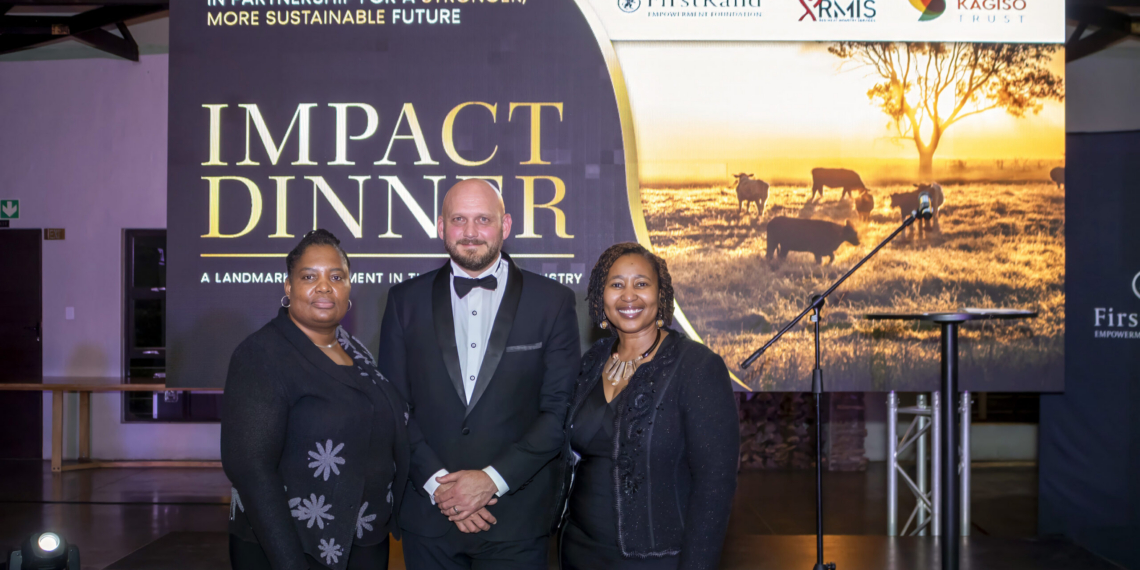
A partnership between Red Meat Industry Services (RMIS), Kagiso Trust and the FirstRand Empowerment Fund is delivering practical support to livestock farmers, with a focus on animal health, skills development, community participation and improved access to the formal red meat value chain.
The partnership was celebrated at the RMIS Impact Gala Dinner held in Tierpoort, Gauteng, on Tuesday, 24 November, where industry stakeholders reflected on the progress made since the initiative began and outlined opportunities to expand its impact.
Dewald Olivier, CEO of RMIS, said the partnership had already exceeded expectations, demonstrating the value of collaboration between industry organisations, development partners and financial institutions.
“What we are celebrating is a shared vision. We started working together before the formal launch, and we are already seeing the results of that collaboration,” he said.
Olivier highlighted the importance of the red meat industry to food security and the broader economy, noting that approximately 96% of South Africa’s red meat production is consumed locally. He added that increasing exports remains an important industry objective.
Related stories
- New RMIS research targets FMD, stock theft & market growth
- RMIS sets focus on traceability and biosecurity in new levy cycle
- When to plant fodder radish for better livestock feed in droughts
- Gauteng farmer builds app to get fair livestock prices
R67m investment supports animal health and identification
Dr Phillip Oosthuizen, COO of RMIS, outlined the project’s progress, explaining that its implementation had focused on three key areas: community development, animal health technician support and improved animal identification.
Of the R67 million in funding, allocations were redirected to strengthen animal health services, including support for animal health technicians. Approximately R13 million was allocated towards employing technicians for 12 months.
Oosthuizen said the technicians were instrumental in addressing practical challenges around vaccine distribution and animal vaccination, particularly in communities where access to veterinary services and transport are limited.
The initiative has already facilitated the vaccination of approximately 230 000 animals, with more than 750 facilities involved in the process.
He emphasised that vaccination alone is not enough, highlighting the importance of animal identification and reliable record-keeping.
“Vaccinating animals is important, but we also need to identify them and capture that information digitally. Without proper records, an identification tag has limited value,” he said.
RMIS is therefore integrating animal identification into its digital ecosystem, helping farmers build more reliable livestock records and improve the visibility of their animals within the value chain.

Community participation key to lasting impact
The community development component initially focused on the Eastern Cape, with plans to expand into four provinces. Oosthuizen said building relationships with communities was essential to ensuring farmers understood and adopted the interventions.
“The biggest thing is relationships. It is relatively easy to provide technical assistance, but the real work lies in building relationships with communities and securing their participation,” he said.
Looking ahead, RMIS is considering further investment in animal health technicians, including training and support to help them establish sustainable businesses or secure employment within the public and private sectors.
Partnerships needed to strengthen the value chain
Kone Gugushe, CEO of the FirstRand Empowerment Fund, said the partnership demonstrated how organisations with shared values and objectives could work together to address challenges facing the livestock industry.
She highlighted the importance of strengthening the industry’s capacity to manage animal health challenges, improve market access and support export growth.
Dr Mankodi Moitse of Kagiso Trust stressed that meaningful development requires more than financial assistance. It needs partnerships that recognise the potential within communities and create opportunities for people to participate in the economy.
“Behind these numbers are people. We want to imagine a future where a young person graduating knows there is a pathway to employment, participation in the economy and breaking the cycle of poverty,” he said.
The partners also pointed to opportunities to build on the initiative through future phases and explore blended finance models to support livestock production.
READ NEXT: Veg prices crash ahead of festive season, squeezing SA farmers