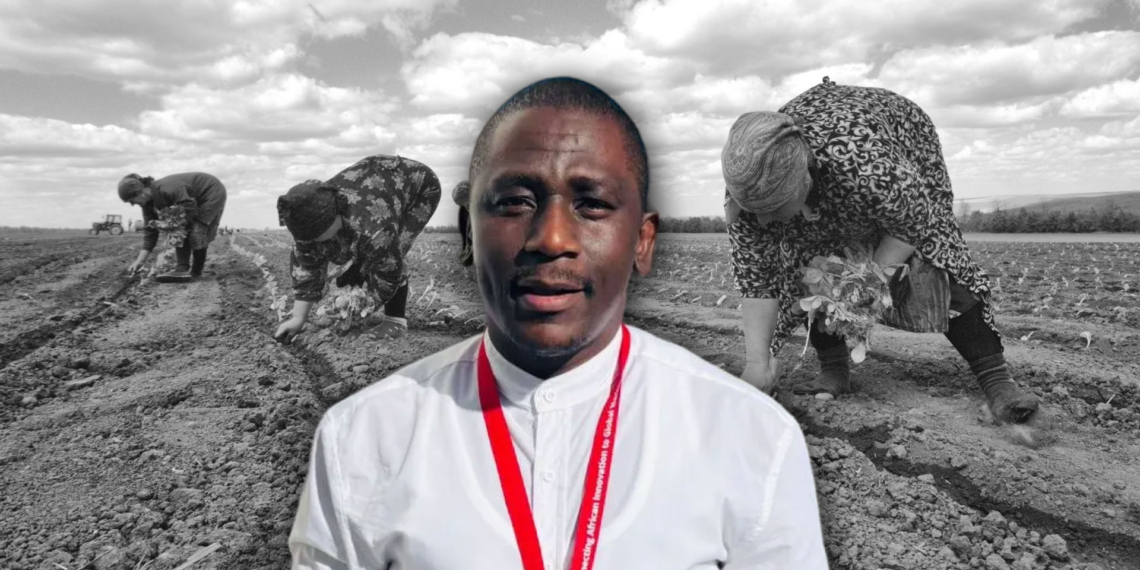
With 34 000 agricultural jobs lost in the third quarter of 2026, rural livelihoods face mounting pressure. ARC researcher Dr Walter Shiba unpacks the latest Stats SA data, arguing that tackling youth unemployment requires looking beyond primary farming toward agro-processing, cold-chain logistics, and blended finance.
South Africa’s latest labour-force figures present a difficult contradiction: employment is growing, but so is unemployment. The economy added jobs during the third quarter of 2026, yet the number of people seeking work increased even faster, leaving the official unemployment rate at a persistently high level.
According to Statistics South Africa’s Quarterly Labour Force Survey for the third quarter of 2026, employment increased by 101 000 to approximately 16.8 million people. However, the number of unemployed people also rose by 97 000, reaching 8.6 million. Consequently, the official unemployment rate increased slightly to 33.7%, compared with 33.6% in the preceding quarter.
These figures show that employment growth alone is insufficient. South Africa must generate work opportunities at a rate that exceeds the growth of its labour force.
Agriculture loses jobs when the country needs them most
The agricultural sector remains crucial to rural employment, household income and food security. However, agricultural employment declined by approximately 34 000 jobs between the second and third quarters of 2026, falling from about 944 000 to 911 000 (see Table 1). This represented a quarterly decline of 3.6%. Agricultural employment was also approximately 9 000 lower than in the corresponding quarter of 2025.
This decline is concerning because agriculture is one of the few sectors capable of creating employment in areas where alternative economic opportunities are limited. Job losses in farming affect more than individual workers. They reduce rural household income, weaken demand in local businesses and increase pressure on social-support systems.
Related stories
- Exports up, jobs down: Why agri-trade leaves rural workers behind
- Farmers forced to cut jobs as operational costs skyrocket
- Stats SA: Food sector income rises 8.4% as takeaways surge
Seasonal production patterns, adverse weather, rising input costs, weak infrastructure and uncertainty in domestic and export markets can all affect agricultural employment. Mechanisation and technological adoption can improve productivity, but they may also reduce demand for certain categories of labour unless accompanied by investment in processing, logistics and other labour-absorbing activities.
Table 1: Key findings at a glance
| Industry | Employment change (000) | Performance |
| Finance | +111 | Highest growth |
| Manufacturing | +33 | Growth |
| Mining | +31 | Growth |
| Community and social services | +20 | Growth |
| Transport | +16 | Growth |
| Utilities | +4 | Growth |
| Trade | +2 | Growth |
| Construction | -8 | Decline |
| Agriculture | -34 | Significant decline |
| Private households | -68 | Largest decline |
Source: Quarterly Labour Force Survey (QLFS), 3rd Quarter 2026
The youth unemployment challenge
The labour-market crisis is particularly severe for young South Africans. In the third quarter of 2026, South Africa had approximately 10.4 million people aged between 15 and 24 years, of whom 35.7% were not in employment, education or training. The rate was 1.8 percentage points higher than in the corresponding quarter of 2025.
Young people who remain disconnected from employment, education and training for extended periods face an increasing risk of permanent exclusion from the labour market. The country therefore needs interventions that combine practical skills development with genuine routes into employment, entrepreneurship and agricultural value chains.
Agriculture can provide some of these routes, but young people should not be encouraged to enter the sector without access to land, finance, infrastructure, markets, technology and mentorship. Training programmes must be linked to commercial opportunities rather than ending with certificates that do not improve employment prospects.
Expanding employment beyond primary production
South Africa’s agricultural employment strategy should extend beyond farming. Significant employment opportunities exist throughout the food system, including in:
- agro-processing and food manufacturing;
- storage, refrigeration and transport;
- fresh-produce markets and retail distribution;
- agricultural input supply and machinery services;
- digital agriculture and market-information services;
- extension, veterinary and technical services; and
- export logistics and compliance.
For example, increased horticultural production can generate jobs on farms, but additional employment can also be created through grading, packaging, cold storage, processing and transportation. This requires coordinated investment across entire value chains.
Smallholder and emerging farmers also need reliable access to markets. Public procurement programmes, commodity organisations, agribusinesses and retailers can support employment by integrating capable producers into structured supply arrangements. However, market access must be supported by extension services, quality assurance, financial management and dependable infrastructure.
What needs to change?
The latest figures point to several priorities.
First, South Africa needs a more deliberate agro-processing strategy focused on labour-intensive commodities and regions with high unemployment. Investment incentives should reward businesses that create sustainable jobs, purchase from local producers and operate in rural areas.
Second, failing roads, unreliable electricity, limited water infrastructure and high logistics costs must be addressed. These constraints reduce agricultural profitability and discourage employers from expanding their operations.
Third, agricultural training should respond directly to industry demand. Partnerships among agricultural colleges, universities, research institutions, commodity organisations and private companies can provide workplace-based learning in technical production, farm management, food processing, data analysis and agricultural marketing.
Fourth, emerging producers require blended financial and technical support.
Funding without adequate mentorship may fail, while mentorship without access to capital and markets cannot produce commercially sustainable enterprises.
Finally, policymakers should recognise that informal and household-based economic activities are important sources of livelihoods. The latest survey recorded declines in employment in both the informal and household sectors during the third quarter. Targeted business-development support, appropriate finance and less burdensome administrative processes could help small enterprises survive and employ more people.
Agriculture must be part of the employment solution
South Africa’s unemployment crisis will not be resolved by a single sector. Nevertheless, agriculture and the wider food system can make a meaningful contribution, particularly in rural communities where unemployment and poverty are most concentrated.
The decline in agricultural employment should therefore serve as a warning. The country cannot treat agriculture solely as a source of food and export earnings. It must also be managed as a strategic employment and rural development asset.
The third-quarter figures show limited progress, but they also reveal the scale of the challenge. Creating 101 000 jobs is welcome, yet it is not enough when 8.6 million people remain unemployed, and more people continue entering the labour market. South Africa needs faster, more inclusive and more labour-absorbing growth. Agriculture, agro-processing and the wider food economy should be central to that effort.
Conclusion
South Africa’s labour market continues to face a fundamental challenge: job creation is not keeping pace with the growing number of people seeking work. While the economy added 101 000 jobs in the third quarter of 2026, unemployment remained stubbornly high, and agriculture, a key source of rural livelihoods, recorded significant job losses.
Expanding employment opportunities across agriculture, agro-processing and the broader food value chain, while improving infrastructure, skills development and market access, will be essential if the country is to achieve more inclusive growth and reduce unemployment on a meaningful scale.
- The views and opinions expressed in this article are those of the author and do not necessarily reflect the views or positions of Food For Mzansi.
READ NEXT: Why Free State smallholder dairy farmers are quitting the industry