Thursday, November 26, 2026
SUBSCRIBE
22 GLOBAL MEDIA AWARDS
Food For Mzansi
  • News
  • Changemakers
  • Lifestyle
  • Farmer’s Inside Track
  • Food for Thought
No Result
View All Result
  • News
  • Changemakers
  • Lifestyle
  • Farmer’s Inside Track
  • Food for Thought
No Result
View All Result
Food For Mzansi
No Result
View All Result
in News

Calls to bridge the gap between red meat industry and researchers

Experts at the Agri X Fusion summit unpacked how SA agribusinesses can leverage academic research, tax incentives, and collaborative partnerships to boost productivity in the red meat value chain

by Staff Reporter
26th November 2026
Add FFM on Google
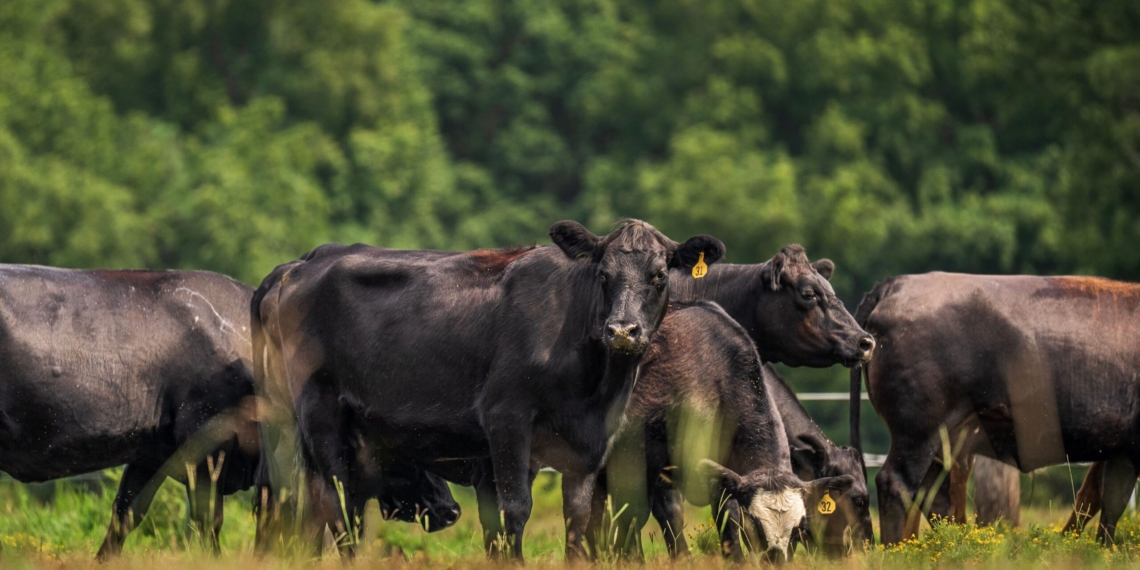
Industry-university collaboration could unlock new opportunities for South Africa’s red meat value chain, giving agribusinesses access to research expertise, innovative solutions and a 150% tax deduction on qualifying research and development expenditure, while helping translate scientific discoveries into practical benefits for farmers. Photo:  Pexels

Industry-university collaboration could unlock new opportunities for South Africa’s red meat value chain, giving agribusinesses access to research expertise, innovative solutions and a 150% tax deduction on qualifying research and development expenditure, while helping translate scientific discoveries into practical benefits for farmers. Photo: Pexels

Share on FacebookShare on TwitterShare on WhatsApp

Collaboration between agribusinesses, universities and research institutions could help address challenges across South Africa’s red meat value chain, while giving companies access to research expertise and financial incentives.

This was the message from an innovation, research and investment panel at the Agri X Fusion Red Meat Value Chain Collaboration Summit, held at Silver Lakes Golf Club in Pretoria recently.

Prof. Eugene Cloete, CEO of the Cape Higher Education Consortium, highlighted the untapped potential of research conducted at public institutions, pointing out that valuable solutions to industry challenges may already exist in university research.

“Somewhere on a university shelf right now sits a thesis that could save or make a company millions,” he said, emphasising the need to connect academic research with practical industry needs.

Facilitated by Hannes Malan of North-West University, the panel included representatives from the National Intellectual Property Management Office (NIPMO), the Agricultural Research Council (ARC), intellectual property law and the private sector.


Related stories
  • Your Sunday lunch has a story: How red meat keeps rural SA moving
  • Agri X Fusion unveils red meat collaboration summit in September
  • South African red meat keeps rural economies alive and growing
  • BFAP outlook: Declining prices, high costs test SA farming sector

Turning research into practical solutions

Dr Otto Koekemoer of Design Biologix stressed that collaboration must extend beyond research and development to include commercialisation.

Using veterinary vaccine development as an example, he explained that taking a vaccine from discovery to market can take between eight and 12 years. Proof of concept is only the beginning, with manufacturing, product stability, regulatory registration and field trials requiring significant time and investment.

He encouraged researchers and businesses to engage early, understand each other’s needs and agree on intellectual property ownership and legal arrangements upfront.

Jetane Charsley of NIPMO explained that businesses can access publicly funded research through licensing, purchasing intellectual property or commissioning contract research under the Intellectual Property Rights from Publicly Financed Research and Development Act.

She advised companies to approach university and research institution technology transfer offices, which help connect businesses with researchers and facilitate commercial agreements.

Financial incentives for research

Collaboration also presents financial opportunities. Charsley highlighted the 150% tax deduction available for qualifying research and development expenditure, including eligible research contracted to South African universities and science councils.

Technology transfer offices can assist businesses in determining whether projects qualify and applying for approval through the department of science, technology and innovation.

Meanwhile, Dr Keoagile Modisakeng of the ARC highlighted opportunities for stronger private-sector partnerships to develop commercially viable research solutions.

Among the resources available are data collected through the ARC’s weather station network, which could support farmers, and the ARC National Forage Genebank, which conserves and distributes genetic resources to improve pastures and livestock feed systems.

The ARC is exploring more efficient ways to facilitate commercial partnerships and attract private investment.

For farmers and agribusinesses, these partnerships could translate into practical advances in animal breeding, feed production, genetic testing, precision farming and traceability.

Cloete encouraged businesses to engage researchers and identify shared challenges, noting, “Research gives us understanding. Industry gives us impact. Collaboration turns one into the other.”

READ NEXT: Climate risk is business risk: How farmers can prepare for El Niño

Red stylized leaves resembling flames enclosed in a rounded, irregular red border on a white background.

Sign-up for the latest agricultural news delivered straight to your inbox every day with Mzansi Today!


Add FFM on Google Follow FFM on Google News

Staff Reporter

Researched and written by our team of writers and editors.

Tags: Agricultural Research CouncilInform meRed meat industry
Food for Thought

South Africa’s job crisis: Why the agricultural sector is bleeding

by Dr Walter Shiba
24th November 2026

Farming is the lifeblood of rural Mzansi. Following a 3.6% drop in agricultural employment in Q3 2026, the ARC’s Dr...

Read moreDetails
A woman walks along a dirt path beside a fenced vegetable garden filled with leafy greens, cabbages, and yellow flowers.

Boshof Solar Power backs three-year emerging farmer programme

24th November 2026
Why seasonal rainfall averages don’t guarantee maize yields

Why seasonal rainfall averages don’t guarantee maize yields

23rd November 2026
Top matric achiever skips varsity to build thriving farm from scratch

Top matric achiever skips varsity to build thriving farm from scratch

23rd November 2026
Beyond timber: How farmers can profit from multi-purpose trees

Beyond timber: How farmers can profit from multi-purpose trees

23rd November 2026

Gauteng farmer builds app to get fair livestock prices

South Africa’s job crisis: Why the agricultural sector is bleeding

Building the future: Seriti Institute brings new hope to Standerton

Why giving farmers seedlings isn’t enough to beat the next drought

Calls to bridge the gap between red meat industry and researchers

Join Food For Mzansi's WhatsApp channel for the latest updates!

JOIN NOW!

THE NEW FACE OF SOUTH AFRICAN AGRICULTURE

With 21 global awards in the first six years of its existence, Food For Mzansi is much more than an agriculture publication. It is a movement, unashamedly saluting the unsung heroes of South African agriculture. We believe in the power of agriculture to promote nation building and social cohesion by telling stories that are often overlooked by broader society.

Calls to bridge the gap between red meat industry and researchers

Building the future: Seriti Institute brings new hope to Standerton

Gauteng farmer builds app to get fair livestock prices

Ramasodi: ‘The best is yet to come for South African agriculture’

Stop losing money on poor livestock marketing – here’s how to fix it

Veg prices crash ahead of festive season, squeezing SA farmers

  • Awards & Global Impact
  • Our Story
  • Contact Us
  • Cookie Policy
  • Privacy Policy
  • Copyright

Contact us
Office: +27 21 879 1824
News: info@foodformzansi.co.za
Advertising: sales@foodformzansi.co.za

Contact us
Office: +27 21 879 1824
News: info@foodformzansi.co.za
Advertising: sales@foodformzansi.co.za

  • Awards & Global Impact
  • Our Story
  • Contact Us
  • Cookie Policy
  • Privacy Policy
  • Copyright

Chat Options

About this assistant

This feature generates automated answers summarised from Food For Mzansi articles. By using it, you are interacting with an AI system (provided by Google), not a human. AI can make mistakes. Please refer to the source articles for verification and citation purposes.

Our staff do not check or moderate Lerato’s answers in advance, but may review some later. Our journalists continue to write and edit all the articles Lerato uses as sources.

To estimate unique and returning web users, we store a random browser ID in this browser. WhatsApp users are counted by phone number. The same person using both channels may be counted twice.

I'm Lerato, your AI assistant!
No Result
View All Result
  • News
  • Changemakers
  • Lifestyle
  • Farmer’s Inside Track
  • Food for Thought

Copyright © 2026 Food for Mzansi