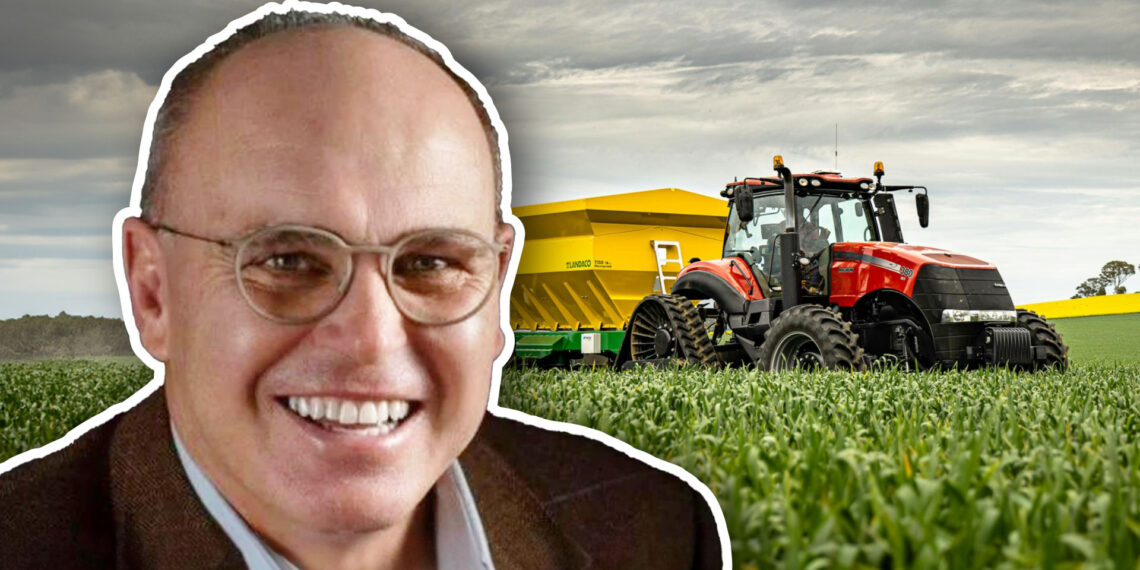
Johann Kotzé, CEO of Agri SA, has raised concerns about the sustainability of South Africa’s agricultural sector, citing rural decay, inadequate service delivery, and fragmented data as pressing issues.
While optimistic about the sector’s resilience and economic outlook, Kotzé highlighted the need for innovative solutions to address the growing challenges facing farmers and agribusinesses in an opinion piece originally published by Agri Orbit.
After his first year at the helm of Agri SA, Kotzé highlighted the strength and determination of farmers as key drivers of the country’s global agricultural competitiveness.
“The passion and ingenuity of South African farmers is the driving force behind our global competitiveness,” he said. “I have full confidence in the agri-food system to continue producing food and am positive about our outlook in 2025. However, I cannot deny the impact of rural decay and inadequate service delivery on the sustainability of individual farmers and value chains.”
Rural challenges threaten sustainability
Kotzé pointed to visible signs of deterioration in rural areas, including pothole-ridden roads, abandoned farmhouses, and struggling communities. These, he warned, are symptomatic of broader systemic issues.
“It’s alarming to see huge grain lorries weaving potholes through the main streets of once-thriving rural villages,” he noted.
He also described how some farmers have been forced to seek financial relief abroad, leaving families and communities to cope with the consequences of persistent drought and economic pressures.
Kotzé cautioned that traditional methods of advocacy and policy engagement are no longer sufficient to address the complexities of the current business environment. “The idea that decay or historical capacity should simply be restored or reclaimed to what it once was is nonsensical,” he said.
Instead, Kotzé argued for a proactive, collaborative approach that leverages new ideas and partnerships to tackle emerging challenges.
“The reactive policy-driven onslaught of organised agriculture is no longer relevant. The current business environment demands more from us – innovative thinking and pragmatic problem-solving,” he added.
Data deficiencies undermine planning
A significant concern for Kotzé is the lack of accurate, reliable data to guide decision-making in the sector. He cited discrepancies in agricultural GDP figures reported by Statistics SA and the Bureau for Food and Agricultural Policy (BFAP) as an example.
“The accuracy of agricultural GDP data is essential for monetary policy and as a measure of agriculture’s health and food security,” Kotzé explained. In response, Agri SA has established an Agricultural Conditions Assessment Committee to ensure ground-level realities align with statistical findings.
Kotzé also revealed plans to create a Food Security Index in collaboration with BFAP and PwC. The index will provide a framework for analyzing economic activities across value chains and facilitate collaboration between agriculture and food sectors.
Shared responsibility for the future
Kotzé stressed that the future of South African agriculture relies on collective action from all stakeholders. “What is experienced at the farm level and in communities is sometimes far beyond the direct influence of officials in Pretoria,” he said.
He acknowledged the significant role industry organisations already play in supporting farmers, from developing new cultivars to managing disease outbreaks and advocating for market access. However, he believes these organisations will need to take on even greater responsibilities in the years ahead.
Despite the obstacles, he remains confident in the sector’s potential.
Kotzé pointed to the concept of a “bended curve” in agriculture, which highlights the sector’s untapped potential. “If we become more focused and pragmatic in how we work together – with each other as well as with state institutions – we can realise our economic potential in agriculture,” he concluded.
As South Africa’s agricultural sector navigates an increasingly complex landscape, Kotzé’s call for innovation and collaboration may serve as a blueprint for ensuring long-term sustainability and growth.
READ NEXT: From hustle to harvest: The rise of young farmers in SA