Dr Siphe Zantsi, an agricultural economist in the economics analysis unit at the Agricultural Research Council (ARC), digs into the rise of young farmers in South Africa, their hustle, and the need to put them front and centre in land redistribution policies. He tackles the barriers keeping youth out of agriculture and makes a case for the support that could secure the sector’s thriving, sustainable future.
South African farmers are generally middle-aged to older, and this is a concern for the sustainability of the agricultural sector.
According to the latest (2017) Commercial Agriculture Census published by Statistics South Africa in 2020, 65% of commercial farm managers in South Africa are between the ages of 45 and 65 years old.
Of this share (65%), 40% of farmers are between the ages of 55 and 65 years old. When one also looks at our smallholder farmers, for example, the General Household Survey or Agricultural Community Survey both published by Statistics South Africa, a similar picture is observed – most smallholder farming household heads are between the ages of 45 and 65.
As a country, we should be deeply concerned about this situation. For a sector that employs more than 900 000 people and contributes close to 12% to the GDP, if one considers the backward and forward linkages of the sector with other sectors.
Do our farmers earn a decent income from farming? With narrow profit margins in farming, one could expect tight break-even points, especially on smaller commercial farms.
Youth participation in agriculture
In smallholder farming, most farmers rely on multiple streams of income to deal with this problem, and it is suspected that managers of smaller commercial farms do the same. These could be some of the reasons we don’t see more young people in primary agriculture.
Other possible reasons might have to do with the alarmingly high rates of unemployment in the country. Seemingly, youth involvement in agriculture is very little or at least little reported, because Statistics South Africa’s surveys consider households as units of analysis. So, even if young people are involved in agriculture, they might not be counted in some instances because they’re not household heads.
This notion of limited youth involvement seems to have spilt over to government efforts of redistributing agricultural land equitably through the land redistribution component of the land reform policy.
Data from government reports and research suggests that very few young people have benefitted from the land redistribution programme.
Showcasing young farming talent
The perception that young people shy away from agriculture is often cited as a reason for their limited participation, alongside corruption and elite capture in land reform. However, evidence suggests that more young people are involved in agriculture than official surveys like those from StatsSA reveal. Household surveys often overlook youth contributions since they primarily count household heads.
Publications like Food For Mzansi frequently showcase young farmers making strides in the sector. Similarly, events like the Agricultural Research Council’s Kaonofatso ya Dikgomo (KyD) farmers’ days reveal numerous young participants, though they remain outnumbered by older farmers.
Related stories
- Hemp farming: Sowing the seeds of success in planting season
- Livestock identification and branding a challenge for rural farmers
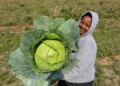
A standout example is 29-year-old Nkosiyazi Ngqulunga from Busi village, Dundee, KwaZulu-Natal. After earning a BA in environmental planning and development from the University of Zululand and struggling to find employment, he began farming on his father’s land. Ngqulunga grows cabbage, a staple in rural South Africa, using innovative and resourceful methods.
Lacking funds for fertiliser, he applies kraal manure collected locally, and without advanced irrigation, he relies on watering cans and hose pipes.
Despite these challenges, Ngqulunga’s determination contrasts sharply with the disheartening reality of many unemployed youth spending their days in taverns, showcasing agriculture’s potential to empower and inspire.

Young farmers making their mark
Young and promising farmers like Linamandla Maphosela (26) from Dutywa, Mbhashe Municipality, are emerging in rural areas. Maphosela, a graduate in animal production from Grootfontein Agricultural College (2020) and entrepreneurship from the University of the Free State (2022), turned to farming after struggling to find formal employment.
Using 1.5 hectares of his father’s land and additional land from a neighbour, he grows vegetables such as cabbage and butternut to sustain himself and earn a living.
Inspired by commercial farmer Mr Malgas, who provided him with an internship, Maphosela gained valuable experience managing irrigated cabbage crops. With earnings from the internship, he invested in sheep heifers and began practising fat lamb production on communal land – an impressive feat given the challenges of land scarcity, disease, and mating control.

Maphosela’s story highlights the significance of role models in encouraging youth to pursue agriculture. Many young people lack exposure to successful black commercial farmers in their communities, seeing only subsistence farming.
While many other young farmers, including women, remain unacknowledged, platforms like Food For Mzansi are shedding light on their stories, giving a broader view of youth involvement in agriculture and its transformative potential.
Supporting serious young farmers
Serious farmers like Ngqulunga and Maphosela deserve prioritisation in government support programmes. While group farming is often funded, it rarely proves successful due to social dynamics and inequality. Many group projects falter, as they are sometimes formed solely to attract funding.
Government funding models should allocate a fair share to individual farmers like Ngqulunga and Maphosela. Given limited resources, funding should focus on kick-starting projects by providing essential production infrastructure such as irrigation systems, machinery, and fencing. Once established, resources can target new farmers, ensuring wider support for the millions of smallholder farmers in need.

While institutions like Land Bank offer assistance, many small-scale farmers lack awareness or fail to register their businesses and obtain tax clearance certificates. Communal land tenure further complicates securing documentation, a critical challenge that requires separate attention. Addressing these issues can unlock broader support for smallholder farmers.
These young farmers offer hope for the sustainability of agriculture. They should be prioritised in land redistribution policies and receive post-settlement support and mentorship. With farming experience, education, willingness to learn, and passion, they have the right qualities. Their youth gives them time to overcome farming challenges, unlike many older beneficiaries.
- Dr Siphe Zantsi is an agricultural economist at the Agricultural Research Council’s economic analysis unit. The views and opinions expressed in this article are those of the author and do not necessarily reflect the views or positions of Food For Mzansi.
READ NEXT: Raising the bar: Dedication drives SA beer excellence
Sign up for Mzansi Today: Your daily take on the news and happenings from the agriculture value chain