Friday, November 6, 2026
SUBSCRIBE
22 GLOBAL MEDIA AWARDS
Food For Mzansi
  • News
  • Changemakers
  • Lifestyle
  • Farmer’s Inside Track
  • Food for Thought
No Result
View All Result
  • News
  • Changemakers
  • Lifestyle
  • Farmer’s Inside Track
  • Food for Thought
No Result
View All Result
Food For Mzansi
No Result
View All Result
in News

Experts warn NC farmers of below-normal rainfall this summer

As dry conditions persist, agricultural researchers urge farmers to utilise early weather warnings when choosing crop varieties and managing herd sizes

by Olwam Mnyande
6th November 2026
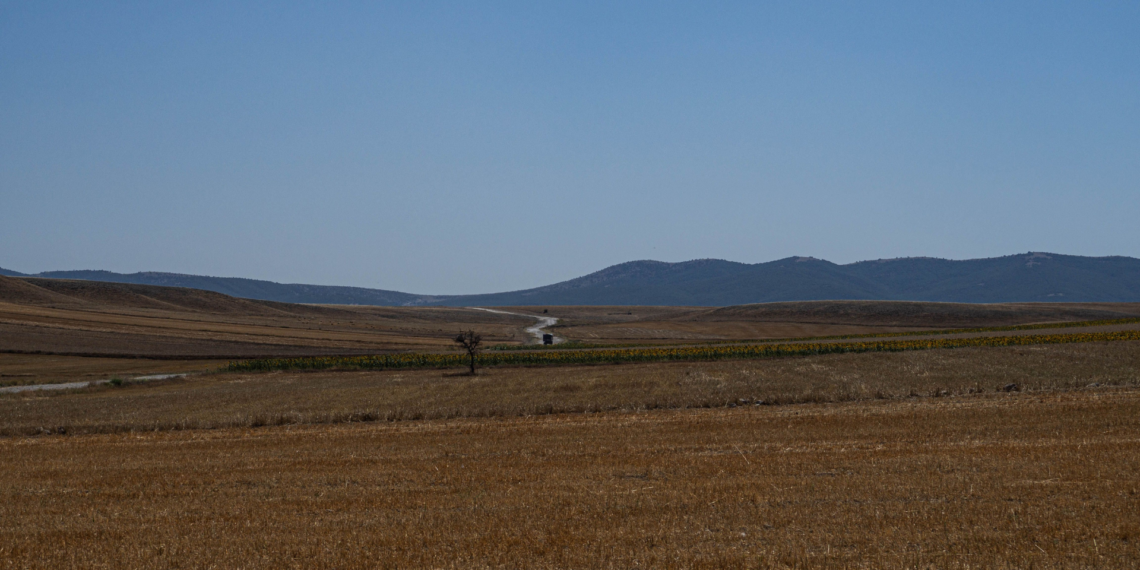
The Northern Cape is one of the driest provinces in SA; the impact of El Niño on farmers will be devastating. Photo: Pexels

The Northern Cape is one of the driest provinces in SA; the impact of El Niño on farmers will be devastating. Photo: Pexels

Share on FacebookShare on TwitterShare on WhatsApp

Climate experts from the Agricultural Research Council have warned Northern Cape farmers to prepare for severe El Niño impacts.

The Northern Cape department of agriculture, environmental affairs, rural development and land reform hosted an online webinar with farmers, researchers, and agricultural and climate experts to raise awareness and suggest strategies to prepare for El Niño in the province.

Johan Malherbe, the senior researcher at the Agricultural Research Council (ARC), explained the South African El Niño process, its impact on the Northern Cape, and the International Research Institute for Climate and Society forecast for the province.

Dealing with a long-lasting drought

“In South Africa’s case, we usually have drought conditions during our summer, especially the November to March period. As you can see, that includes the entire summer rainfall region, and the Northern Cape usually sees a negative impact as well.

“Most of the Northern Cape interior, we see about a 50 to 60% chance of below-normal rainfall, up to January next year,” Malherbe said.

Sarah Roffe, a climate researcher at the ARC, highlighted her drought research, explaining that the latest drought started in 2015.

“And we see that it is the longest-lasting drought. And in many areas, this drought lasted roughly 70 months. That is a long time to have reduced rainfall. That is a long time to worry about impact on your livestock and your range land,” she said.

She also explained how drought has affected vegetation patterns and rangelands.

“The pattern of our vegetation varies quite consistently in all of these areas. Particularly when the drought conditions are stronger, we see that the impact on our vegetation and particularly our rangeland is more intense,” Roffe said.


Related stories

  • Northern Cape youth lead the fight against water scarcity
  • Cape heatwave havoc: Farmers battle extreme temperatures
  • ‘We need feed’: NC farmers plead amid prolonged drought
  • ‘We’re just surviving’: Water woes & land limits cripple NC farmers

How dry spells impact planting decisions and livestock

Meanwhile, Gugulethu Zuma Netshiukhwi, an agri-meteorologist and ARC researcher, highlighted the importance of monitoring weather forecasts, growing seasons, early warnings on expected rains and other outlooks before planting decisions.

“This information will assist the farmers to make decisions in terms of which crops or which livestock or breed to adopt in that particular area, and also looking at the crop type, crop varieties, and the planting date.

“Right now, planting everything at one time will not be a good idea, but what is recommended is that the farmers should actually maybe consider adopting sequential or staggered planting,” she said.

She emphasised the difficult decisions livestock farmers face, such as feed and water scarcity during the El Niño event.

“Range management, this one for the parts of the Northern Cape, is very crucial. If the farmer cannot afford to maintain a huge number, we advise and recommend, not instruct. 

“We advise and recommend that maybe it will be better to sell a portion of the livestock rather than to keep livestock. When the heatwave comes, we hear of the livestock that has succumbed because of heat stroke, dehydration, parasites, and other diseases,” she cautioned.

READ NEXT: Municipal failure drives up production costs for poultry farmers

Sign-up for the latest agricultural news delivered straight to your inbox every day with Mzansi Today!

Olwam Mnyande

Tags: DroughtEl NiñoInform meNorthern Cape
Securing loans: How to improve your farm’s credit risk score
Farmer's Inside Track

Securing loans: How to improve your farm’s credit risk score

by Patricia Tembo
3rd November 2026

Boost your farm’s bankability. Learn how lenders assess credit risk, why personal records matter, and how to manage debt to...

Read moreDetails
Delheim Estate awarded Conservation Pioneer, leading in eco-friendly winemaking and biodiversity preservation. Photo: Supplied/Food For Mzansi

Wine industry leaders call for collaboration and skills development

3rd November 2026
Grain SA CEO Dr Tobias Doyer speaks about the changing face of global agriculture at the CEO session of the Royal Agricultural Society of the Commonwealth’s 2026 Commonwealth Agriculture Conference at FNB Portside in Cape Town. Photo: Supplied

Commonwealth agriculture CEOs call for shows to evolve

3rd November 2026
Three ways to study agriculture, and one day to see the difference

Three ways to study agriculture, and one day to see the difference

3rd November 2026

Five key priorities shaping the future of SA’s animal feed industry

3rd November 2026

Wine industry leaders call for collaboration and skills development

Commonwealth farming looks to partnerships for a stronger future

Brotherly hustle: Limpopo duo takes egg business to campus

Municipal failure drives up production costs for poultry farmers

Experts warn NC farmers of below-normal rainfall this summer

Join Food For Mzansi's WhatsApp channel for the latest updates!

JOIN NOW!

THE NEW FACE OF SOUTH AFRICAN AGRICULTURE

With 21 global awards in the first six years of its existence, Food For Mzansi is much more than an agriculture publication. It is a movement, unashamedly saluting the unsung heroes of South African agriculture. We believe in the power of agriculture to promote nation building and social cohesion by telling stories that are often overlooked by broader society.

Experts warn NC farmers of below-normal rainfall this summer

Commonwealth farming looks to partnerships for a stronger future

Your Sunday lunch has a story: How red meat keeps rural SA moving

Life after Agoa: ‘SA’s exclusion is not the end of US trade’

AgriSA backs Grain SA in fight over soybean pricing fairness

Meet the judges: Shoprite’s Act For Change Food Garden Competition

  • Awards & Global Impact
  • Our Story
  • Contact Us
  • Cookie Policy
  • Privacy Policy
  • Copyright

Contact us
Office: +27 21 879 1824
News: info@foodformzansi.co.za
Advertising: sales@foodformzansi.co.za

Contact us
Office: +27 21 879 1824
News: info@foodformzansi.co.za
Advertising: sales@foodformzansi.co.za

  • Awards & Global Impact
  • Our Story
  • Contact Us
  • Cookie Policy
  • Privacy Policy
  • Copyright

Chat Options

About this assistant

This feature generates automated answers summarised from Food For Mzansi articles. By using it, you are interacting with an AI system (provided by Google), not a human. AI can make mistakes. Please refer to the source articles for verification and citation purposes.

Our staff do not check or moderate Lerato’s answers in advance, but may review some later. Our journalists continue to write and edit all the articles Lerato uses as sources.

To estimate unique and returning web users, we store a random browser ID in this browser. WhatsApp users are counted by phone number. The same person using both channels may be counted twice.

I'm Lerato, your AI assistant!
No Result
View All Result
  • News
  • Changemakers
  • Lifestyle
  • Farmer’s Inside Track
  • Food for Thought

Copyright © 2026 Food for Mzansi