Water is no longer just an environmental issue in Mzansi. It is becoming one of the biggest threats to the country’s food system.
That was the message from the Water and Food Indaba, held at Cape Town’s Two Oceans Aquarium recently, where farmers, researchers, policymakers and community leaders reflected on the lessons from Day Zero while examining how water scarcity continues to affect farming, food production and communities across the country.
When water becomes a food issue
Community organiser and feminist activist Henriette Abrahams from Bonteheuwel on the Cape Flats said the challenge facing many working-class communities is not a lack of solutions, but a lack of political will.
“The state knows exactly what needs to be done. But the will is not there,” she said, arguing that communities are too often dismissed when raising concerns over basic services.
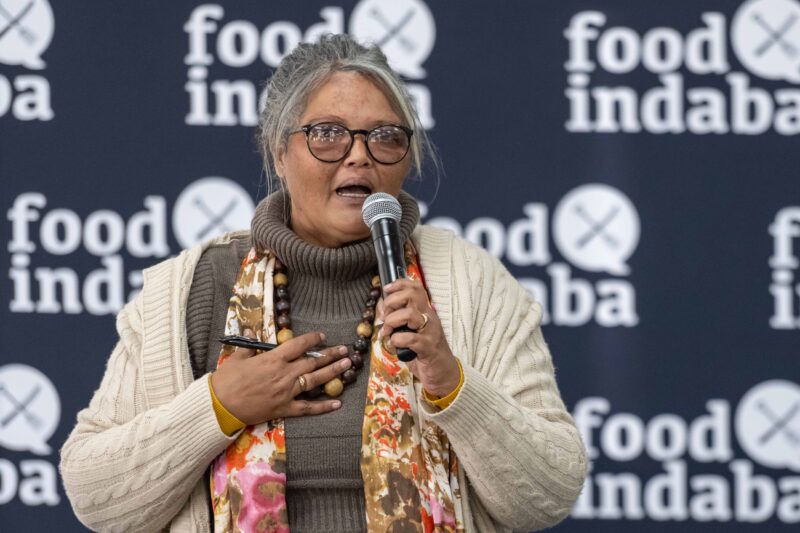
Drawing on lessons from the Covid-19 lockdown, Abrahams explained how residents turned to community food gardens after realising food parcels were unsustainable. They occupied unused land, relied on elders to teach younger generations about working the soil and revived traditional water-saving practices to keep gardens alive despite limited resources.
“We are done with promises and sticking plasters. We need real solutions, and they need to trust that we, as a community, have knowledge.”
Henriette Abrahams
Related stories
- SA’s water crisis puts farmers and food security at risk
- Rural water crisis ignored, warns expert on World Water Day
- Drought, floods, and dry taps: ‘It’s too much,’ say EC farmers
- Water woes leave EC farmers high and dry
Why location still matters
Water is more than an environmental issue; it is also a question of inequality, says Nkosikhona Swartbooi from Movement4Care.
Swartbooi argued that access to water, much like access to housing, is still shaped by apartheid spatial planning and economic inequality.
He said where people live continues to determine the quality of services they receive, from water and sanitation to opportunities that improve livelihoods.
Drawing on the Constitutional Court victory over the Tafelberg housing site, Swartbooi said the government has a responsibility to use public land and resources to progressively realise people’s constitutional rights.
“Water, much like housing, has become commodified. Access to water is determined not only by your race, but also by your class,” he said.
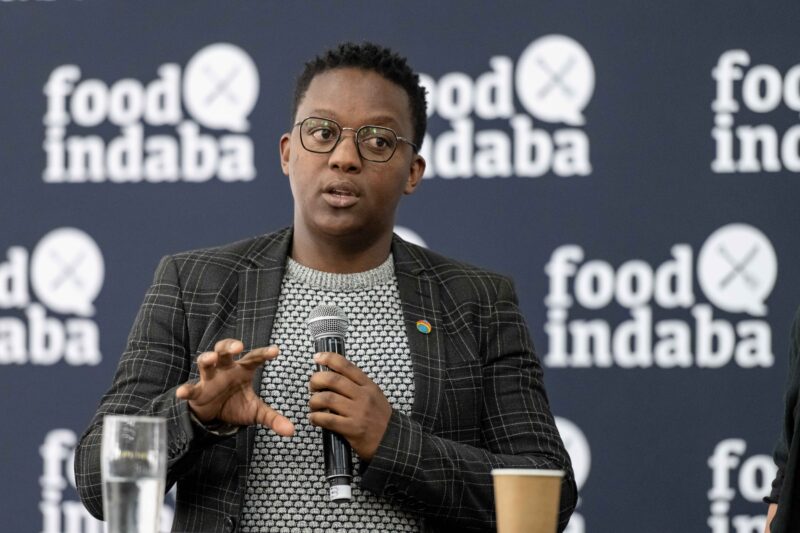
He also stressed that the fight for water cannot be separated from the fight for decent housing and basic services.
“When we fight for housing, we are not only fighting for bricks and mortar. We are fighting for everything that comes with the rights guaranteed in our Constitution.”
Nkosikhona Swartbooi
Swartbooi warned that unless inequality is addressed, many communities will continue to face barriers to water, sanitation and food security, despite living in one of the country’s wealthiest cities.
Water carried more than survival during lockdown
The struggle for water during the Covid-19 lockdown exposed inequalities that many Capetonians had lived with long before the pandemic, according to independent filmmaker Miki Redelinghuys.
Speaking at the Water and Food Indaba, Redelinghuys reflected on documenting the Reclaim the City movement through her film Mother City.
She recalled how volunteers carried five-litre containers of water every week to inner-city housing occupations after authorities cut off water and electricity, highlighting how communities stepped in where the state had failed.
Reflecting on one of the documentary’s most powerful moments, she quoted Movement4Care’s Nkosikhona Swartbooi: “Covid didn’t create inequality. It didn’t create the abuse of black bodies. It simply exposed what was already there.”

Redelinghuys said the pandemic laid bare the stark contrast between communities.
“While people in the suburbs were exchanging recipes, people in townships were worried about where their next meal would come from.”
She noted that documenting these lived realities helped expose how unequal access to water, housing and other basic services continues to shape everyday life, particularly for poor and working-class communities.


READ NEXT: SA’s water crisis: A permanent threat to farming and economy