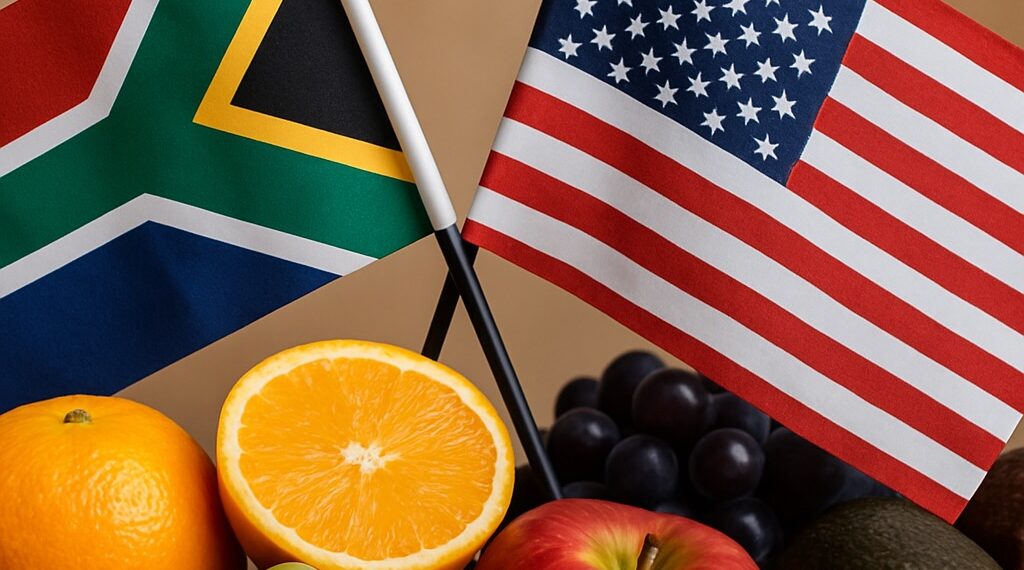
South Africa’s export sector is adjusting to a new 12.5% US tariff framework following major legal and trade policy shifts in Washington, with key agricultural exemptions offering crucial market relief.
Following a ruling earlier this year by the US Supreme Court, the 30% tariffs previously imposed under emergency powers fell away.
The decision struck down the punitive trade barriers that had hung over international agricultural trade, replacing them with a temporary global baseline tariff framework applying a 10% rate on most US imports through 25 July.
Crucially for the local sector, fresh oranges remain exempt from these duties, maintaining duty-free access to the American market and offering significant stability for growers and importers alike. However, other citrus categories including mandarins, grapefruits, and lemons remain subject to tariffs, with a proposed Section 301 investigation considering a 12.5% rate for several trading partners.
Related stories
- Macadamia growers eye better returns as tariffs ease
- SA scrambles to shield farmers as US tariffs bite
- Macadamia exports adapt to changing markets, US tariffs
- US tariff hike could crack SA macadamia exports
Navigating the new US trade baseline
Minister of trade, industry, and competition Parks Tau explained that the United States Trade Representative (USTR) ruling followed extensive written submissions, diplomatic consultations in Washington, and testimony presented at public hearings.
Importantly for the agricultural sector, the USTR confirmed key product exemptions under Annex I and Annex II, preserving duty-free access for fresh oranges, orange and lime juice, and macadamia nuts.
To address the core rationale behind the USTR determination, Tau announced that South Africa will publish a notice in the Government Gazette inviting public comments on draft regulations prohibiting the import of goods produced using forced or child labour.
“Government will continue to engage with the USTR on the Section 301 tariffs with a view to either eliminate or reduce the current tariff imposed on our country,” Tau said.
Commenting on the baseline shift, Wandile Sihlobo, chief economist at Agbiz, noted that while an increase to 12.5% is not ideal, the sector remains in a manageable position compared to previous proposals.
“The agricultural sector could still do better given where we are coming from: a 30% tariff. Importantly, the US has raised the tariffs for a range of countries, including some of South Africa’s agricultural competitors, such as Australia, Peru and Chile, who are also at these levels. Notably, oranges, fruit juices, and nuts are still exempt from these tariffs,” Sihlobo added.
Industry reaction and market competitiveness
From an operational perspective, the trade landscape comes at a time when the citrus industry has already been navigating a rough patch following severe winter flooding in key growing regions, compounding cost pressures across the value chain.
Despite these operational hurdles, the Citrus Growers’ Association of Southern Africa (CGA) welcomed the continued exemption for oranges while highlighting ongoing cost pressures on soft citrus varieties.
Paul Hardman, chief operating officer of the CGA, said while orange growers have secured vital certainty, non-exempt categories face added duties.
“Importantly, oranges remain exempt from tariffs and continue to enjoy duty-free access to the US market. This provided relief to our growers and to the US consumer market. But all other citrus categories, including mandarins, grapefruit and lemons, are currently subject to the new tariff of 12.5%,” Hardman stated.
He noted that while the 2.5% increase above the previous baseline will add pressure on local growers, it does not alter relative market dynamics against key regional rivals. “The new tariffs are also imposed on our major South American competitors – therefore it should not drastically alter the competitiveness of SA citrus in the US.”
However, Hardman argued that the rationale behind duty-free orange access should naturally apply across the full citrus basket.
“The tariff exemption logic applied to oranges should extend to other citrus categories, like mandarins, a category in which SA exports to the US have more than tripled over the past decade,” Hardman explained.
“SA citrus is counter-seasonal and complementary to US production. Restricting access risks avoidable price increases for US consumers, while our trade already sustains thousands of American jobs across logistics and retail.”
READ NEXT: Removed roof, cut water: Families accuse farm owner of eviction