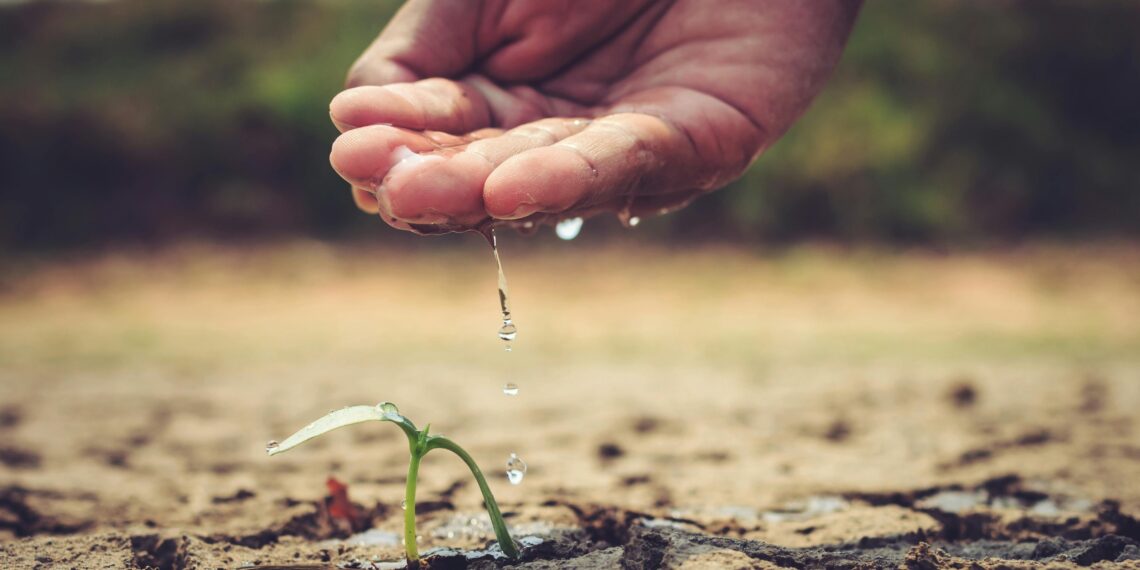
South Africa’s water scarcity can no longer be treated as a seasonal summer emergency but should be handled as a permanent, daily structural challenge that directly threatens the country’s economy and agricultural value chain.
This was the urgent message from water experts during a recent webinar hosted by the climate change division of the Water Institute of Southern Africa (WISA), which brought together key stakeholders from government and utility sectors to address mounting climate risks.
The session focused on the growing frequency of extreme, interlocking weather patterns that leave no time for systems or finances to reset. For South Africa, the stakes for the agricultural sector and food security are high due to the compounding pressures of severe natural water constraints and infrastructure demands.
Highlighting the baseline climate vulnerability of the region, Lathyrus Kgasago, a climate change specialist at Rand Water, noted that the nation’s natural water constraints are severe.
“Our average annual rain pattern is a little bit lower, if not 50% of the global annual rainfall. We also have challenges of limited underground water, aquifer capacity, and we heavily rely on other nearby countries like Lesotho [for water],” Kgasago said.
Related stories
- SA’s water crisis puts farmers and food security at risk
- No water, no farming: Broken pipes halt KZN women farmers
- Water infrastructure wins while extension officer hopes dry up
- ‘Our power, our planet’: Farmers innovate to protect soil and water
Domino effect on the agricultural value chain
As extreme events like El Niño and La Niña increasingly overlap with shorter recovery intervals, bulk water suppliers find themselves at the frontline of an operational crisis. Kgasago, who leads the strategic establishment of Rand Water’s first dedicated climate change department as a corporate coordinator, warned that climate change is actively multiplying existing systemic pressures.
“We are in the midst of the climate change challenges, which are not necessarily introducing new issues to our climate… It’s perpetuating the issues that are already there, particularly in the water sector,” he said.
According to Kgasago, the rapidly closing intervals between extreme weather events do not give businesses, individuals, or natural systems sufficient time to recover or the financial space to reset.
She pointed to specific environmental factors that trigger wider destruction. “Indicators of climate change, which are drought, high precipitation, and floods, have the potential of damaging the infrastructure and also the water quality.”
The consequences of these disruptions roll directly into the broader economy. “And the virtue of not having sufficient water to distribute to our customers, companies, households, and agricultural spaces has implications in impacting the economic value chain,” Kgasago cautioned.
To survive these environmental and population pressures, she emphasised that the sector must fundamentally alter its mindset.
“The message today is to move beyond viewing water scarcity as a seasonal crisis and instead address it as a structural requirement for adaptive and climate-resilient management. We need to operate differently. The water crisis is not only in summer; it should always be our daily bread.”
In response, Rand Water has revised its climate change policy and strategy to transition from reactive fixes to a long-term system approach, utilising scenario-based planning across the full water value chain to ensure uninterrupted supply.
Sanitation innovation in vulnerable spaces
The climate crisis has similarly forced a radical rethink in municipal management, where traditional infrastructure fails to cope with shifting climate realities. In large urban centres, the challenge is intensified by rapid migration and informal settlements located in geographically sensitive or difficult terrains.
Neden Ramsuran, manager of wastewater operations at the eThekwini Municipality, explained that conventional, water-borne sanitation systems cannot keep pace with current realities. In eThekwini alone, over 600 informal settlements house approximately 25% of the population. Using traditional engineering approaches, it could take up to 80 years to fully address these backlogs.
“Realistically, we cannot rely on traditional solutions,” Ramsuran stated, noting that climate change has added a severe layer of complexity to an already difficult social, environmental, and spatial challenge. “When we combine sanitation with climate change, it becomes not just important, but urgent.”
In response, the municipality has adopted a diversified sanitation portfolio out of pure necessity. This mixed system relies on flexible and scalable innovations, including water-borne sanitation, ventilated improved pit (VIP) toilets, urine division systems, septic tanks, conservancy tanks, chemical toilets, and various decentralised water-energy-sanitation solutions.
“There’s no single solution that works everywhere. And this is where innovation becomes essential. We need systems that are flexible, scalable, and suitable for different contexts,” Ramsuran added.
A reviewed strategy for climate adaptation
These institutional and municipal shifts align directly with broader regulatory updates driven by the department of water and sanitation (DWS). The department recently completed a comprehensive review of its national sector climate change strategy, which was approved by the minister in early 2025.
Neswiswi Azwidohwi, a climate change scientist at the DWS who spoke on policies to encourage climate adaptation and mitigation, explained that the policy review was prompted by a legislative mandate requiring the strategy to be updated every five years, alongside the department recently absorbing the national sanitation portfolio into its core mandate.
“This work is to develop or to update the national climate change response strategy… So, in order to know or to develop effective adaptation actions and mitigation actions, we needed to understand the status quo as it is now, so that we understand the impact of climate change on the water resources and the projected impact.
“We have a vision there which says a low-carbon, climate-resilient, equitable, efficient, and sustainable water and sanitation sector by 2050,” Azwidohwi stated. “And to achieve that vision, we’ve had to develop the key strategic objectives to direct the work towards developing, towards achieving that vision.”
READ NEXT: KZN’s agri gateway grows: Dube AgriZone 2 opens new doors