In the Eastern Cape, the shifting climate has become an everyday threat to the survival of small-scale farmers. While Mthatha reels from recent floods, just a few hours away, farmers in Buffalo City have been silently battling the other extreme: persistent drought, followed by floods, and unreliable infrastructure. Many have given up working the land.
Climate change has turned farming into a gamble, say crop growers from villages like Mdantsane, Berlin, and Msintsini. A few years ago, many of them were producing healthy vegetables, herbs, and fruit for their communities. Now, the land lies dry, crops wither, and local food security is taking a direct hit.
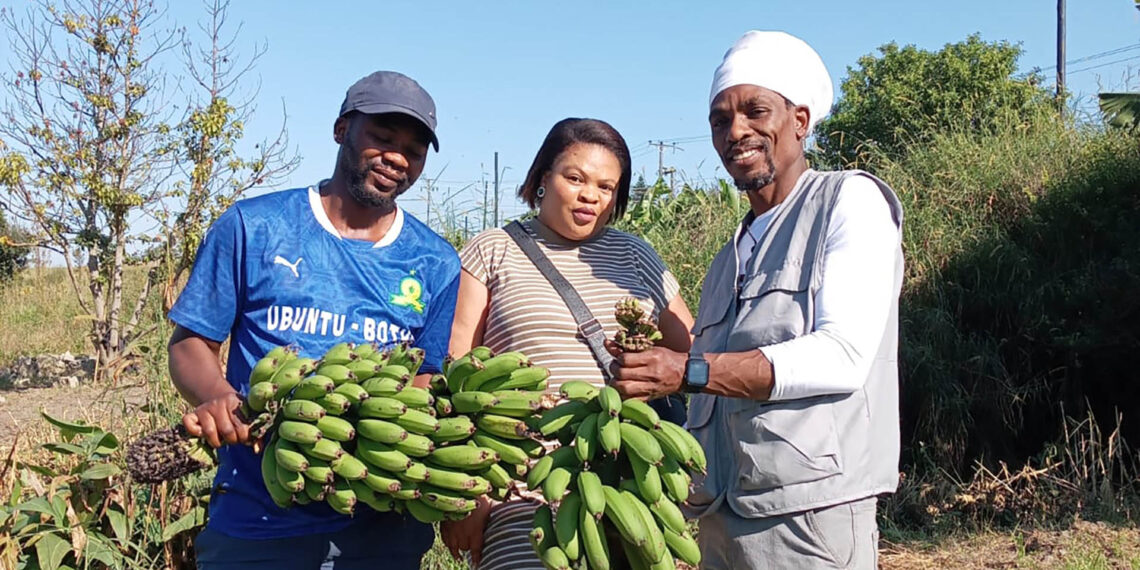
Sihle Ntozini, who farms a 1.2-hectare plot in Nu-1, Mdantsane, used to grow spinach, cabbage, potatoes, broccoli, and bananas. Now, only the bananas hang on.
“It started in 2020. When it rains, it pours – and floods all the crops I had,” he said.
A stream runs through his land, but the water is contaminated. He’s reluctant to use it, fearing for the health of his plants and the people who eat them. Like many others, Sihle feels forgotten and exhausted.
Mangaliso Balelo from Msintsini Village used to supply the local community with fresh produce, saving residents money on transport to town. But when the taps ran dry, so did his dream.
“Even though we were helping the village by providing fresh produce locally, so people didn’t have to spend money going to town, we had to close down,” Balelo said. “I thought about using the community tanks to water my crops, but that water is meant for drinking – it’s more important than my business.”
READ NEXT: Drought, rain, disease: Sheep farmers battle climate extremes
‘I’ve given up hope’
Berlin Village farmer and activist Phiwokuhle Myoyo has spent nearly a decade trying to find solutions. Since 2016, she’s dealt with taps that open for only a few hours a day. But the situation has worsened to the point where she’s thinking of giving up farming entirely.
“I’ve knocked on every door – from the extension office to Amatola Water, even the premier, Oscar Mabuyane. Nothing has changed,” she said. “If we were supported properly with boreholes, we wouldn’t be here.”

Even during periods of rainfall, the relief is short-lived. “Last year February, I felt like I was gambling with my soul,” Myoyo said.
According to the Eastern Cape department of agriculture, Buffalo City’s water stress is linked to long-term drought and the worsening effects of climate change, including high temperatures and poor groundwater recharge.
But for the farmers, the issue is simple: without reliable water, the land cannot survive. And neither can they.
READ THE FULL ARTICLE HERE.
ALSO READ: ‘We’re just surviving’: Water woes & land limits cripple NC farmers