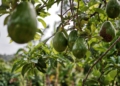
Guava production in South Africa is dropping due to a deadly wilt disease and low farm profit margins. Amid production delays, producer sentiment remains negative despite the demand for fresh guavas gradually increasing.
Guavas, also known as poor man’s apple because it is full of nutrients and inexpensive, was first planted in South Africa in 1890 by Gawie Malherbe in Paarl.
According to an agricultural economist at the National Agricultural Marketing Council, Thabile Nkunjana, guava production in South Africa has fallen slightly over the years due to a variety of issues including guava wilt disease and low-profit margins at times.
Unpredictable weather patterns are adding to the challenges and Western Cape farmers are feeling it the worst, Nkunjana said.
Excessive rains in the province, he added, have led to a five-week harvest delay in this year’s guava marketing season which normally runs from April to September.
Profits take a dip
“Farmers will be affected differently depending on where they produce. Some guava growers will incur reduced profits, especially those who are already stressed from prior season challenges and economic constraints such as interest rates.”
Other growing regions have not reported extreme concerns this season, with the exception of small production decreases. This is, however, related to other challenges, Nkunjana explained.
The biggest concern for the current season is unpredictable weather patterns that are often too cold or too rainy.
“This has a significant impact on the size and quality of the guavas,” Nkunjana said. “The impact, however, will not be uniform across guava-producing areas or farmers.”
SA a small player on the global stage
South Africa is a minor player in global guava production with exports only possible during a good year.
Between 30 000 to 35 000 tonnes of guava are produced on South African farms. This is quite small in comparison to Thailand’s 2.5 million metric tonnes or Peru’s 280 000 tonnes exported in a typical year, Nkunjana said.
In terms of exports, South African farmers export very little to none of their fresh guavas.
“Canned guavas account for a small portion of exports annually, and the bulk of guava produced in South Africa is processed, with estimates ranging from 70% to a bit more in some years. Unprocessed guava is sold via fresh produce markets across the country,” he said.
There are about 60 producers in the Western Cape. These farmers are situated in areas such as Klein Drakenstein, Paarl, Gouda, Wellington, Kraaifontein, Porterville, and Mossel Bay.
Demand is gradually increasing
According to the Guava Producers Association, fresh guava demand is gradually increasing. Over the past few years, juice and puree have been made from almost 70% of crops.
Somewhat favourable price changes have been seen and are anticipated. However, because the income per hectare is not comparable with that of other crops and because of the significant increase in the minimum wage, producer sentiment is still negative, the association said.
ALSO READ: Women’s Day: Join us at our Soul To Soil brunch
Enjoyed reading? Tell us why with a quick 5-min survey
Sign up for Mzansi Today: Your daily take on the news and happenings from the agriculture value chain.