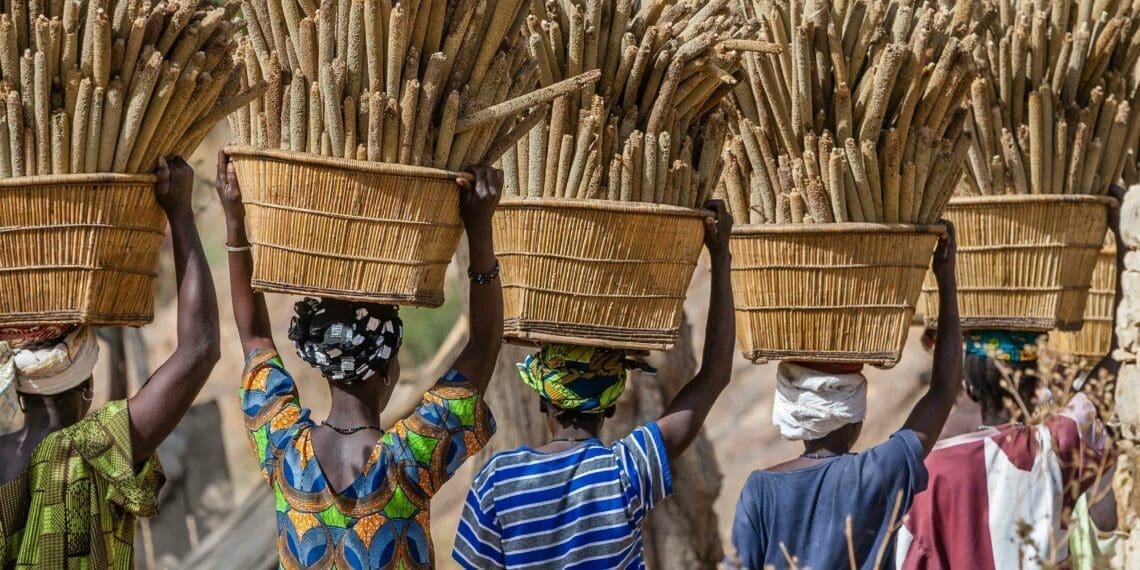
It is no secret that women are the bedrock of Mzansi’s agriculture sector. Not only are they feeding the nation, they are also ploughing the land and deserve greater recognition, believes the Small Enterprise Business Development Agency (Seda).
At a recent event, Seda’s Western Cape provincial head, Alex Qunta, underscored that gender equality is key for a sustainable tomorrow.
Women’s role in agriculture and business is often overlooked, he says. “They perform numerous labour-intensive jobs such as weeding, ploughing, grass cutting, picking, cotton stick collection, separation of seeds from fibre, keeping of livestock and milking of cows.”
Food For Mzansi got some insights on his views on women in agriculture.
Zolani Sinxo: Why do you believe that gender equality is critically important to achieve sustainability in South Africa?
Alex Qunta: As we know from history, women were not seen as people that could be in business as business was meant for men. However, they have always been the supporters of men. That’s why we are looking at gender equality to acknowledge women’s contribution to society and in business. It’s about time we stop restricting women only to the kitchen and see them as equal to men and eliminate stereotypes and discrimination against them.
How do you see the role of women in the advancement of agriculture and ensuring food security in our country?

By strengthening and supporting their businesses and to make them leaders in the sector, not just to be bystanders or consumers of goods but also producers and traders. I believe women are careful of what they consume. Some don’t sell just for profit, but to ensure that the next best person also eats quality food. We definitely need to invest more in agriculture entrepreneurs.
Food and biosecurity is critical in the times we live in. We need to ensure that we limit imported goods that are not on a high standard and support our local businesses.
How has Seda supported small-scale entrepreneurs in agriculture?
I must be honest, we are helping to some extent, but we are not doing enough. However, through stakeholder engagement and partnerships we can do more than what we are doing now. Hence, we are doing such networking sessions to establish where the need is; to bring these entrepreneurs together and to listen to their stories.
Some people don’t have the time to visit our offices or we are too far away from them. We are trying to bring our services closer to the people and that is my mandate which I seek to achieve – to reach more people to access our services and know about us.
Do we see enough women stepping up and wanting to be helped by Seda?
Yes, definitely. If you look at the women that have attended the recent International Women’s Day celebration, most of them are coming from rural areas. Meaning that women from all corners are eager to be in business and really want to make a difference in their lives and society.
How do we ensure we don’t just remember women on those occasions?
This is not our last engagement. We have programmes throughout the year that support women and entrepreneurs. We want to encourage women to make use of our services and, of course, we don’t know everyone who needs to be helped.
People must visit our offices every given day, so they may find help and support. We also try by all means to reach out, even in the most remote areas, for people to come and make use of our services.
ALSO READ: ‘Help women farmers compete in bigger markets’
Sign up for Mzansi Today: Your daily take on the news and happenings from the agriculture value chain.