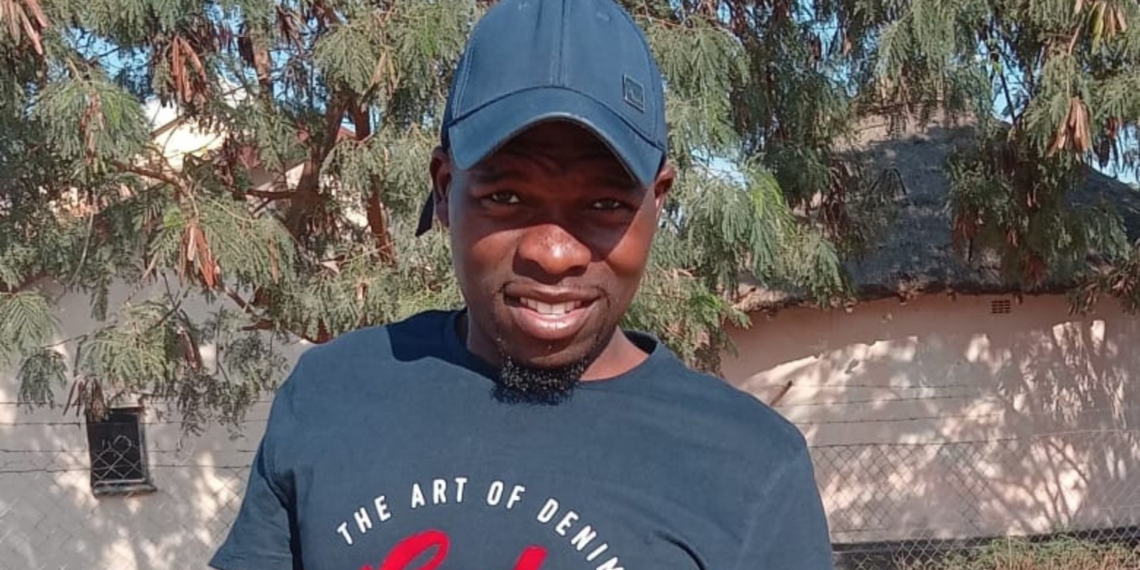
Youth empowerment takes centre stage as the Agricultural Research Council (ARC) highlights the success of its biogas initiative. Through the ARC’s specialised training, Evans Baloyi has become a lead contractor, turning cow dung into clean cooking gas and nutrient-rich fertiliser for rural families.
Youth empowerment and capacity building are central to sustainable rural development. At their core, these concepts focus on equipping young people with practical skills, confidence, and opportunities that enable them to improve their livelihoods, get employment, alleviate poverty and contribute meaningfully to their communities.
The Agricultural Research Council (ARC), through its research, innovation, and rural development projects, places capacity building at the centre of its mandate. The ARC-DALRRD Biogas Project is one such initiative, designed not only to improve household energy security but also to equip young South Africans with specialised technical skills, enabling them to meaningfully participate in the green economy.
One of the strongest examples of this vision in action is the story of Evans Baloyi, whose journey from casual labourer to skilled biogas digester builder demonstrates the transformative power of targeted youth empowerment.
When Evans Baloyi, a soft-spoken 36-year-old from Giyani in Limpopo, first joined the ARC-DALRRD Biogas Project in early 2016, he arrived as a casual labourer with moderate construction experience. Ten years later, he stands as one of the most experienced builders of the home-scale biogas digesters, a skill that has helped transform households across four provinces.
Baloyi’s journey is a story of talent recognised, hard work rewarded, and the power of skills development to uplift communities.
A builder in the making
Before joining the Agricultural Research Council (ARC), Baloyi had worked mainly on traditional building projects such as houses and basic structural works. His potential, however, quickly caught the attention of ARC project leaders.
He was offered intensive training over a three-to-four-month period, a turning point that shifted him from general labourer to a fully qualified biogas digester builder. By June 2016, just months after joining the project, he was entrusted as its main contractor. And he has remained in that role ever since.
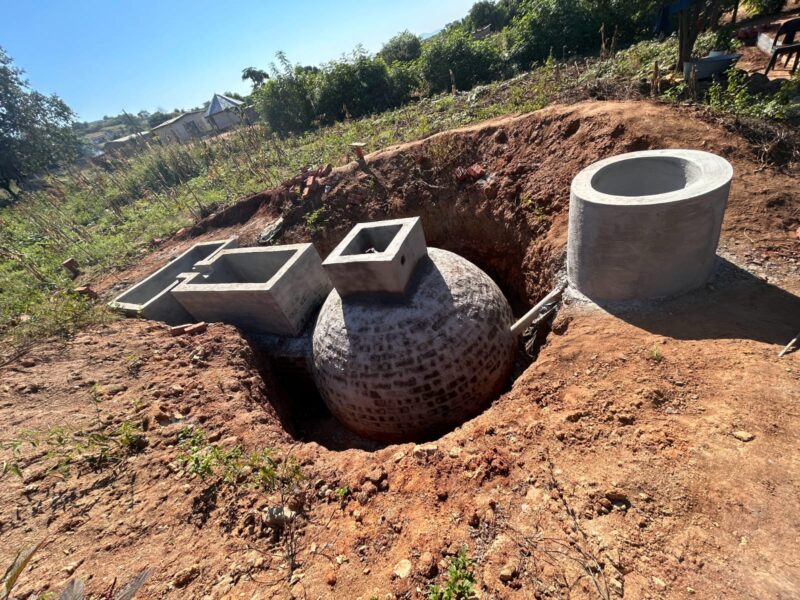
With guidance from ARC personnel, Baloyi was trained to construct a pressure-tight biogas digester using a specialised bricklaying method that relies on precision and structural geometry rather than scaffolding.
The process begins by preparing a carefully shaped, curved, circular pit that forms the foundation of the digester. Each brick must be placed with exact alignment, allowing the dome to gain its strength from curved compression. This method creates a fully sealed internal chamber that can safely retain gas and support the microbial digestion of organic material.
Related stories
- Rural and farming areas key to driving biogas revolution in Mzansi
- Shelembe family turns neglected land into thriving KZN farm
- Reviving indigenous crops in Mngeni: Smallholders grow food and hope
- Middle East war: Fuel, fertiliser hike could deal double blow to farmers
The resulting structure is self-sustaining, designed so that pressure generated inside the digester automatically pushes the digestate through the outlet without mechanical assistance.
“It was a big step for me,” he recalls. “I knew how to build, but biogas was something new. The training opened my eyes.”
Powering households, growing skills
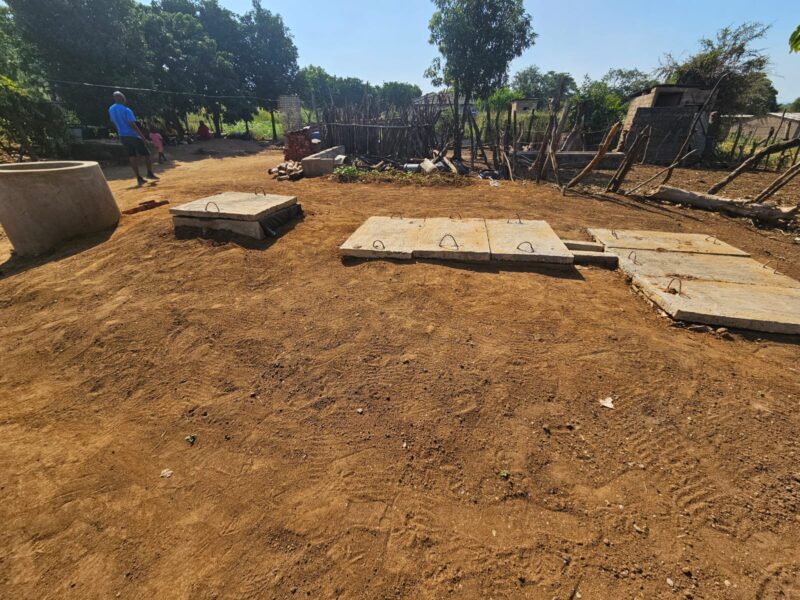
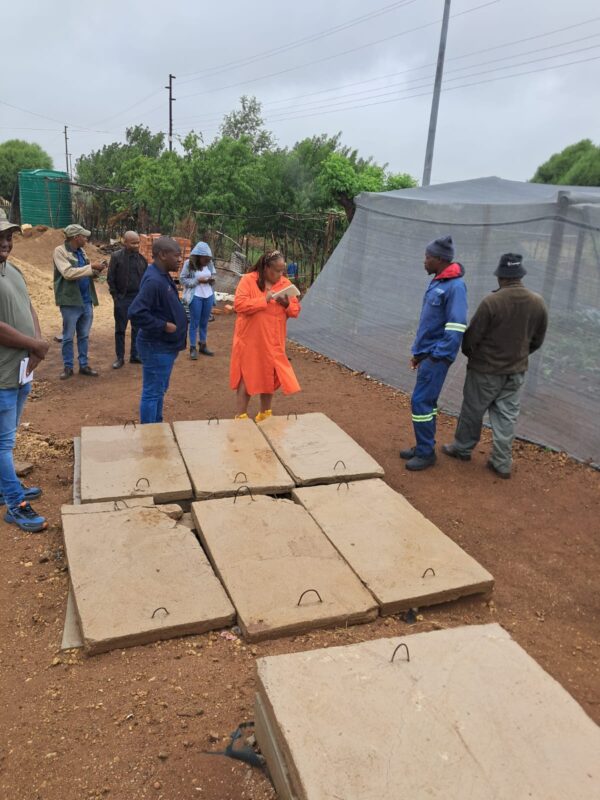
As part of the Integrated Food and Energy System (IFES), Baloyi built biogas digesters, shade-net garden structures, and rainwater harvesting systems, working closely with local labourers in each community. His work spans 26 completed IFES units across the Eastern Cape, Limpopo, Mpumalanga and North West.
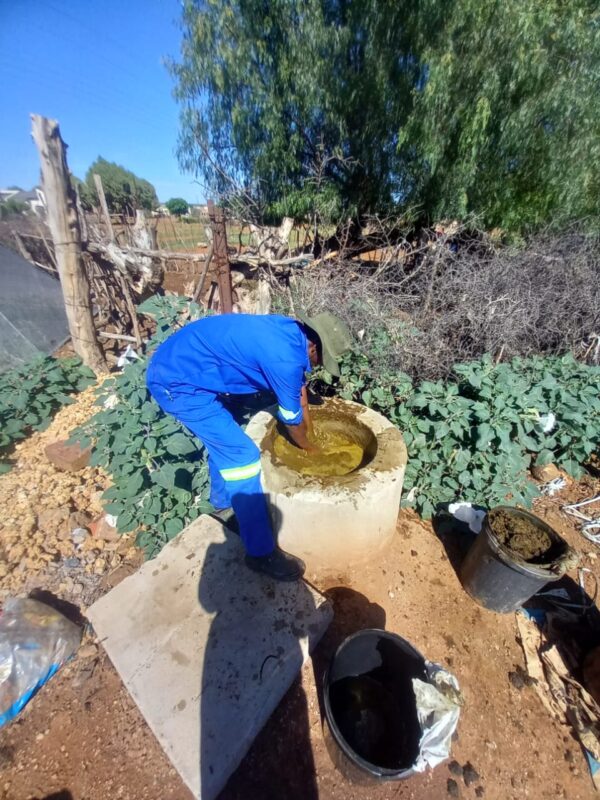
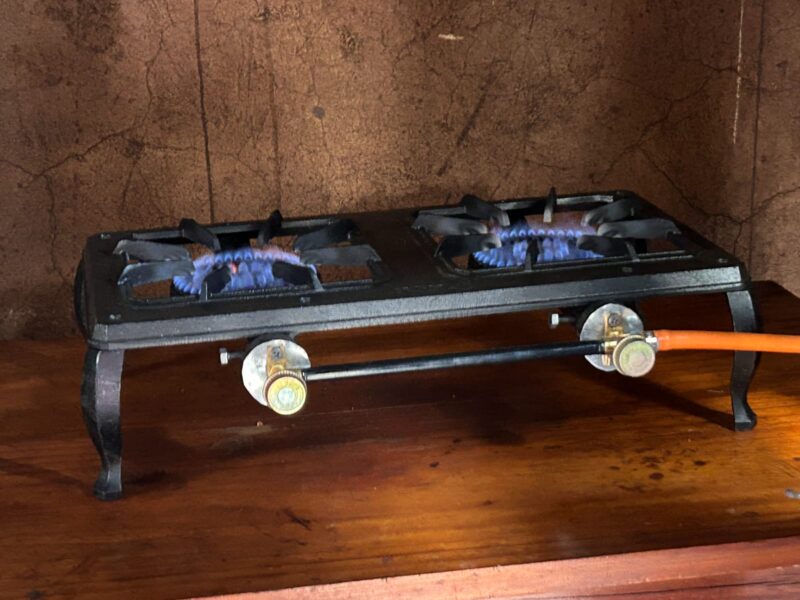
The biogas digester is a six-cubic-metre brick-and-mortar structure built underground and used to convert cow dung and other organic waste into a clean cooking gas. The leftover slurry becomes nutrient-rich fertiliser for household gardens.
“People are always excited the first time the gas lights up,” he says with a smile. “You can see the difference it makes immediately.”

Precision building, real-world challenges
Constructing a biogas digester is no simple task. Under good conditions, Baloyi completed one in three weeks, though rocky ground and bad weather occasionally stretched the timeline.
To ensure the durability of the structure, Baloyi commented that he followed strict material ratios to ensure durability, for example, two wheelbarrows of sand per 50kg bag of 50N cement and performed a pressure test at the end of each build to ensure the structure is completely airtight.
Leaks, rocky soil, late material deliveries and rainstorms all tested his patience over the years. At one point, a jackhammer had to be purchased solely for hard-ground sites. But Baloyi weathered each challenge.
“In construction, you learn to expect the unexpected,” he says. “You fix it and move on.”
Community bonds and lasting impact
Beyond technical skill, Baloyi has earned a reputation for his easy way with people. Households welcomed him warmly, and local workers often expressed eagerness to learn from him.
ARC supervisors describe him as a reliable, committed and patient person, someone who not only builds infrastructure but also confidence among the young workers he works with.
Although the construction phase of the project has ended, Baloyi continues to support households through ongoing maintenance visits, ensuring systems remain functional and safe.
“It’s not just a job,” he says. “It’s something that helps families. I’m proud to be part of that.”
A story of empowerment
The ARC-DALRRD Biogas Project set out to build more than digesters; it aimed to build skills, independence and opportunity. In Evans Baloyi, that vision has been realised.
From casual labourer to master builder, his journey shows the powerful impact of investing in people.
The project team acknowledges and appreciates the funding and support provided by the national department of agriculture, land reform and rural development (DALRRD), which made this transformation possible.
- Perm Mthethwa, Siboniso Nkambule, Zikhona Buyeye, Primrose Magama, Manoshi Mothapo and Mokhele Moeletsi from the Agricultural Research Council’s (ARC) natural resources and engineering unit wrote this article. The views and opinions expressed in this article are those of the author and do not necessarily reflect the views or positions of Food For Mzansi.
READ NEXT: More than just meat: Unlocking the hidden goldmine of SA cattle