Rolling blackouts are costing South Africa dearly. The electricity crisis is a barrier to growth, destroys investor confidence and handicaps almost every economic activity. It has raised input costs for producers and retailers and has triggered a new round of inflation and interest rate increases. Any solution will obviously incur costs because it will require the adoption of new technologies, such as large-scale grid-connected solar farms that are linked to battery energy storage.
But these technologies are expensive. A solar farm consisting of 50 MW of photovoltaic panels with 240 MWh of storage capacity will cost R2.6 billion. Batteries are the biggest outlay, accounting for about 40% of the total cost.
Expensive but …
A photovoltaic panel converts solar energy to electricity, which can be used to charge a bank of batteries or supply consumers directly. The batteries then supply the stored energy into the grid over peak periods.
Combining solar with storage makes it more expensive than coal – which still accounts for 80% of South Africa’s electricity generation – when comparing units of energy produced.
But this technology is affordable relative to the options consumers are already adopting in significant volumes – diesel generators or small-scale batteries coupled to inverters – as long as it is at a large scale and is used for peak power only.
I argue that South Africa can solve much of its energy crisis by building new facilities consisting of battery storage with photovoltaic panels. However, the new technology cannot be used without reform of the wholesale energy market.
Reforms to the energy market
Much of the media’s attention to the energy crisis has been focused on generation capacity or lack thereof. But there is another equally important contributor – the failure of the government to unbundle Eskom (the state-owned electricity utility) and create a market operator and a transmission system operator as independent entities.
A market operator is an energy “stock exchange”. It facilitates contracts between the energy producers, the transmission system and the distributors. Many countries in the world have already restructured their electricity supply industry to establish such a market and introduce greater competition among power producers.
The UK, Canada, the US and many countries in the European Union have undertaken market reforms like this, with positive outcomes.
South Africa indicated an intention to follow such an approach in 1998. But it has never acted on this policy. Instead, it has kept alive an increasingly inefficient and dysfunctional state-owned utility. As a result, the country has a shortage of generation capacity, a shortage of connection and transmission capacity, and a growing environmental disaster.
Blackouts have changed supply and demand
Analysis of the usage data from the Eskom portal suggests that rolling power blackouts have led to changes in the country’s energy landscape.
On the supply side, customers are increasingly using alternative energy sources. Consumers who require a stable energy supply have made alternative plans, in most cases shifting to the use of diesel generators.
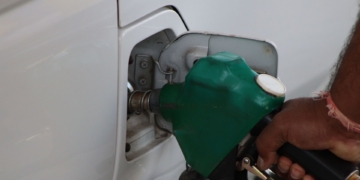
Figures of diesel consumption are not available, but, based on the electricity shortfall, I estimate, using the data for April 2023, that the additional diesel usage, excluding Eskom and the independent power producers, was about 660 million litres per month, which is almost the same as the amount used by the whole transport sector.
On the demand side, the blackouts have led to shifts in the use of grid electricity at different times of the day/night cycle. This has been driven mainly by the use of lithium batteries. Eskom is already reporting that there is an added demand of 1.4GW to recharge battery storage, or about 5% additional load on the grid.
The costs of small-scale solutions
The cost of a battery-plus-inverter system to meet the needs of an average household under Stage 4 load shedding – which is about 6 hours of outages every 24 hours – is about R100 000 to R150 000 (about US$5 000 to $7 600).
At current interest rates, and assuming an average energy consumption of 15kWh per day and an Eskom rate of R2.75 per kWh, the net cost will be R6.10 per kWh. This makes it more expensive than diesel.
Back-up power from an 8kVA diesel generator, using the same set of assumptions, will cost about R5.20 per kWh, including diesel and capital charges.
The installation of 1.4GW of battery capacity nationally confirms that there is already a market for the purchase of energy at a higher cost. Energy security is a necessity for many businesses, especially those operating cold storage or essential equipment.
The costs of large-scale solar with batteries
In a recently published article, I set out what the landscape might look like if South Africa implemented a plan to balance renewable energy capacity and time-of-use tariffs, and ended Eskom’s monopoly.
Customers could pay different rates depending on the time of day when they used electricity.
For my article, I used a simple model for the South African energy grid and considered the optimal configuration for a photovoltaic/battery storage facility which could provide peak power of 6GW, which is about 20% of the total demand.
It concluded that the grid would need an installed photovoltaic capacity of 18GW, coupled with a storage system rated at 3.7GW/10.4 GWh. The solar facility would pay for itself if a time-of-use tariff of R3.50 per kWh, almost double the present tariff excluding network charges, could be levied.
But this would require ending Eskom’s distribution monopoly and the establishment of the market operator. Different tariffs would be the result of competition between different players.
A three-step plan
The analysis suggests that it would be possible to solve the peak power problem in three steps. Firstly, unbundle Eskom and establish the market operator, secondly use the bail-out funds to build connection capacity, and thirdly, use the market operator to build large-scale photovoltaic/battery capacity. Market reform has been on the policy agenda for nearly 25 years. But little real progress has been made. South Africa should stop going around in circles. It needs to take a straight line in the fast lane.
This article first appeared in The Conversation and was written by David Walwyn.
READ NEXT: Grab indaba tickets before they’re gone
Sign up for Farmer’s Inside Track: Join our exclusive platform for new entrants into farming and agri-business, with newsletters and podcasts.