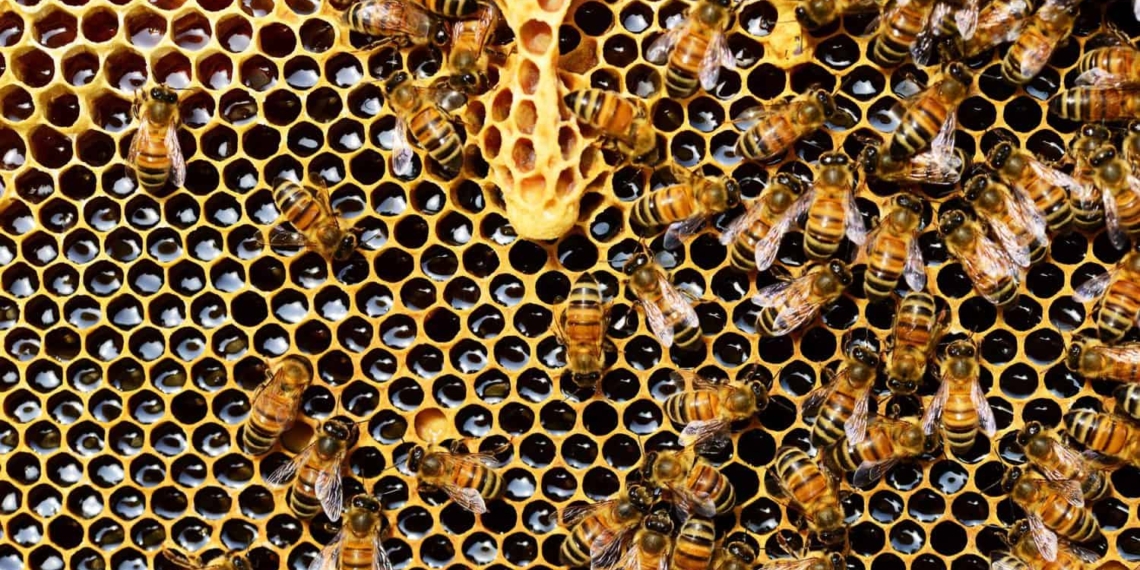
 Honey-lovers, did you know that we don’t have a traceability system that helps ensure the quality of what you buy? South Africans consume much more honey than we produce locally, which means there is huge growth potential for the Mzansi honey industry. Unfortunately, it also means most of us consume the imported stuff, which is often diluted with corn syrup.
The honey industry is relatively small, both globally and domestically in South Africa as compared to other animal sectors. The average annual honey consumption in South Africa is 5000 tons, while the local production amounts to 2000 tons, implying the country is a net importer of honey.
As more people develop healthy eating habits mostly made from natural remedies, demand for honey and other products from beehives are increasing. This has resulted to supply deficit of approximately 3 000 tons annually. At the same time, it creates a lot of room for investment in the South African bee farming industry. The majority of South Africa’s honey is imported from China.
In 2018, South African imports of honey from China amounted to over 80% of the total honey imports. The developing honey market in South Africa offers an excellent opportunity for farmers to enter the agricultural value chains, however, the imports from China and other countries are somewhat depressing the market price and affecting the profitability of the domestic producers. Moreover, the quality of honey imported into the country is considered substandard as compared to locally produced honey, which further distorts the domestic market prices. This article seeks to raise awareness on the business potential for honey in the country. The domestic market is still relatively young and a couple of production measures such as traceability needs to be strengthened in order to grow the industry.
The importance of traceability in the honey value chain
There have been several reports from markets and producer organisations suggesting that honey imported from China is mixed up with corn syrup, which raises questions about the quality of honey consumed in South Africa. Honey is ranked in the top 10 products susceptible to food fraud, which raises concerns over the originality and authenticity of the honey consumed in South Africa and in the world’s largest honey consuming countries like Germany and the US.
Therefore, consumers have the right to know what they are eating because honey is an easily adulterated product and difficult to detect on the shelf. Hence, traceability is a very important aspect within the supply chain that allows a company to track the origin of a product from the beginning to the end consumer.
Currently, there is not much control on traceability particularly when honey is imported. You may find out that you may know initially where honey has been produced at the origin, but when it gets to the buyer, the honey from different origins is mixed together and you lose traceability.
Furthermore, you might also find out that its packed in South Africa, but where it comes from you don’t know. On the other hand, it has been reported that currently there are no laboratories recognised under the SA national accreditation system able to do what’s commonly referred to as C4 sugar level tests to work out the adulteration of honey. In 2017 a sample of eight honeys were sent abroad to the laboratory for C4 sugar levels, six were found to have exceeded the international limits of 7% sugar levels. Therefore, consumers are at a risk of being dumped with adulterated honey due to a lack of a national body in enforcing these standards.
The bottom line
Perhaps the only guarantee that South Africans have as to the quality and source of honey is when there is a guaranteed traceability sticker on the lids or the bottles of the honey. Honey-lovers need to have a brand trust, trust in the company that sells the product. Therefore, the traceability system is the solution to the problem of information asymmetry. It can be helpful in the production of honey to ensure the food safety of the product. This situation is impacting on the stability of the beekeeping industry in South Africa and the health of our honey bees too. Lastly, all imported honey needs to be irradiated by law, to control diseases.