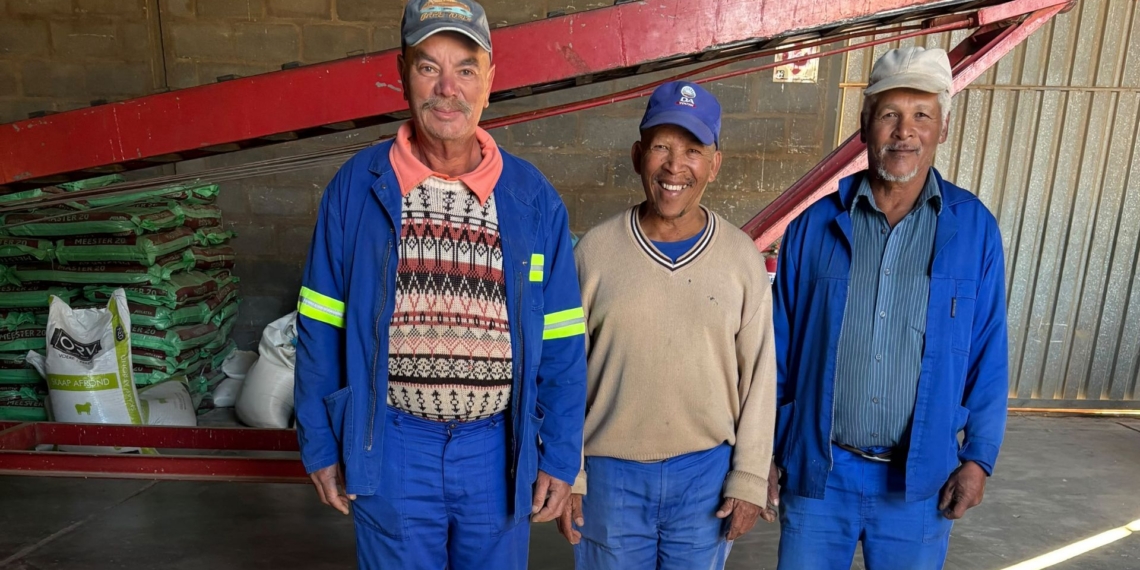
As drought continues in Loeriesfontein, 104 small-scale farmers received significant livestock feed support to help with increasing feed costs.
Drought in the Northern Cape has reduced water supplies in rivers, dams, and underground sources. Farmers are especially affected because drought causes crops to fail and reduces grazing for livestock. Many communities also can’t access enough clean water for households and businesses.
Through two farmers’ unions representing small-scale farmers and the local enterprise development initiative, farmers received support within three months.
Farmers received 50kg packs of maize, pellets, protein supplements containing energy and minerals, and other support to help with livestock nutrition.
These organisations ensured early and fair distribution of livestock feed support based on the farmer’s needs, how much livestock each farmer has and how much support is needed on that farm.
Related stories
- Cape heatwave havoc: Farmers battle extreme temperatures
- Record farm exports overshadowed by growing drought disaster
- ‘We need feed’: NC farmers plead amid prolonged drought
- SA soybean industry fights back after drought
Lifeline for Loeriesfontein livestock farmers
Gwynne-Lee Borcherds, a social programme manager at Khobab Wind, highlighted the importance of livestock farming in Loeriesfontein and how funding can help farmers with drought challenges.
“Loeriesfontein is well-known for its livestock industry. By helping farmers maintain healthy livestock during challenging periods, we are contributing to the sustainability of livelihoods that the broader community depends on.
“These initiatives can assist in ensuring that there is a long-term goal for emerging farmers in accessing markets, larger herds, more agricultural opportunities and expanding their small farming businesses,” said Borcherds.
One beneficiary farmer expressed his gratitude, saying, “We are incredibly grateful for the feed. We could not have asked for better support. With the drought conditions we are facing, we would have really struggled without this assistance.
“The support came at just the right time, and we are truly thankful. We simply cannot afford to buy feed ourselves.”
READ NEXT: Farmers forced to cut jobs as operational costs skyrocket