Phetole Raseropo didn’t get into farming by accident. Growing up in Tladi, Soweto, he spent his childhood selling avocados just to make a plan. That street-level trade is what led him to study microbiology and botany, and later establish a flourishing agribusiness.
Raseropo’s first enterprise, Evergrow, failed in 2018 due to a lack of a solid foundation and proper contracts. However, he took those lessons and started again in 2024.
Now, with P Agricultural Group, he focuses on the basics: seedlings, crop production, and community.
Learning from the ground up
While living with his grandfather, Alfred Manoko, Raseropo often found himself short of lunch money. His grandfather’s solution was simple: take avocados from the tree in their yard and sell them to his teachers.
Trading that fruit for pocket money gave him his first taste of independence and a love for working with crops.
“That tree was my first office,” Raseropo says. “It taught me that if you have something good to sell and you’re ready to put in the work, you don’t need a fancy setup to get started.”

This path led him to graduate with a degree in microbiology and botany in 2016 at Fort Hare University. His passion grew when he started as an intern and later worked as a site supervisor for Inmed South Africa.
While working on the ground, Raseropo noticed many farmers struggling to identify plants or pick the right cultivars.
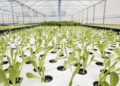
In 2019, during a field day in Zuurbekom, he saw the gap and decided to use seedlings as more than just a product; they became a tool to teach farmers how to handle diseases and grow for the actual market.
Related stories
- Soweto residents turn dumping site into food haven
- Soweto couple conquers hunger with community farm
- Former Soweto DJ finds rhythm in sustainable farming
- Betty Nkoana’s gardens bring hope to struggling families
Scaling and community impact
Raseropo founded P Agricultural Group after repurposing Taupedi HP, a school in his area that had been closed for 20 years.
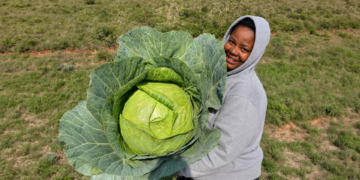
He turned the 25 000m² site into a hub for spinach, tomatoes, cabbage, peppers, and seedlings. The business now employs 16 people, with six permanent and ten temporary staff.
The business scaled fast. By 2024, P Agricultural Group was already planting over one million seedlings and partnered with Seriti to plant 32 000 seedlings in a single hour.
The momentum continued into 2025, when they took third place nationally in the Shoprite Act for Change garden competition. That same year, the group sold two tonnes of peppers directly to their local community, proving that their model of high-volume, local production actually works.
“Our community initiatives are about more than agriculture; they are about impact mostly,” Raseropo says. “We show participants that there is no business without community.”

He adds that impact is visible in people like Kopano Maema, who started as a volunteer with them and is now studying accounting science at Wits University.
The group also works closely with Phiri Special School. Every week, they visit the school to give students with disabilities practical, hands-on lessons on growing their own food.
Building a farming system that lasts
P Agricultural Group has grown its partnership with Inmed South Africa. The business keeps running by using a mix of the money they make from selling seedlings, doing contract work, and getting support from big companies.
“Most importantly, we build systems that allow the garden to sustain itself through local participation and shared ownership.”
Phetole Raseropo
The business focuses on fast-growing crops like spinach and cabbage to meet market demand and local nutrition. By producing their own seedlings, the group also acts as a guide for other farmers who don’t have access to technical advice.
Raseropo explains that land ownership is a major problem. Without a large piece of land that he actually owns, he is limited in how much he can grow. Having his own land would mean he could hire more people and reach farmers who are further away.
Reliable water is another necessity. While the business is moving, a borehole is something he still needs to keep production consistent.

The weather also dictates the work. From January to February, the climate in Johannesburg often messes with the crops, he explains, so he doesn’t produce during those months.
Raseropo says that having the right infrastructure to grow crops all year round would save the business.
“We want to influence how young people see farming and show that sustainable food systems can drive real economic change.”
Their goal is to turn P Agricultural Group into a leading seedling supplier using agritech to create jobs and food security in any community.
READ NEXT: Agrolimo Farms: Tebogo turns schoolyards into Soweto’s pantry