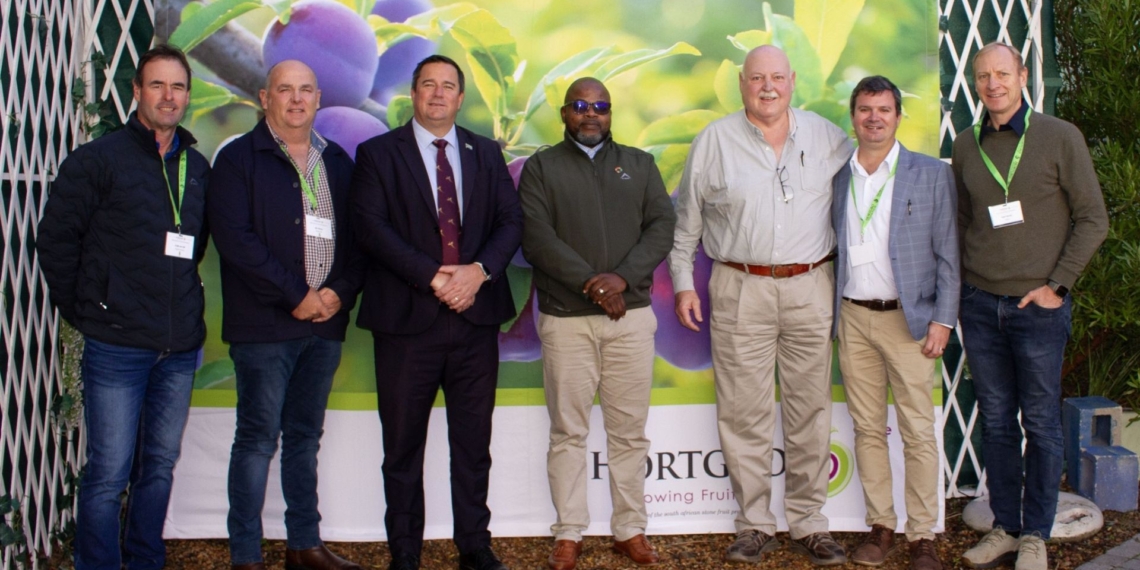
During this past week, Hortgro held a series of events with industry leaders, government officials and decision-makers to engage on pressing matters and opportunities in the fruit industry.
In his keynote address, agriculture minister John Steenhuisen said the industry was operating at the front lines of change as it deals daily with shifting climate conditions, increasingly complex export requirements, evolving consumer expectations, logistical pressures, technological disruption, and fierce global competition.
Despite all of these challenges, he added, it remains one of the most dynamic, resilient and internationally competitive industries in South African agriculture.
“Importantly, it is an industry whose impact extends far beyond orchards and pack-houses. The deciduous fruit industry sustains more than 302 000 jobs across primary agriculture and agri-processing and contributes to a broader horticultural economy worth over R147 billion nationally.
“That is not simply an agricultural statistic. It is a social and economic reality for hundreds of thousands of South Africans. Across the Western Cape and Eastern Cape, this industry is one of the great anchors of rural economic life,” he said.
Sustaining livelihoods in a changing climate
Steenhuisen commended local fruit producers and stated that they produce world-class fruit. “They are building globally competitive value chains that sustain livelihoods, generate foreign exchange earnings and position South Africa as a serious agricultural exporter on the international stage.
Related stories
- Hortgro mentor Tannie Lona helps students harvest their potential
- Youngest Hortgro hotshot takes transformation to heart
- Infrastructure crisis deepens strain on storm-battered fruit farmers
- Tongaat Hulett: Farmer-led group forms as liquidation looms
“That success did not happen by accident. It happened because this industry invested heavily in organisation, research, innovation, quality standards and collective action.”
The minister further noted that climate change is no longer a future challenge for agriculture. “It is already reshaping production realities today. The South African fruit industry is particularly vulnerable because deciduous fruit production depends heavily on reliable winter chilling, predictable flowering patterns, irrigation stability and export-grade quality standards.
“That is why science and research are becoming more important, not less. One of the reasons South Africa’s fruit industry has remained globally competitive is because this sector has consistently invested in innovation and scientific capability. The programme for this symposium reflects exactly that reality.”
New boss takes the reins
Meanwhile, on the sidelines of the symposium, Hortgro announced the appointment of Jacques du Preez as its new chief executive officer, effective 1 August 2026. Du Preez succeeds Anton Rabe (Hortgro executive director), who is retiring.
Du Preez said he was honoured to assume the leadership role at such a pivotal moment for the industry.
“Hortgro’s strength lies in the trust and collaboration among growers, government, and our international partners. It will be difficult to step into Anton’s shoes.
“He is a true legend of the industry, but I look forward to building on his remarkable legacy and pursuing new opportunities for South Africa’s deciduous fruit sector on the global stage,” Du Preez said.
Nicholas Dicey, Hortgro’s board chairperson, said Rabe’s vision, dedication, and passion for this industry have left an indelible mark on South African agriculture.
“We wish him well in retirement and are confident that Jacques is the ideal person to carry this work forward,” Dicey said.
READ NEXT: Nyhontso outlines billions to boost land reform and viability