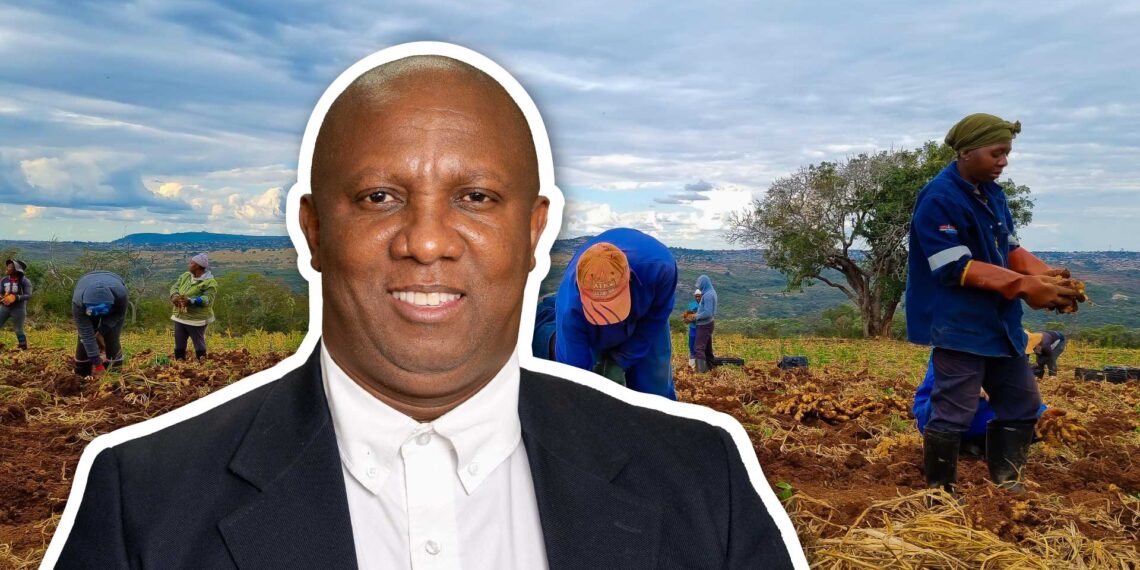
Land reform should not begin and end with farming, warns expert Peter Setou, who says restricting it to agriculture deprives beneficiaries of greater opportunities in areas such as conservation and tourism.
Setou points out that discussions about the land reform programme have disproportionately focused on how productive the beneficiaries have managed to use the land effectively for agricultural purposes, without considering the suitability of the land for non-agricultural activities.
He explained that while South Africa has an expansive land surface, data from the National Treasury indicates that only a fraction of this land is arable and suitable for agricultural activities. Furthermore, unfavourable climatic and soil conditions leave only 12% of the country suitable for the production of rain-fed crops, with only 3% considered genuinely fertile land.
Potential of tourism for land reform beneficiaries
“This creates opportunities for beneficiaries of the land reform programme to consider opportunities in non-agricultural ventures such as conservation and the tourism sector and to leverage the country’s unparalleled diverse ecosystem to offer a variety of experiences, from adventure tourism, wildlife safaris and natural scenic wonders to conservation of unique flora and fauna and cultural heritage,” he said.
The latest Economic Impact Research by the World Travel and Tourism Council indicated that the total contribution of travel and tourism to the economy is projected at about R659 billion, equivalent to 8.9% of the national gross domestic product (GDP).
Setou said initiatives that the department of tourism is undertaking to boost tourism, such as improving the visa regime and increasing the number of direct flights to South Africa, are beginning to bear fruit. The surge in the number of visitors from the countries affected by these policy changes is an indication of this.
Related stories
- Land reform needs real budgets, not just promises
- Land reform farm blossoms under Lipali’s leadership
- Land reform failure: Ideas not the issue, delivery is
- Land reform is justice, not just policy, says Ngcukaitobi
He noted that the successful implementation of the land reform programme has the potential to accelerate the growth of the tourism sector by deflating simmering fears of wanton land grabs and encouraging nervous investors to plough much-needed capital into tourism-related projects.
“Through strategic collaborations between the beneficiary communities and private investors,” Setou added, “beneficiary communities can play a meaningful role in the tourism sector and ensure that they become part of the tourism growth story in South Africa.
“Through our advisory and capacity building support services, Vumelana Advisory Fund has successfully facilitated landmark transactions that have enabled beneficiary communities to forge strategic partnerships with private investors enabling them to put their land to effective economic use in the tourism industry.”
Partnerships bearing fruit
Some of the partnerships the organisation has been instrumental in forging are the Barokologadi – ERP Melorane Game Reserve Partnership, which resulted in the conclusion of two partnership agreements with Elephants, Rhinos & People (ERP) in 2015 and 2016 for the development of tourism lodges on the land adjacent to Madikwe Game Reserve.
“Another one is Mkambati Nature Reserve – Gwegwe Camp Tourism Partnership, which is a lease-based partnership agreement that provides for the developer to lease a portion of the reserve and develop a 110-bed lodge and 10 villas at two beach locations in the Eastern Cape at a cost of more than R65 million. At the end of the lease period, the ownership of the lodge will revert to the community trust.
“The successful partnership models reinforce our conviction that the success of the land reform programme in South Africa hinges on close collaboration between beneficiary communities and private investors. Whilst there are challenges in the implementation of land reform, it is important to share success stories and lessons that key stakeholders can learn from,” Setou said.
He emphasised that the land reform programme presents synergies that should be explored, where the claimant communities have the land assets, and the private investors have the required capital, expertise, and access to markets.
READ NEXT: New study unlocks rooibos power for fish farming