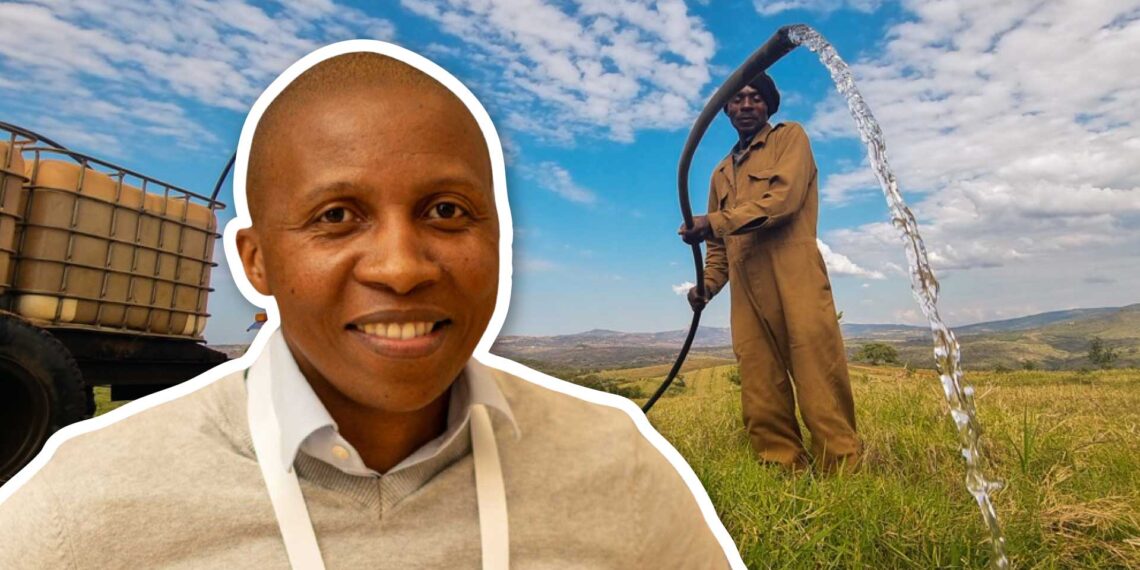
Dr Siphe Zantsi, agricultural economist at the Agricultural Research Council (ARC), explores the financial and strategic realities of land reform in South Africa. Drawing on extensive research and the Ilupsa simulation model, he highlights a critical need for realistic budgeting and phased support for beneficiaries.
One lesson we’ve learned from implementing land reform in South Africa is that it is an expensive endeavour, both financially and in terms of human resources. While there are many challenges associated with land reform, this piece focuses specifically on the importance of realistic planning and budgeting, two aspects that have not received adequate attention from commentators.
Land reform carries significant costs, usually borne by the state, as most beneficiaries cannot afford to purchase land independently. This is especially true under South Africa’s market-led land reform strategy, where the government buys land on the open market and redistributes it to deserving applicants. Once land is acquired, the government also provides funding to support agricultural production.
The Comprehensive Agricultural Support Programme (Casp) is the primary grant used to support land reform beneficiaries.
It includes several key components essential to nurturing new farmers, such as:
- Information and knowledge management
- Technical and advisory assistance, and regulatory services
- Marketing and business development
- Training and capacity building
- On- and off-farm infrastructure and production inputs
- Financial assistance
Flaws in funding criteria
However, the funding criteria for support beyond land acquisition have significant flaws. First, the support provided is not well-aligned with land acquisition. Often, beneficiaries have access to farms for extended periods without the means to acquire necessary production inputs. In response, the Recapitalisation and Development Programme was introduced to bring such farms back into production, but by then, the damage was often severe.
Second, there is no defined period for support. Some beneficiaries receive assistance indefinitely, while others continue to wait for support. This undermines the original goal: to support beneficiaries until they become self-sufficient, especially given limited financial resources.
Related stories
- Post-claim support: Why land reform isn’t just about land ownership
- Land reform is justice, not just policy, says Ngcukaitobi
Moreover, the budget for land reform has historically been minimal. In the first decade of implementation, only 0.5% of the national budget was allocated to land reform. By 2019, Prof. Michael Aliber estimated the allocation had reached only 1%. He further noted that this limited budget was compounded by unrealistic projections and targets, often based on secondary data regarding the number of beneficiaries, farms needed, and required funding.
Evidence-based modelling
In a recent study from a collaborative project between Stellenbosch University and Agroscope, a Swiss centre of excellence, we sought to improve the funding criteria and other aspects of land reform. Since 2017, we have been developing a mathematical model called Impact of Land Use Patterns in South Africa (Ilupsa) to simulate the performance of the agricultural sector over the next eight years.
We modelled, among other things, the impact of land redistribution and the expropriation of underutilised commercial farms, as well as the costs involved in redistributing land within that time frame.
To begin, we established a reasonable period for supporting land reform beneficiaries until they become independent commercial farmers. Drawing from previous smallholder commercialisation initiatives and interviews with agricultural economists and commercial farmers, we determined that a seven-year support period was appropriate.
In this model:
- Years 1–3: 100% support
- Year 4: 75% support
- Year 5: 50% support
- Year 6: 25% support
- Year 7: 0% support
This phased approach allows beneficiaries to gradually become self-reliant. A comprehensive support programme would also ensure fairness, enabling a larger number of deserving applicants to receive assistance, given the long waiting list.
Our research found that the government requires a greater budget for post-acquisition production support than for land acquisition itself. Yet, most policy discussions focus on acquiring land, often measured in hectares, rather than financing production, a far more critical component.
Land type and cost variability
Using the Ilupsa model, we estimated the funds needed to support land access based on simulations of land availability. The model calculated budgets required for renting land (equivalent to land mortgage values) and for input costs based on enterprise budgets. Our simulations suggest that approximately R2 million would be required to support a single emerging farmer from year 1 to year 8, at which point they would become self-sufficient. The total projected cost for land acquisition and production support over seven years was R482.7 billion (in 2018 values).
It’s worth noting that most of the farms commercial farmers were willing to sell consisted mainly of grazing land, which is less costly than irrigated arable land. Should more arable land enter the market, acquisition costs could rise significantly. These projections are based on real-world farm data from commercial enterprises and commercially oriented smallholders, although, as with any model, a margin of error exists.
Nevertheless, the key takeaway is that our Ilupsa model – and others like it – can provide valuable insights for land reform policymakers through data-driven analysis and strategic foresight. Ilupsa can help identify how much land can be redistributed within a certain timeframe, the number of potential beneficiaries, and the investment required. The lack of such evidence-based tools has contributed to the failure of previous targets, such as redistributing 30% of agricultural land by 1999 and again by 2014.
- Dr Siphe Zantsi is an agricultural economist at the Agricultural Research Council. The views and opinions expressed in this article are those of the author and do not necessarily reflect the views or positions of Food For Mzansi.
READ NEXT: Beyond the cellar: Where grapes grow, so do dreams
Sign up for Mzansi Today: Your daily take on the news and happenings from the agriculture value chain.