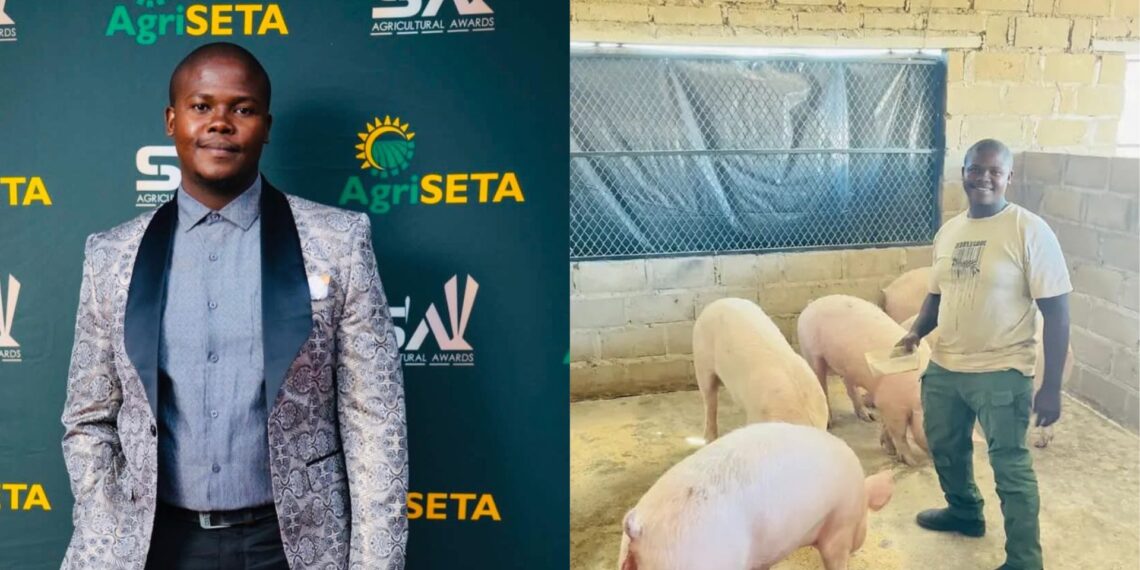
Moving around with his family taught Sinqobile Mtshali more than just new places and people. It also gave him skills he uses in adulthood, and now helps him as a pig farmer.
Mtshali loves raising animals, being independent, and building himself into the young businessman he always wanted to be.
Although his father influenced his interest in business, he still wasn’t sure which direction to take.
He started his degree in business law and management at the Durban University of Technology in 2019. His studies helped give him direction, and that is when he realised that farming could be his entry point.
Answering the call of farming
By his honours year in 2023, he started looking closely at business ideas that did not need a lot of capital and that he could relate to. Farming kept coming up. It was familiar to him because he grew up around it.
With a better understanding of how business works, he could now see how to turn farming into something sustainable.
“I always loved farming. I was encouraged to start, and I began watching videos on Facebook. That is where my interest in animal farming really grew,” he says.
In 2024, he started Mtshali Livestock Butchery, focusing on Large White and Duroc pigs. “Pigs grow fast, and that helps when it comes to profits,” he explains.
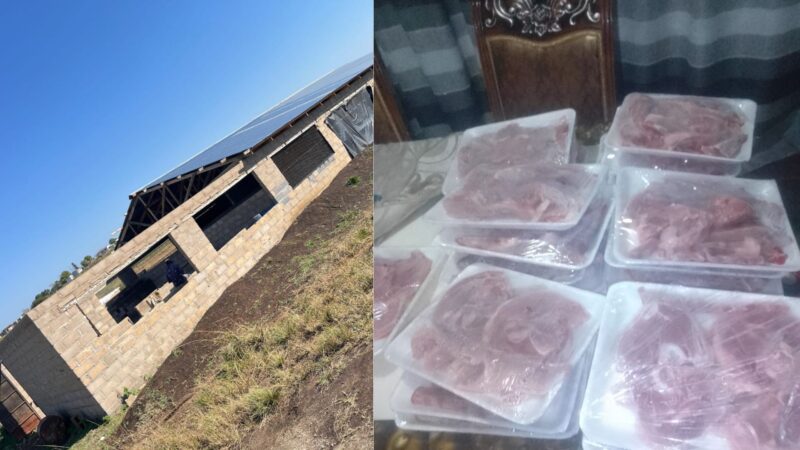
He started with R14 000, which he used to buy livestock and build a basic piggery structure. He says he was fortunate to find a former pig farmer who was closing down and selling livestock. That is how he managed to start with pregnant sows and one Large White boar.
“At the beginning, things were not good. I struggled with feed management, and I did not understand the theory behind pig farming,” he admits.
He believed he could learn everything on the ground, but quickly realised that structure and knowledge were important.
“Now things are better. My management and maintenance have improved. I understand the importance of organising feed on time and watching out for diseases.”
Sinqobile Mtshali
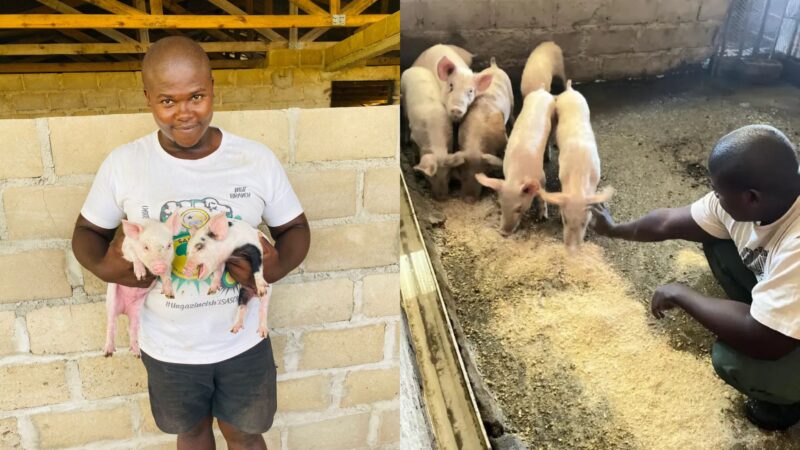
Currently, he has about 15 pigs, including seven piglets, three sows, one boar, and six crossbreeds, a mix of Hemingburg and Duroc.
Diversification keeps the business afloat
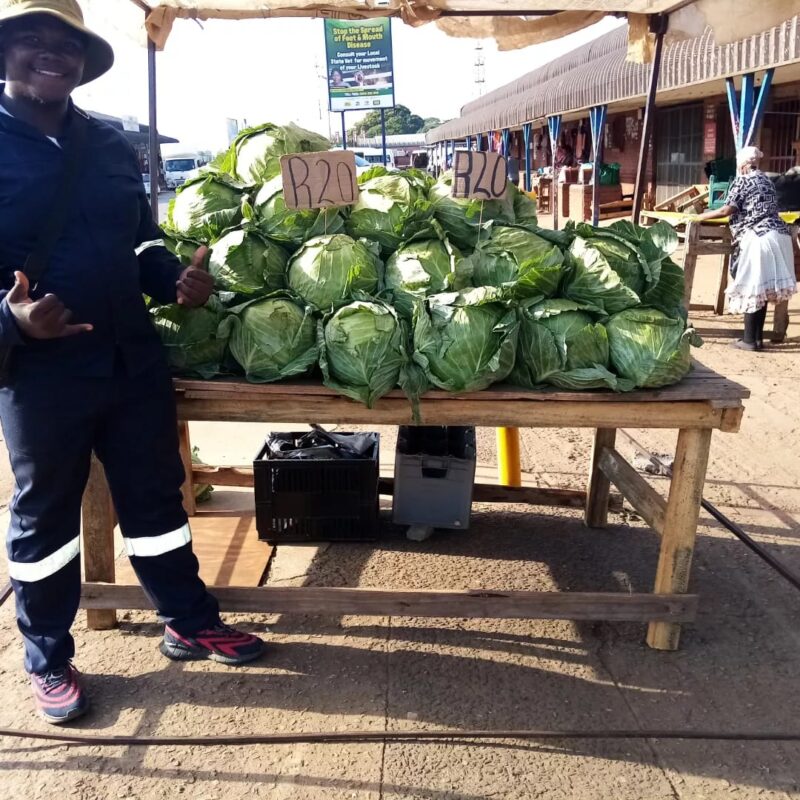
Mtshali says he decided to take a chance and add vegetable trading as part of his niche, working as a street vendor alongside his piggery business. He buys produce from local vegetable farmers and resells it to make a profit and keep cash flowing.
Related stories
- HR graduate ditches desk for piggery: Zintle builds thrivingfarm
- University student’s small piggery brings home the bacon
- Three little pigs pull ex-prisoner from the depths of despair
His day-to-day work at the piggery includes cleaning the structures and feeding the pigs.
“They usually eat in the morning and again in the afternoon or evening. Cleaning takes most of the time, especially when I do not have anyone to help me.”
He adds that pig farming becomes more labour-intensive when there are piglets or when pigs are sick. “I feed my animals pig grower feed from a local supplier. I try to manage feed costs, but I struggle during the dry season.”
He says he once tried to produce his own feed but could not continue because of the financial costs involved. “I wish that one day I could make my own feed. I believe that would improve my situation.”
When it comes to medication, Mtshali says regular deworming has worked well, and he gives iron supplements to piglets. However, some stronger medication he would like to use is expensive.
He also points out that feeding equipment, such as water pans, is costly. Although he has a water well and manually fills water for the pigs, he understands that this is not the healthiest long-term solution.
“My biggest infrastructure challenge is fencing. I am on three hectares, and this has also slowed down my plans to add crop farming,” he says.
Challenges remain, but his vision grows
Mtshali says funding for livestock farmers remains a major challenge for him. There are days when farming feels draining, but he says going back to the drawing board helps him refocus.
Mtshali Livestock and Butchery is now making sales through packaged pork products. Most of his customers are based in Mtubatuba.
His next big goal is to venture into agritourism, attracting visitors from other countries to learn about young farmers making a difference in addressing food insecurity.
He is also looking into agroprocessing, including the production of sausages, polony, salami, dried meat and other processed foods.
Mtshali adds that he hopes to secure funding so he can move forward faster with his plans. That will set him on the path to sustainable success.
READ NEXT: Engineering graduate takes shot left to farming in North West