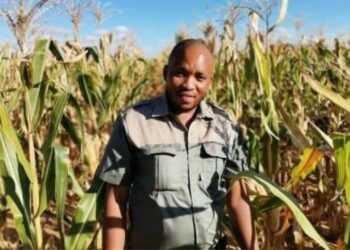
Land pollution burdens communities every day. That’s what moved Vosloorus resident Innocent Sukazi to transform a piece of trash-filled land into a thriving 2.4-hectare farm.
Leaving finance behind, he now grows vegetables and raises rabbits while mentoring thousands via free social media lessons.
Sukazi’s love for farming began early in his teenage years. “My father, Petrous Sukazi, farmed when I was young, and he used to take me along to help with weed removal in his garden when I was 15 years old,” he recalls.
Growing up, he also watched agricultural videos and photos on Facebook, asking many questions, though sometimes without finding answers. Eventually, he started experimenting with soil, teaching himself along the way.
“I didn’t know much about farming, but I believed I could do it if others could,” he says, highlighting the curiosity and determination that fuelled his journey.
One man’s trash is another man’s treasure
Two years ago, that passion led Sukazi to pivot. He left his job in the loan department at Bayport Financial Services to start selling chickens from his backyard.
Fierce competition, however, soon caused the venture to fold, but it marked his first step into agriculture.
Soon after, during his regular walks through the community, Sukazi was deeply moved by land littered with rubbish. This inspired him to approach the councillor for the unused land. He cleared it himself, started planting vegetables, and launched the Sukazi Agriculture project.
Located at the corner of Kukuku Street and Papadikota in Vosloorus, Gauteng, the project spans 2.4 hectares where he cultivates potatoes, tomatoes, and spinach.
Related stories
- Soweto couple conquers hunger with community farm
- Farming friends turn lockdown losses into a permaculture haven
- Ihawu Lesizwe: Farming co-op empowers youth, grows community
- Limpopo farmer finds peace, purpose in the harvest
His farming journey started modestly, planting 500 spinach plants on a 100-by-30-meter plot without access to water or any funding. “The only support I received was a R10 000 voucher for chickens from the department of agriculture, which lasted for three months,” he says.
This humble beginning laid the foundation for the community farm he manages today. He is now a mixed farmer, cultivating various vegetables and raising rabbits, which he sells to his local community members.
Building a farming community
Currently, Sukazi employs two full-time workers and relies on six part-time helpers, especially during the busy summer season, to keep the farm running smoothly.
Beyond farming, Sukazi reaches and empowers people across South Africa and Swaziland through social media, where he teaches farming techniques for free from the once neglected land. With over 180 people on his WhatsApp, 4.9k followers on Facebook, and 28.8k on TikTok, Sukazi provides farming lessons

“I also do live sessions every Tuesday at 8 o’clock where I teach about farming basics, which seeds to buy, and proper spacing between plants,” he explains. “I don’t face challenges with the group because I make it clear that farming is their choice. If they want to farm, I assist; if not, I don’t push. Many surprise me with the results they achieve.”
Despite his success, challenges remain. The farm depends on rainwater, as tap water isn’t always available, and the land belongs to the community and could be sold at any time. Without capital, leasing land is currently not an option. Yet Sukazi continues his journey with resilience amid uncertainty.
However, these fears do not dim his dreams. “My goal is to own tractors, a farmer’s bakkie, and farm more than 50 hectares with many cows and workers planting vegetables, but it all depends on funding,” he says.
READ NEXT: Value-added farming: Build a high-profit, sustainable business