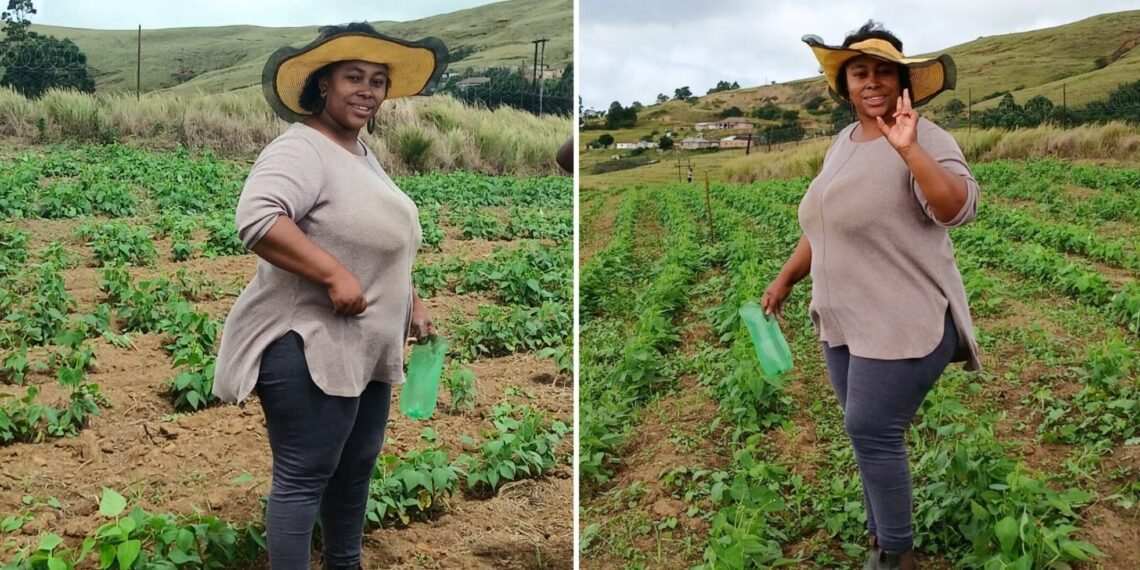
The Ntombela twins are like two peas in a pod. They wear their hearts on their sleeves for their community, they’ve both worked in banking, and now they specialise in growing yellow maize and dry beans.
Zandisile Ntombela and her twin sister Zandile Cele are the founders of Biazo K Primary Cooperative in Nkandla, KwaZulu-Natal. Their childhood was shaped by the harsh realities of women and youth constantly seeking job opportunities.
“We witnessed the alarming amounts of graduates who [were] unemployed… looking for jobs in the bank,” recalls Zandile.
Passion for the soil runs deep
Their time in the banking sector made this an almost daily occurrence. Both sisters held leadership positions as branch managers for over 14 years. While Zandile worked as a branch manager at Absa, her sister Zandisile worked as a branch manager at Ithala Bank.
Believing in agriculture’s power to transform their community, the two sisters launched their own farming venture starting with 1.5 hectares in 2019 and eventually expanded their operations to 100 hectares.
Their connection to the land runs deeper than the soil. Their grandfather, Ediman Ntombela was a farmer and instilled in them a profound love and passion for agriculture.
“With a deep-rooted understanding of agriculture, we sought to utilise it as a catalyst for change,” Zandile shares.
“Reflecting on the failures of numerous cooperatives, we recognised the need to redefine the narrative surrounding cooperative endeavours.”
Farming with a purpose
Their cooperative, located in eThalaneni, is primarily focused on plant production, specialising in dry crops such as yellow maize and dry beans.
In response to market demands, the twins are also introducing sweet potatoes and taro, a tropical root crop grown primarily for its starchy corm or underground stem, to their cultivation portfolio. They have introduced these two crops so that they can venture into agro-processing as these crops are used in baby food.
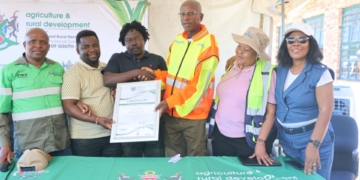
Their growth and community-minded approach have earned them acknowledgment and backing from the Ekukhanyeni Tribal Council who generously allocated 50 hectares to them.
“Our focus extends beyond mere expansion. We are dedicated to utilising our resources to benefit the wider community. With 10 hectares already fenced off, we have proposed to increase our production of dry beans to supply school nutrition programmes,” Zandile says.
“As we mark our fifth year in farming, the success of our cooperative is evident, as reflected in our employment of 10 seasonal workers. We are making significant strides towards transforming our community for the better.”
Finding silver linings in cloudy skies
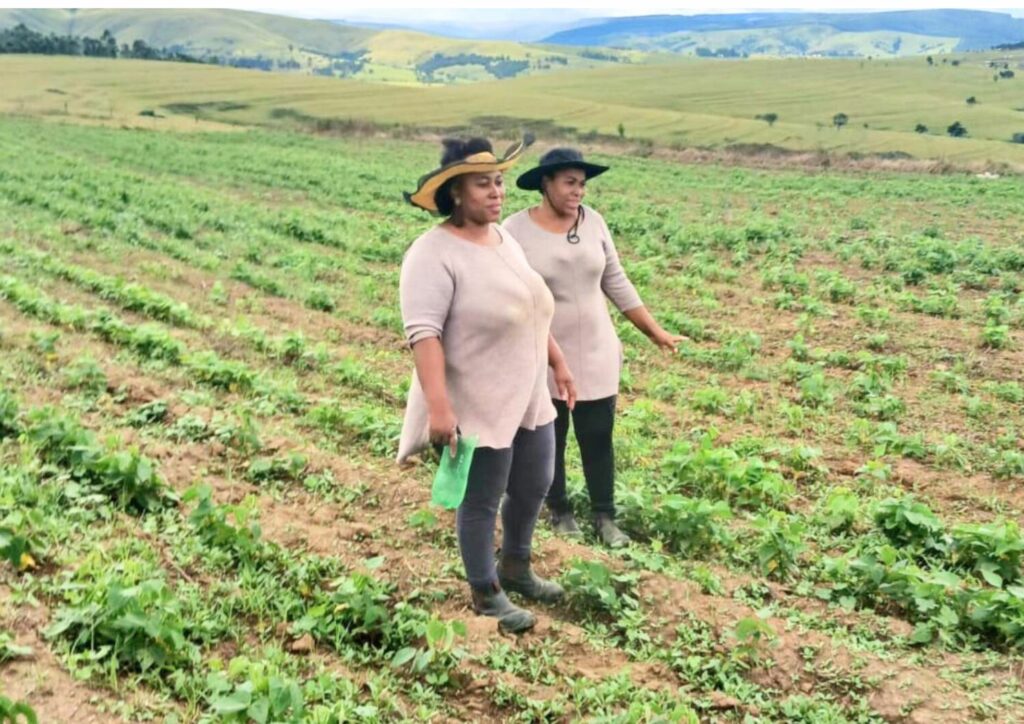
Zandile shares that she and her twin sister have encountered numerous challenges, with climate change being a significant concern. Also, operating without an irrigation system has been tricky because they solely rely on rainwater for the growth of their dry crops.
“We are acutely aware of specific planting windows that must not be missed, as unfavourable weather conditions can severely impact our yields, whether through excessive rain or intense sunlight.
“One critical setback we face is the absence of essential equipment, particularly a tractor, which is fundamental for aspiring emerging farmers like us,” she says.
According to Zandisile, their farm currently lacks irrigation systems making them dependent on rain to irrigate their crops. This is why their strategy of intercropping yellow maize and dry beans works so well.
“This method improves crop yields by more efficient resources such as nutrients and water. We have three systems helping us to fight water scarcity on our farm as we use other plants to assist other plants, namely transpiration during the day and guttation and dew [formation] during the night.”
Zandisile Ntombela
READ NEXT: From backyard grower to airline supplier: Thusini is flying high
Knowing their market
The small village town of Nkandla currently has 164 schools that have school nutrition schemes. They have already approached the sisters to supply them with 300 bags 5kg bags of dry beans every week, Zandisile explains.
Yellow maize is also in high demand in the community as most households are livestock farmers and chicken breeders, ultimately being their main market.
“On our farm, we don’t use blanket approaches when it comes to pricing. As we are social entrepreneurs, we do customer segments, and we price appropriately.
“Due to high market demand, we saw a need to develop other farmers in planting dry beans and yellow maize,” says Zandisile.
“We served Nkandla Hospital as board members where we saw a huge need as [it] has high [numbers of] infants and toddlers who are suffering from malnutrition. Sadly others even succumb to death due to this sickness,” she says.
Serving the community of Nkandla
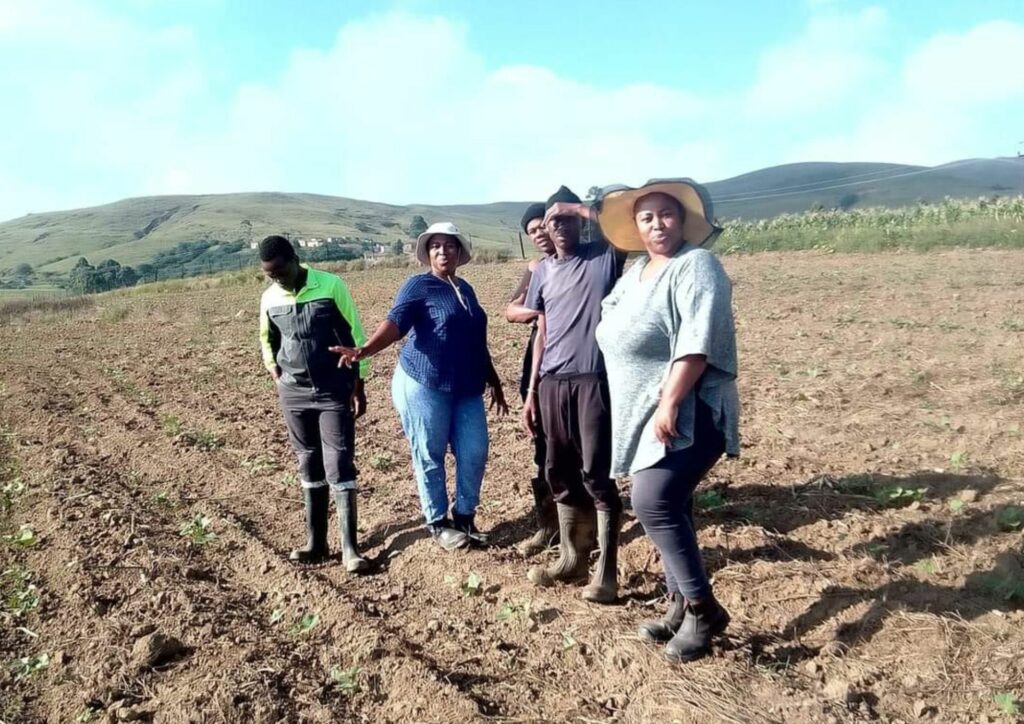
Despite their business constraints, they have explored alternative solutions, hiring more women and youth from their community, utilising hand tools to carry out essential farming tasks.
“Our farm serves as a platform for empowerment and community enlightenment. Through collective effort, we aim to inspire our community members to take control of their futures,” Zandile shares.
And while the farming twins aim to upgrade their capabilities by acquiring the necessary equipment, they are extending a helping hand to other cooperatives.
“Our goal is to contribute to the eradication of poverty in the streets of Nkandla through sustainable economic empowerment initiatives,” says Zandile.
In the meantime, every day on the farm is a breath of fresh air compared to the corporate grind of number-crunching in a suit. The farm has become their haven. They find fulfillment in meaningful work and the opportunity to connect with their community and heritage.
READ NEXT: Farming with heart: Ncongwane’s hands-on approach pays off
Get Stories of Change: Inspirational stories from the people that feed Mzansi.