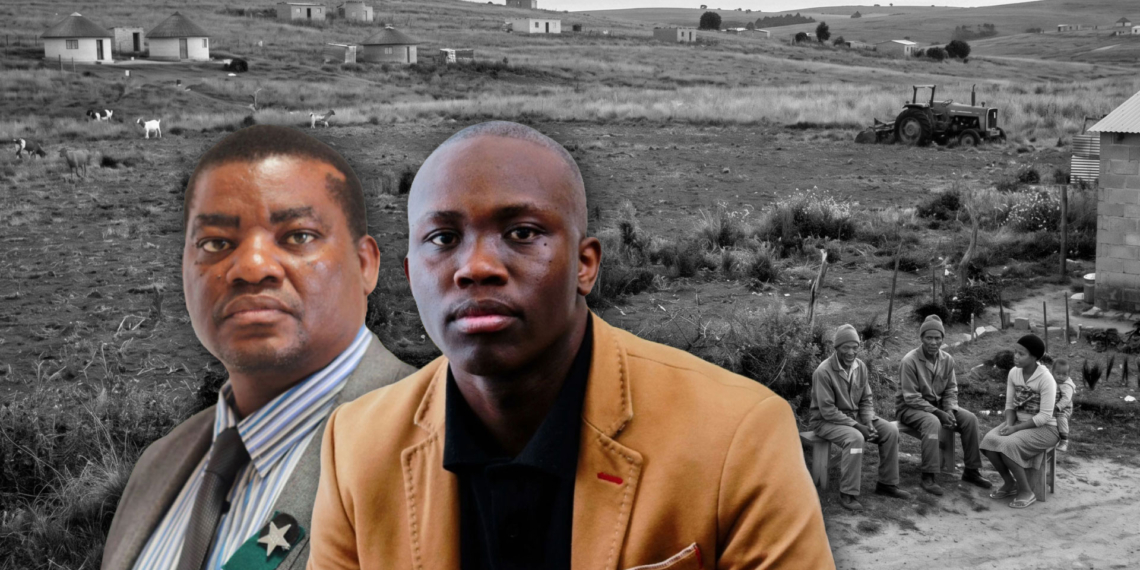
South Africa’s former homelands hold millions of hectares of fertile yet uncultivated land, trapped by insecure tenure systems, poor infrastructure, and limited farmer support. The ARC’s Papi Kubeka and Dr Joseph Kau share emerging success stories that show how land reform and innovation could unlock rural economic growth and food security.
South Africa’s agricultural sector in the former homelands presents a stark contradiction: widespread unemployment, poverty, and food insecurity coexist with vast tracts of fertile land left fallow and unused. An estimated 2.5 million hectares of this virgin land remains uncultivated.
This underdevelopment is a direct legacy of apartheid-era laws, which unequally distributed resources between small-scale black farmers and large-scale, predominantly white commercial farmers. Confined to just 13% of the country’s land, often with poor soil and far from urban centres, farming in these fragmented territories – such as Transkei, Bophuthatswana, and Venda – became a sidelined activity. This contrasted sharply with the flourishing, well-supported white commercial sector.
Since the 1990s, cultivation in these areas has sharply declined due to several interconnected factors. A primary issue is the insecure tenure system, dominated by the “permission to occupy” (PTO) granted by traditional leaders. This system offers little security, as farmers cannot use the land as collateral for loans, stifling investment in seeds, equipment, and irrigation.
Smallholder farmers also struggle to access tailored finance, training, quality inputs, and reliable markets. Existing support programmes are often unevenly distributed.
Further challenges include land degradation from years of neglect, the exacerbating effects of climate change, and conflicts arising from poor governance. Unclear roles and frequent disputes between traditional authorities, municipal governments, and communities create instability and deter investment. In some cases, traditional leaders allocate land for mining without community consent, undermining agricultural potential.
Despite this, a tide of change is emerging. Grass-roots innovation and entrepreneurship are beginning to unlock the value of these natural assets. Furthermore, legislative initiatives like the Draft Communal Land Bill from the former department of agriculture, land reform and rural development (DALRRD) are sparking renewed interest in formalising land rights in these areas.
Related stories
- New land law seeks balance between rights and reform
- Land reform: New landholders could profit from wildlife
- CPA crisis: Non-compliance drags land reform down
Glimmers of hope: Entrepreneurship turning the tide
Amidst the challenges, pockets of success demonstrate the latent potential of the former homelands. The Nemaorani Citrus project, also known as Easy Farm, is a prime example. Founded by the late agricultural pioneer Israel Nemaorani in 1990 under a PTO arrangement near Thohoyandou in Limpopo, the farm specialises in citrus and bananas. By 2017, it had 115 hectares of citrus and 60-70 hectares of bananas.
Its success was built on formalising long-term, bankable leases with traditional authorities. This security allowed Nemaorani to secure loans, transform the PTO land into a thriving commercial enterprise, and, crucially, obtain a formal title deed for his farm, all while creating local jobs.
Another significant example is the informal cannabis industry in the former Transkei in the Eastern Cape. Operating almost exclusively on communal land under PTO systems, this enterprise represents a thriving informal agricultural economy with over 80 000 small-scale producers. It generates substantial revenue and sustains rural livelihoods, proving that entrepreneurship can flourish under communal tenure. However, it also highlights the major constraint of the system: the inability to use land as collateral limits investment in improving quality, scale, and processing infrastructure.
In Limpopo, the Mopani Worm Project showcases how innovation can formalise and boost high-value informal commodities. The University of Venda developed semi-domestication techniques and helped link harvesters to formal markets, such as the Richtersveld Cooperative. Supported by the provincial department of agriculture, these interventions boosted incomes by 30% and reduced illegal harvesting by 40% in pilot areas.
Recognising these realities, some provinces and institutions are adapting. Limpopo and the Northern Cape now accept PTO documents as proof of land rights for funding applications, provided leases are long-term (10+ years for infrastructure). Financial institutions like Land Bank are also piloting “Right-to-occupy” bridging loans for community property associations (CPAs).
Transforming fallow land requires a coordinated approach
The DALRRD has recognised the intrinsic value of land in the former homelands, but regulating it has been an ongoing struggle. The Communal Land Rights Act (CLRA) of 2004 was declared unconstitutional in 2010. Since then, the Interim Protection of Informal Land Rights Act (IPILRA) has been extended as a temporary measure. New draft legislation, including the Draft Communal Land Bill and the Draft Equitable Access to Land Bill, was scheduled for publication in 2025 for public comment.
This legislative initiative is a crucial step toward economic and social stability. Its success, however, hinges on truly empowering people with secure, transferable rights, not merely entrenching unaccountable traditional authority. A core objective is to create clear pathways to upgrade PTO permits into legally recognised tenure.
Land security alone is insufficient. A viable support system for farmers is essential, including access to finance, climate-smart techniques, markets, and critical infrastructure like water, storage, and roads. This requires seamless collaboration across government departments. Development finance institutions must innovate by creating financial products that accept non-traditional collateral suitable for communal systems.
There is an urgent need to resolve governance conflicts by establishing clear legal roles for traditional leaders, municipalities, and communities to prevent elite capture. Investing in research and extension services for land rehabilitation and climate change mitigation can stimulate rural economies.
Furthermore, actively promoting and commercialising indigenous and underutilised traditional foods offers a low-input, resilient pathway to food security and economic diversity. By highlighting diverse business opportunities and anchoring them in cultural heritage, these lands can be transformed into viable economic enterprises, including through ecotourism.
Unlocking a hidden treasure
Evidence shows that fallow land in the former homelands can be transformed into viable economic agricultural enterprises. Dedicated legislation is needed to protect investments and ensure long-term, transferable ownership rights.
The upcoming Draft Communal Land Bill and Draft Equitable Access to Land Bill serve as important platforms for engagement by communities, civil society, and state entities.
Organisations like the Agricultural Research Council must inform policy to incorporate sustainable practices. Additionally, the Preservation and Development of Agricultural Land Act (PDALA), Act No 39 of 2024, provides a legal framework for preserving agricultural land while enhancing sustainable livelihoods.
With effective strategies and policies, the government can unlock this hidden treasure, creating jobs and alleviating poverty in the former homelands.
- Papi Kubeka is an intern agricultural economist, and Dr Joseph Kau is an agricultural economist at the Agricultural Research Council (ARC). The views and opinions expressed in this article are those of the author and do not necessarily reflect the views or positions of Food For Mzansi.
READ NEXT: Tomato farmers squeezed as Joburg Market leads price shocks