Thursday, January 15, 2026
SUBSCRIBE
21 GLOBAL MEDIA AWARDS
Food For Mzansi
  • News
  • Changemakers
  • Lifestyle
  • Farmer’s Inside Track
  • Food for Thought
No Result
View All Result
  • News
  • Changemakers
  • Lifestyle
  • Farmer’s Inside Track
  • Food for Thought
No Result
View All Result
Food For Mzansi
No Result
View All Result
in News

Vaccine delays frustrate farmers as FMD crisis deepens

Despite a new government task team, FMD cases are still rising in the Free State. While government plans include individual animal tracking and an overhaul of the Animal Health Act, farmers highlight vaccine supply delays, saying current production is "far too little"

by Lisakanya Venna
10th October 2025
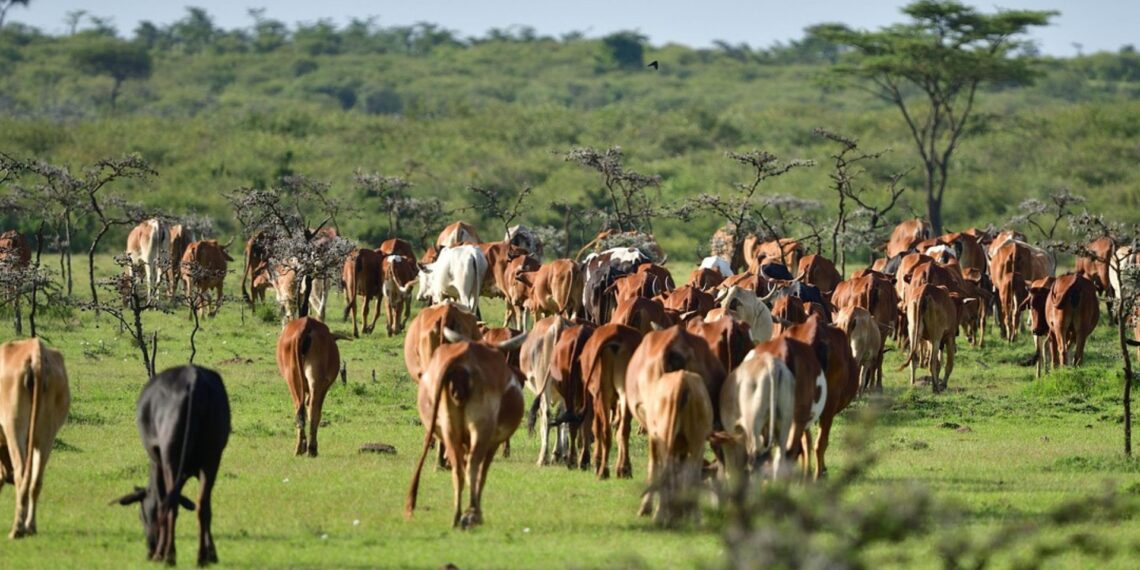
Farmers are urged to strengthen biosecurity measures to help curb the spread of foot-and-mouth disease currently affecting parts of South Africa.

FANRPAN marks 2025 with major milestones — launching its 2025–2035 Strategy, empowering youth, and driving inclusive, evidence-based agricultural policy across Africa. Photo: Pixabay

Share on FacebookShare on TwitterShare on WhatsApp

A month after the department of agriculture appointed a task team to tackle the foot-and-mouth disease (FMD) outbreak, some farmers remain dissatisfied with government efforts, calling for more decisive action and improved support to curb the escalating crisis.

Last month, the minister of agriculture and rural development, John Steenhuisen, announced a series of critical interventions aimed at curbing persistent FMD outbreaks across several provinces, including the appointment of a dedicated task team.

He revealed that “the task team will ensure better coordination, enforcement and accountability in tackling animal disease outbreaks.”

Is FMD out of control?

Notwithstanding the appointment, FMD cases have continued to surge, with four new confirmed outbreaks in Kroonstad, Viljoenskroon, Edenville and Cornelia/Frankfort, bringing the total to 42 confirmed infections in the Free State alone.

In light of these ongoing challenges, the deputy director-general (DDG) for agricultural production, biosecurity and natural resources management at the South African department of agriculture, Dipepeneneng Serage, told Food For Mzansi that vaccination is one of the critical measures being deployed as an immediate and short-term strategy. 

“Since the appointment of the task team, private farmers and commodity organisations will be allowed to acquire vaccines to build a vaccine bank, but under the control of the government. This will assist the government to focus resources on the communal sector.

“Farms under quarantine are being evacuated to assess and study the epidemiology of the virus. Information is being gathered from commercial farms to inform new biosecurity measures,” Serage said.

Looking ahead, Serage outlined a vision for enhanced livestock management in South Africa. He indicated that other medium-term plans include individual identification and tracking of all animals nationwide, followed by dividing the country into biosecurity regions.

He also announced progress in vaccine production and regulatory updates, noting that the Agricultural Research Council (ARC) would begin producing FMD vaccines from April 2026.

Furthermore, the Animal Health Act would replace the current Animals Diseases Act, enabling provincial departments to tailor engagement structures to their specific provincial needs.

“The task team is not meant to replace the government,” Serage said. “The provincial departments of agriculture are working with farmers to prevent and control disease once it occurs. It was never the intention of the task team to visit farmers.”


Related stories

  • FMD: SA’s meat future hinges on biosecurity overhaul
  • Communal grazing worsens FMD outbreak in Free State
  • FMD failures spark alarm at Pretoria crisis talks
  • How indigenous essential oils can drive jobs, food security

Government shortfalls 

Despite these interventions, some farmers remain dissatisfied with the response.

Cobus van Coller, whose Libanon farm in the Viljoenskroon, Free State, lies within the quarantine zone, has taken extra biosecurity measures such as foot baths and disinfectant sprays for workers and vehicles; steps the department has urged all farmers, auctioneers, and speculators to adopt.

However, Van Coller highlighted significant government shortcomings. He explained that there are some delays because the vaccine manufacturers are currently unable to meet demand. 

“It is actually impossible for them to produce enough vaccines right now. By March next year, they expect to make 20 000 doses per month, but that is far too little to address the outbreak effectively.

“This is where the department is failing. Also, they do not have quarantine guards or checkpoints to prevent illegal livestock movement on the roads to monitor infected animals at night.”

Farmer Cobus van Coller

He also mentioned the need for research regarding livestock taken to the abattoir within five to six months after vaccination. At present, farmers have to discard the fifth quarter, the head and feet, and pay an extra R1 000.

He said research is needed to shorten this period to six weeks after vaccination, plus another six weeks before slaughter, which would eliminate both the penalty and the disposal of these parts.

“Also, there is nothing wrong with the meat. That is another thing the department can help us explain to consumers that the meat is perfectly safe,” he said.

Meanwhile, a farmer from Delmas in Mpumalanga, Mbongeni Moyo, told Food For Mzansi that although his farm is not affected by FMD as they vaccinate and deworm on a seasonal basis, they have not been contacted by anyone from the government and feel that “they are not doing enough.” 

READ NEXT: Fast lane to compliance: Pesticide permits now online in SA

Sign-up for the latest agricultural news delivered straight to your inbox every day with Mzansi Today!

Lisakanya Venna

Lisakanya Venna is a junior journalist and content coordinator with varied multimedia experience. As a CPUT journalism alumni, she finds fulfilment in sharing impactful stories and serving as a reliable source of information.

Tags: Animal diseasesCommercialising farmerFMDFree StateInform me

Related Posts

FMD: Farmers who notice symptoms of foot and mouth disease in their livestock should report it to local veterinarians as soon as possible. Photo: Supplied/Food For Mzansi

Steenhuisen unveils 10-year roadmap to eradicate FMD

14th January 2026
Gledhow Sugar 'confident' about financial future

Sugar tax, cheap imports endanger rural livelihoods

14th January 2026

SA cheers Agoa renewal amid exporter relief

Young farmers rise! Agri-learners triumph in grade 12 finals

Festive stock heists spark alarm across rural SA

Western Cape fires destroy farmland and livelihoods

Paarl plant positions SA as fruit packhouse tech hub

This week’s agricultural events: 12-16 January 2026

Glen Mendi is a research assistant in the economic analysis unit at the Agricultural Research Council. Photo: Gareth Davies
Food for Thought

Reviving indigenous crops in Mngeni: Smallholders grow food and hope

by Staff Reporter
13th January 2026

Glen Mendi of the Agricultural Research Council highlights how smallholder farmers in Mngeni village in the Eastern Cape are building...

Read moreDetails
Livestock theft remains one of the biggest challenges for farmers in SA. Photo: Supplied/Food For Mzansi

Festive stock heists spark alarm across rural SA

13th January 2026
Some of the land in the Overstrand Municipality has been destroyed by wildfires. Photo: Overstrand Municipality

Western Cape fires destroy farmland and livelihoods

12th January 2026
Limpopo

Seeds of love: Limpopo couple’s farming journey takes root

12th January 2026
Olivier Jaubert of MAF RODA SA shares how the Paarl-based operation is boosting efficiency, skills, and exports into Southern Africa. Photo: Supplied/ Food For Mzansi

Paarl plant positions SA as fruit packhouse tech hub

12th January 2026

Africa’s food future: Urgent action for a secure 2026

Reviving indigenous crops in Mngeni: Smallholders grow food and hope

Sugar tax, cheap imports endanger rural livelihoods

SA cheers Agoa renewal amid exporter relief

Paarl plant positions SA as fruit packhouse tech hub

Join Food For Mzansi's WhatsApp channel for the latest updates!

JOIN NOW!
Next Post
Farmers engage actively, asking questions and seeking guidance during Joburg Market’s Market Access and Product Standards session. Photo: Supplied/Food For Mzansi

Joburg Market empowers small-scale farmers with market training

THE NEW FACE OF SOUTH AFRICAN AGRICULTURE

With 21 global awards in the first six years of its existence, Food For Mzansi is much more than an agriculture publication. It is a movement, unashamedly saluting the unsung heroes of South African agriculture. We believe in the power of agriculture to promote nation building and social cohesion by telling stories that are often overlooked by broader society.

A commercial farmer’s dismay: Steenhuisen faces FMD storm

Steenhuisen unveils 10-year roadmap to eradicate FMD

Netafim’s precision irrigation helps farmers grow more with less

Africa’s food future: Urgent action for a secure 2026

Sugar tax, cheap imports endanger rural livelihoods

SA cheers Agoa renewal amid exporter relief

  • Awards & Global Impact
  • Our Story
  • Contact Us
  • Cookie Policy
  • Privacy Policy
  • Copyright

Contact us
Office: +27 21 879 1824
News: info@foodformzansi.co.za
Advertising: sales@foodformzansi.co.za

Contact us
Office: +27 21 879 1824
News: info@foodformzansi.co.za
Advertising: sales@foodformzansi.co.za

  • Awards & Global Impact
  • Our Story
  • Contact Us
  • Cookie Policy
  • Privacy Policy
  • Copyright
No Result
View All Result
  • News
  • Changemakers
  • Lifestyle
  • Farmer’s Inside Track
  • Food for Thought

Copyright © 2024 Food for Mzansi

This website uses cookies. By continuing to use this website you are giving consent to cookies being used. Visit our Privacy and Cookie Policy.