Thursday, October 15, 2026
SUBSCRIBE
22 GLOBAL MEDIA AWARDS
Food For Mzansi
  • News
  • Changemakers
  • Lifestyle
  • Farmer’s Inside Track
  • Food for Thought
No Result
View All Result
  • News
  • Changemakers
  • Lifestyle
  • Farmer’s Inside Track
  • Food for Thought
No Result
View All Result
Food For Mzansi
No Result
View All Result
in News

How indigenous essential oils can drive jobs, food security

Indigenous plant oils such as marula, Kalahari melon, and impepho offer exceptional nutritional, medicinal, and industrial benefits. Experts say their development can transform local economies, boost biodiversity, and preserve cultural heritage

by Vateka Halile
7th October 2025
Indigenous South African plant oils like marula and Kalahari melon offer powerful health, economic and sustainability benefits, driving jobs, food security and biodiversity. Photo: Freepik

Indigenous South African plant oils like marula and Kalahari melon offer powerful health, economic and sustainability benefits, driving jobs, food security and biodiversity. Photo: Freepik

Share on FacebookShare on TwitterShare on WhatsApp

Essential oils are proving to be much more than beauty products. At a recent scientific conference in Gauteng, researchers showcased the vital connection between indigenous crops and medicinal plants.

According to Bulelwa Ngcangatha, a production scientist from the department of agriculture in the Eastern Cape, with a master’s degree in chemistry, indigenous oil production holds great potential to boost the province’s economy. This is achieved by creating jobs in distillation, packaging, and branding, while also generating income and supporting the growth of new industries.

She explained that this initiative can also encourage sustainable farming through practices like intercropping and the promotion of indigenous and traditional food crops (ITFCs).

Bulelwa Ngcangatha holds a master’s degree in chemistry and is a scientist, production grade A at the Dohne Agricultural Development Institute. Photo: Supplied/Food For Mzansi

“By leveraging local expertise in conjunction with innovative technologies, this strategy aims to bolster food security, enhance biodiversity, and implement climate-resilient farming techniques, ultimately benefiting both local communities and the surrounding ecosystems,” Ngcangatha said.


Related stories
  • Indigenous crops: The climate-smart superfoods we need
  • Seeking healthier harvests: Experts turn to indigenous crops
  • Indigenous flowers: A new path to profit for SA farmers
  • SA agro-processors to hunt new markets in Germany

Ngcangatha explained that indigenous plant oils are rich in nutritional and medicinal properties, containing high levels of polyphenols, phytochemicals, and essential fatty acids.


“These compounds confer significant antioxidant, anti-inflammatory, and antimicrobial effects that can be comparable to or surpass those of more commonly used oils such as olive, canola, and sunflower.”

Bulelwa Ngcangatha

She noted that their unique composition shows promise for use in skincare, particularly for managing inflammation and offering sun protection.
They may also be developed as dietary supplements to support overall health and used in industrial applications such as natural perfumery and wood preservation.

Potential of climate-resilient indigenous plants

Indigenous plant oils hold significant potential to enhance food security and sovereignty among marginalised communities, says Sinazo Wutu, a scientific technician at Dohne Analytical Services in the Eastern Cape. 

She explained that these plants provide highly nutritious and climate-resilient food sources, contributing to dietary diversity and local economies through sustainable value chains.

“The incorporation of these oils into food systems enhances nutritional security, uplifts household livelihoods, and preserves cultural heritage.”

However, their potential is limited by factors such as insufficient knowledge, negative cultural perceptions, limited access to seeds, and competition from subsidised commercial crops.

Sinazo Wutu is a scientific technician at Dohne Analytical Services with a master’s degree in applied sciences in chemistry. Photo: Supplied/Food For Mzansi

Some of the indigenous oils Wutu shared with Food For Mzansi include:

  • Marula (Sclerocarya): The fruit yields an oil used in cosmetics for its moisturising and anti-ageing properties and as a nutrient-rich food ingredient. It thrives in Limpopo, Mpumalanga, and North West.
    Marula oil is derived from the kernels, often using supercritical fluid extraction (SFE-CO2), which produces high-quality oil and a protein-rich byproduct. A key challenge is sustainable harvesting, as collecting fallen fruits can affect tree regeneration if seeds are not dispersed naturally. Opportunities lie in value-added products, bioactive compound research, and scaling up extraction to support local incomes.
  • Kalahari melon (Citrullus lanatus var. citroides): The seed oil is high in linoleic acid and γ-tocopherol, making it fast-absorbing and suitable for skincare and speciality foods. It grows in the Northern Cape, North West, and arid parts of the Western Cape. Seeds are washed, dried, and extracted either by decortication or pressing whole kernels.
    Oils must be stored carefully to prevent oxidation. Wild harvesting offers economic opportunities for local communities.
  • African Immortelle / Impepho (Helichrysum odoratissimum): This essential oil is valued in natural cosmetics and aromatherapy for skin-healing and anti-inflammatory properties. Some chemotypes also repel insects. It is endemic to South Africa, found in parts of the Eastern Cape and Free State.
    Oil is extracted by steam distillation of flowering tops, requiring prompt processing to maintain quality. Challenges include low yields and rapid biochemical degradation post-harvest.
    Opportunities exist in sustainable cultivation, alternative extraction methods, and developing high-value medicinal, cosmetic, and insect-repellent products.

    ALSO READ: Grain and oilseed markets: Tariffs shake up global trade

Sign-up for the latest agricultural news delivered straight to your inbox every day with Mzansi Today!

Vateka Halile

Vateka Halile grew up in rural areas of Cofimvaba in the Eastern Cape. She was raised in a traditional family setting and found writing to be a source of comfort and escape. Vateka participated in an online citizen journalism course through Food For Mzansi, and her passion for health and medicine-related stories was born. Her dedication to community work and love for social justice and solidarity spaces is evident in her quality time with the community when she isn't working.

Tags: Commercialising farmerEastern Capeindigenous cropsInform memedicinal plants
Farmers urged to tap into recycled human waste as fertiliser
News

Farmers urged to tap into recycled human waste as fertiliser

by Lisakanya Venna
14th October 2026

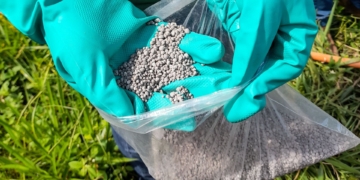
Facing soaring input costs and record-low rainfall, South African farmers are being urged to embrace the sanitation economy. Deputy minister...

Read moreDetails
Ramaphosa: Title deeds and blended finance key to farming growth

Ramaphosa: Title deeds and blended finance key to farming growth

14th October 2026
What farmers should know about diarrhoea in lambs and kids

What farmers should know about diarrhoea in lambs and kids

13th October 2026
Agricultural Writers SA North honours top farmers, stakeholders

Agricultural Writers SA North honours top farmers, stakeholders

13th October 2026

Why Free State smallholder dairy farmers are quitting the industry

13th October 2026

Why Free State smallholder dairy farmers are quitting the industry

Farmers urged to tap into recycled human waste as fertiliser

Ramaphosa: Title deeds and blended finance key to farming growth

Agda conference puts inclusive agricultural growth in focus

Farmworkers rally against rising evictions and housing insecurity

Join Food For Mzansi's WhatsApp channel for the latest updates!

JOIN NOW!
Next Post
Ten tips to establish grazing pasture and boost profits

Ten tips to establish grazing pasture and boost profits

THE NEW FACE OF SOUTH AFRICAN AGRICULTURE

With 21 global awards in the first six years of its existence, Food For Mzansi is much more than an agriculture publication. It is a movement, unashamedly saluting the unsung heroes of South African agriculture. We believe in the power of agriculture to promote nation building and social cohesion by telling stories that are often overlooked by broader society.

Land Bank must step up support for farmers, says Aucamp

Mpumalanga agripreneur bottles family wisdom one chilli at a time

Stronger rural policing needed to protect lives and livelihoods

Farmworkers rally against rising evictions and housing insecurity

AgriSETA sets the stage for the SAAA’s big night

Agda conference puts inclusive agricultural growth in focus

  • Awards & Global Impact
  • Our Story
  • Contact Us
  • Cookie Policy
  • Privacy Policy
  • Copyright

Contact us
Office: +27 21 879 1824
News: info@foodformzansi.co.za
Advertising: sales@foodformzansi.co.za

Contact us
Office: +27 21 879 1824
News: info@foodformzansi.co.za
Advertising: sales@foodformzansi.co.za

  • Awards & Global Impact
  • Our Story
  • Contact Us
  • Cookie Policy
  • Privacy Policy
  • Copyright

Chat Options

I'm Lerato, your AI assistant!
No Result
View All Result
  • News
  • Changemakers
  • Lifestyle
  • Farmer’s Inside Track
  • Food for Thought

Copyright © 2024 Food for Mzansi