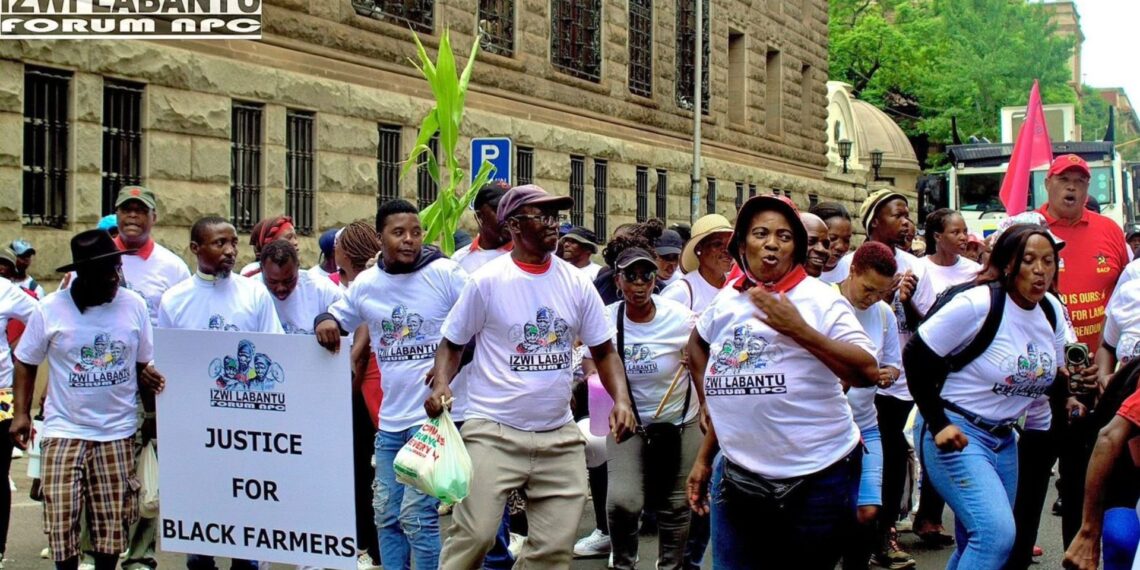
What began as a determined march on 29 January to the Union Buildings quickly became impossible to ignore. Farmers and members of the wider agricultural community took their grievances to the nation’s seat of power, demanding action on issues threatening livelihoods, food security, and rural stability.
The unified voices cut through bureaucracy and hesitation, compelling senior government officials to stop, listen, and engage.
The result was a rare nine-hour meeting on Saturday, 7 February, that included the minister of land reform and rural development, Mzwanele Nyhontso, the minister of agriculture, John Steenhuisen, and the deputy minister in the presidency, Nonceba Mhlauli. The ministers met with the leaders of the Izwi Labantu Forum to examine the farmers’ memorandum.
In a joint statement, the ministers said the issues raised, including market access and bureaucratic delays, form part of existing policy and implementation programmes currently being executed under an “accelerated service delivery” framework.
Farmers demand action
According to Norma Mbatha, executive chairperson of Izwi Labantu Forum, the march was prompted by years of frustration with the slow pace of land reform, ongoing corruption in the agricultural sector, deliberate delays in issuing title deeds, lack of access to production finance and resources, and the failure of government to protect black farmers from threats like killings, stock theft, and evictions.
“Farmers feel trapped in a cycle where they are set up to fail without secure land ownership or support, while the sector is treated as a slush fund for politicians, officials, and connected individuals,” she said.
The forum presented a non-negotiable memorandum of demands, which included:
- Title deeds: The immediate and fair issuance of title deeds to rightful black farmers and beneficiaries to unlock access to finance and production resources.
- Transparency: The public release of a detailed list of all state-owned land, current beneficiaries, and funds allocated to each farm from government entities.
- Rural safety: Enhanced protection for black farmers against killings, stock theft, threats, and evictions, including stronger rural safety coordination.
- Economic reform: Accelerated land redistribution, debt relief, equitable access to markets, and an end to the bureaucratic delays and corruption that undermine emerging farmers.
Related stories
- Protestors demand action against hunger at Social Justice Summit
- Land reform and rural safety top AgriSA’s 2026 agenda
- CPA crisis: Non-compliance drags land reform down
- SA joins global seed talks as trade threatens food security
Yet, while these policy frameworks are being discussed in boardrooms, many farmers on the ground continue to face a harsh and unchanged reality.
Phakiso Modise, a Free State farmer who attended the march, shared that his grandfather’s livestock was sold off when the municipality and white farmers seized ancestral land.
He said his uncle could only farm sheep and crops from his yard, stunting growth, explaining that before 1994, his family worked farms and kept livestock, but post-apartheid relocation to townships brought no payouts.
“Our government has not stepped in to help our people and ensure that justice is done to the vulnerable and the poor. This issue of witnessing brutality being perpetuated against our people, not only my family but all across the board, and every caring citizen of leadership calibre will not pass a blind eye,” Modise said.
Struggle for land continues
Echoing these struggles, David Aphane, a Gauteng farmer and PLAS beneficiary, joined Izwi Labantu seeking resolution on land issues.
“My biggest challenge is title deeds for PLAS farmers and the commercialisation of emerging farmers. I am one of the farmers who have been approved to receive title deeds and given a land donation certificate according to the act.
“However, since minister Thoko Didiza left, the new minister has ignored that process, and officials also put pressure on us to continue paying our leases despite land donation certificates,” Aphane said.
As part of the government’s response, the department of land reform and rural development (DLRRD) confirmed it is working towards allocating 200 000 hectares of land between 2024 and 2029 to ensure equitable land access and improved tenure security.
The Izwi Labantu Forum has welcomed the government’s commitment to ongoing and concrete interventions to strengthen farmer support and land reform outcomes.
“The meeting was adjourned on a mutual understanding that Izwi Labantu Forum, acting on direction from the black farmers we represent, will formally respond to the government’s position as outlined. In turn, government will provide detailed responses to our submissions, and both parties will reconvene for further engagement in approximately four weeks’ time,” the forum stated.
READ NEXT: Steenhuisen to quit DA top job: What lies ahead for agriculture?