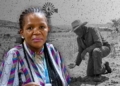

“Give the slum a try now,” Vuyo Mayesa (40) hums at the end of the telephone line. These are not just the lyrics of Bob Marley’s iconic “Trenchtown Rock”. It is also the inspiration behind the culinary ventures of Mayesa, a Northern Cape native.
In the 1973 hit song, Marley refers his place of birth, Trenchtown, a Jamaican slum, while Mayesa speaks to the community of Refithlile, a township in Warrenton, nearly 77 kilometres from the provincial hub of Kimberley.
RECIPE: Make Vuyo’s fresh basil pesto

The founder of the Ditshoswane community art centre and food garden, Mayesa has merged his love for art with his love for food, creating a vibrant, fresh green basil pesto he proudly calls “Vuyo’s Organic Pesto.”
“People always think nothing good ever comes from a rural town or even the township. People should not think rural townships have nothing to offer but drug and alcohol statistics,” he says.
“We are not wasting away. There are so many people with aspirations who want to make it.”
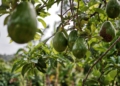
Using basil grown in the Ditshoswane garden, Mayesa looked to sustain his developing culinary interests’ pesto under the national lockdown.
“Food is art, food is self-reliance. An idea that was viable was expanding into the culinary arts. I planted a packet of mixed herbs and basil was one of the herbs that just took off!”
An avid home cook, Mayesa will often cook meals for friends and family travelling far and wide. “That is how I was called the ‘accidental chef’. I started cooking for friends and family, then my neighbours and then the community,” he explains.
“You can never be narrow with your ambitions in the artistic space, food is an art.”
His partner, Dikeledi Frans, and children, Khumo (8) and Dibanke (5), are always keen to try meals prepared in his kitchen. When his family tried out the pesto, they could not stop asking for more, he says.
“They are the first to experiment my dishes in my kitchen.”
‘Jamaican Ital cuisine is vital’
Mayesa was raised in Kimberley by his Rastafarian father, Rochester Mafafo, who is also an artist.

Growing up in a vegetarian household he was taught the value of eating from the earth. Rastafarian diets are primarily vegan and are prepared in the style of Jamaican Ital cooking.
Mayesa explains, “To stay healthy and spiritually connected to the earth, Rastas eat a natural diet free from additives, chemicals, and meat.
“On Fridays, there was a special meal we always eat at home. We used to love making this veggie dish in one pot from leftovers we would call it a big pot-o-pan in a Jamaican accent.”
Where art and food collide
Born to a creative family, his father is a painter, sculptor, and musician. It was not so difficult for Mayesa to follow in these artistic footsteps. “My dad has also been inspiring in terms of food. He would teach us to push boundaries and explore ideas.”
In 2015, Mayesa ditched his office job as a basic adult education trainer to dedicate his life to his dreams in the arts.

He has mastered music, painting, drawing and poetry and has now set his eyes on food.
“I always get asked, ‘How do you marry food and art?’ You can never be narrow with your ambitions in the artistic space,” he says.
Rural communities are often misrepresented as clusters of crime, drug, and alcohol abuse. By developing his basil pesto, Warrenton foodies are now given something greater to be proud of their town.
“I thought is this patch (of basil) just going to grow and be shared or what? Then I thought of exploring ways of preservation. There it was, our own basil pesto from eKasi.
“What compelled me was the need to tell a good story that comes from a rural and informal settlement.
“We try and source other locally grown produce from other growers. Some of the ingredients that we use are seasonal, like the pecan nuts which are grown next door.”
RECIPE: Make Vuyo’s fresh basil pesto
Growing food community
Mayesa been inspired by a fellow business owner and cook, Moss Mahumapelo.
“He inspired me with his tripe pizza. I used to wonder if we would be stuck with this mala mogodu (tripe) as this monotonous representation of black South African cuisine.
“I learned from him to push the boundaries. My kids inspire me the most because we are in a vulnerable space where we are able to learn together and explore curiosity together.”
Mayesa is a staunch believer in education as a vehicle of growth in rural communities. “There is space we are not tapping into which is the training and development especially within the hospitality sector.
Mayesa believes it is up to rising young chefs, “To teach our people these existing resources that lie within us. In 2021 you still must learn to be an Italian chef, why can’t you learn to be an African cuisine chef? We need to align our standards with global standards.”
His future plans will see him seek out his culinary education.
Mayesa advises hopeful cooks to never be ashamed to take the road less travelled. “Work on your dreams. Making a dream come true is not something that comes easy. Persevere, reinvent yourself and keep your eyes on the prize.”