Wednesday, October 21, 2026
SUBSCRIBE
22 GLOBAL MEDIA AWARDS
Food For Mzansi
  • News
  • Changemakers
  • Lifestyle
  • Farmer’s Inside Track
  • Food for Thought
No Result
View All Result
  • News
  • Changemakers
  • Lifestyle
  • Farmer’s Inside Track
  • Food for Thought
No Result
View All Result
Food For Mzansi
No Result
View All Result
in Farmer's Inside Track

Weekend podcast: Dealing with rising fertiliser costs

Fertilisers are in short supply due to the conflict between Russia and Ukraine, causing the price of fertiliser to rise daily. Agricultural economist Thabile Nkunjana unpacks the impact on South African farmers and how they can explore producing their own fertiliser

by Vateka Halile
23rd April 2022
In this weekend episode of Farmer's Inside Track, Thabile Nkunjana, agricultural economist at the National Agricultural Marketing Council (NAMC), talks about fertiliser prices. Photo: Food For Mzansi

In this weekend episode of Farmer's Inside Track, Thabile Nkunjana, agricultural economist at the National Agricultural Marketing Council (NAMC), talks about fertiliser prices. Photo: Food For Mzansi

Share on FacebookShare on TwitterShare on WhatsApp

South Africa imports about 80% of its fertiliser, according to Thabile Nkunjana, agricultural economist at the National Agricultural Marketing Council (NAMC). The ongoing war between Russia and Ukraine means Mzansi’s food producers are forced to cough up almost double, with prices rising daily. 

Joining the weekend edition of Farmer’s Inside Track, Thapelo Phiri, organic fertiliser specialist joins us to unpack the effects on farmer and alternatives for producers.

According to Phiri, the Russia-Ukraine conflict will definitely affect South African farmers.  

“Russia is the world’s largest exporter of fertilisers, accounting for 23% of ammonia, 21% of potage, 14% of urea, and 10% of phosphate. Before the conflict, South Africa had the third highest fertiliser prices in the world. Surely this time around, farmers need to prepare more for high fertiliser prices as they prepare for winter crops.”

Phiri adds that this is going to affect overall food production, because of the high fertiliser prices. And Mzansi food systems will be challenged because of higher costs overall. 

ALSO READ: Fertiliser prices: Cash-only farmers fighting to survive

Farmers in Mzansi can produce their own

He unpacks ways in which farmers can produce their own fertilisers. “The option for farmers who want to explore producing their own fertilisers is to try producing organic fertilisers, as by doing so they will be able to reduce their dependence on chemical inputs and lower their overall input cost while increasing their production.” 

Phiri says that farmers can also try to make their own compost and fertilisers by using chicken waste or animal waste. It can assist them in cutting the input costs within their farm operations. 

Mzansi is realising that agriculture is faced with difficult challenges, he adds. “We find ourselves in a simultaneous crisis in which the long-term effects of Covid-19 continue to shine a light on the instability of food systems.” 

However, fertilisers are in short supply due to the conflict in Ukraine. “It is not possible to continue doing business as usual,” Phiri says. 

Want to know more? Listen to the full episode of Farmer’s Inside Track

Option 1: Click here to listen on Spotify (all mobile and other devices).

Option 2: Click here to listen on any Apple device.

Option 3: Click here to listen on Google Podcasts.

Sign up for Farmer’s Inside Track: Join our exclusive platform for new entrants into farming and agri-business, with newsletters and podcasts.

Vateka Halile

Vateka Halile grew up in rural areas of Cofimvaba in the Eastern Cape. She was raised in a traditional family setting and found writing to be a source of comfort and escape. Vateka participated in an online citizen journalism course through Food For Mzansi, and her passion for health and medicine-related stories was born. Her dedication to community work and love for social justice and solidarity spaces is evident in her quality time with the community when she isn't working.

Tags: National Agricultural Marketing CouncilPodcastRussiaUkraine
Inspiration

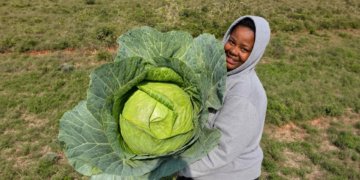
Reluctant farmer scales EC cabbage enterprise to supply Spar

by Lisakanya Venna
19th October 2026

Eastern Cape grower Sibahle Sifo went from resisting family farm duties to running Imbewu YeThemba Agricultural Projects. Overcoming total flood...

Read moreDetails
Reality check: What SA agri interns really experience on the farm

Reality check: What SA agri interns really experience on the farm

19th October 2026
This week’s agri events: 19 – 23 October

This week’s agri events: 19 – 23 October

19th October 2026

Stop the rot: Four steps to slash post-harvest losses

18th October 2026
A standing ovation for agriculture’s incredible talent! The Agri’s Got Talent 2026 top three celebrate their achievements: winner Honey Katoo of Endulini Fruit in Patensie, alongside runner-up Clareece Vlotman of Wolfpack in Wolseley and finalist Lwandile Nantsi of Laastedrift in Ceres. Photo: Supplied/Food For Mzansi

Patensie claims Agri’s Got Talent crown for second year running

17th October 2026

CPAs urged to register for free governance support toolkits

Reluctant farmer scales EC cabbage enterprise to supply Spar

Land Bank must step up support for farmers, says Aucamp

Mpumalanga agripreneur bottles family wisdom one chilli at a time

Agda conference puts inclusive agricultural growth in focus

Join Food For Mzansi's WhatsApp channel for the latest updates!

JOIN NOW!
Next Post
Vuyokazi Makapela, a director at Afrivet. Photo: Funiwe Ngwenya/Food For Mzansi

One Health: Animal diseases threaten food security

THE NEW FACE OF SOUTH AFRICAN AGRICULTURE

With 21 global awards in the first six years of its existence, Food For Mzansi is much more than an agriculture publication. It is a movement, unashamedly saluting the unsung heroes of South African agriculture. We believe in the power of agriculture to promote nation building and social cohesion by telling stories that are often overlooked by broader society.

Smart irrigation: Precision tools boost crop yields while cutting costs

By-laws vs. livelihoods: Barriers facing WC smallholder farmers

CPAs urged to register for free governance support toolkits

Potatoes and tomatoes plunge while avocado prices soar

Becoming bankable: How to get your farm ready for finance

Fixing SA’s agricultural visa system to protect seasonal harvests

  • Awards & Global Impact
  • Our Story
  • Contact Us
  • Cookie Policy
  • Privacy Policy
  • Copyright

Contact us
Office: +27 21 879 1824
News: info@foodformzansi.co.za
Advertising: sales@foodformzansi.co.za

Contact us
Office: +27 21 879 1824
News: info@foodformzansi.co.za
Advertising: sales@foodformzansi.co.za

  • Awards & Global Impact
  • Our Story
  • Contact Us
  • Cookie Policy
  • Privacy Policy
  • Copyright

Chat Options

About this assistant

This feature generates automated answers summarised from Food For Mzansi articles. By using it, you are interacting with an AI system (provided by Google), not a human. AI can make mistakes. Please refer to the source articles for verification and citation purposes.

Our staff do not check or moderate Lerato’s answers in advance, but may review some later. Our journalists continue to write and edit all the articles Lerato uses as sources.

To estimate unique and returning web users, we store a random browser ID in this browser. WhatsApp users are counted by phone number. The same person using both channels may be counted twice.

I'm Lerato, your AI assistant!
No Result
View All Result
  • News
  • Changemakers
  • Lifestyle
  • Farmer’s Inside Track
  • Food for Thought

Copyright © 2026 Food for Mzansi