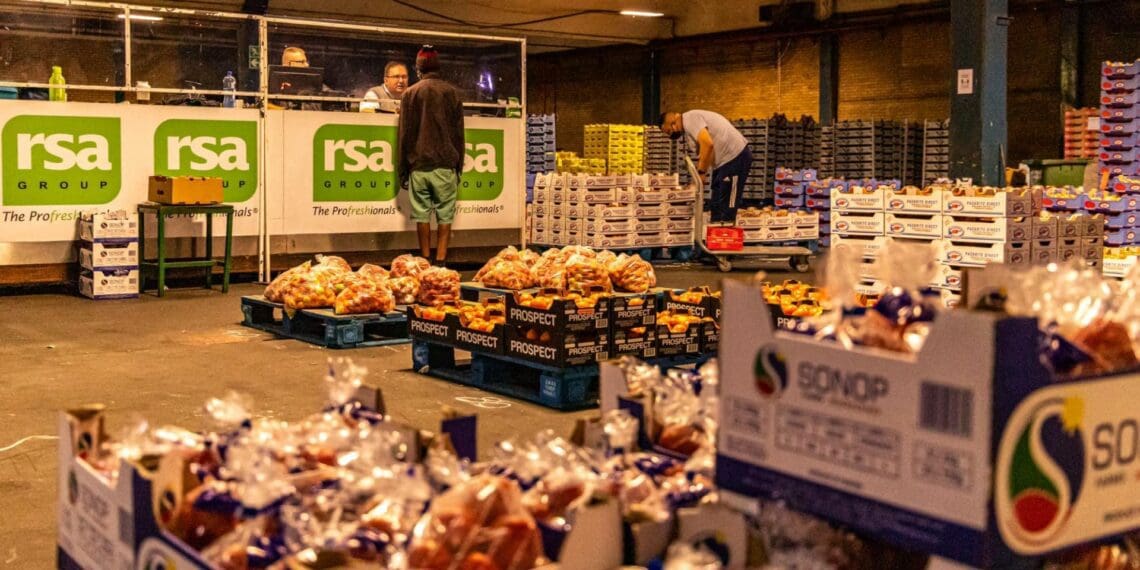
National fresh produce markets across the country will undergo investigation following allegations of anti-competitive conduct in South Africa’s fresh produce value chain. The investigation is led by South Africa’s Competition Commission.
The Fresh Produce Market Inquiry (FPMI) will commence on 31 March and probe all fresh produce markets in the country.
According to commissioner Doris Tshepe, the 18-month-long investigation will examine problems in the fresh produce value chain that make access and participation in the value chain difficult. Tshepe was addressing members of the media at the official launch of the FPMI in Tshwane, Gauteng.
The role of fresh produce markets
She believes the food and agro-processing sector makes a significant contribution to the economy and has the potential to serve as a driver of inclusive growth in the South African economy.
“It is for these reasons that the commission, through the FPMI, intends to conduct an inquiry into the fresh produce value chain in order to understand its functioning and the features, or combination of features, that may be impeding competition and participation,” Tshepe said.

Why all of a sudden?
The inquiry is motivated by three reasons, Tshepe explained. From a legal perspective, the commission has reason to believe that conduct within the fresh produce market value chain is undermining the Competition Act 89 of 1998.
“We have been receiving several complaints from the commission alleging anti-competitive conduct in the fresh produce value chain. We found that it is affecting low-earning consumers,” she told Food For Mzansi.
Secondly, in November 2021 the commission published a concentration study in which key findings of the study revealed that the agricultural sector in South Africa is characterised by high levels of concentration at different levels of the value chain.
“Concentration in the market creates a base for a wide range of anticompetitive conduct in various forms,” Tshepe explained.
Furthermore, food price studies conducted by the commission revealed an alarming level of price increases and volatility in pricing for various fresh food products.
“In some instances, these price increases were surpassing the annual inflation rate, which then raises questions to what are the drivers of such increases,” Tshepe said.
ALSO READ: Fresh produce markets ‘at tipping point’
How will it work?
The market inquiry will focus on particular issues at each layer of the value chain, including the sale of fresh produce by the farmer to retailers, processors, or export markets.
According to deputy commissioner Hardin Ratshisusu, who will be chairing the inquiry, the inquiry focuses on three themes.
Firstly, the efficiency of the value chain, with an emphasis on the dynamics around fresh produce market facilities.
“The enquiry will look at the national fresh produce markets as a route to market for farmers. Fundamental questions about access, the role of market agents and costs associated with selling through these platforms, the price discovery process, and barriers to entry,” Ratshisusu said.
Issues surrounding key inputs
Secondly, they will focus on market dynamics of key inputs (fertilisers, seeds etc.) and their impact on producers.

“Issues related to access to such as finance or credit, fertilisers, seeds, and various agrochemicals will be interrogated,” Ratshisusu said.
“Participation of smallholder farmers or historically disadvantaged persons (HDPs) in various value chains will be assessed under questions related to market access, discriminatory practices, access to credit finance, and access to water.”
Lastly, barriers to entry, expansion, and participation will be looked at. Under this theme, the inquiry will assess various issues concerning smallholders or HDP farmers when interacting with various stakeholders, including input suppliers and output markets, in the value chain.
Contracting under the spotlight
“The inquiry will look at direct contracting between farmers and retailers, wholesalers and processors as a route to market.
“The inquiry intends to understand the basic conditions of entry into various contracting arrangements, price determination, and costs associated with contractual arrangements including associated terms and conditions,” Ratshisusu explained.
The FPMI will focus on selected fruits and vegetables that are representative of the fresh produce value chain. The identified fruits and vegetables account for at least 70% of the production and sale of these products throughout South Africa.
They are apples, citrus, bananas, pears, and table grapes, as well as potatoes, onions, carrots, cabbage, tomatoes, and spinach.
What happens after the inquiry?
Once completed, the inquiry report will be submitted to the minister of trade, industry and competition. The report will include all the workings of the market inquiry, any findings made, and remedial action that may be required.
“We also can make recommendations to various stakeholders including government and regulatory authorities were we to find that there may be some regulatory barriers to entry in the market,” Tshepe said.
Findings and recommendations by the inquiry are binding and parties will be required to implement them.
“If they are not happy with them, the act allows for any party who is not happy with the findings of the competition commission to appeal against it to the competition tribunal.”
Doris Tshepe, commissioner of the Competition Commission
Because remedial actions will be binding on parties, transparency is key to the process, and parties need to participate, Tshepe added.
Members of the public and stakeholders interested in participating in the FPMI are encouraged to visit the commission’s website to access the relevant documents.
Dates and venues to be confirmed
Dates and venues for public hearings will be communicated and these public hearings will be held in a number of provinces particularly Limpopo, Mpumalanga, Free State, Western Cape, as well as Gauteng.
“We’ll endeavour to cover almost all provinces where these produce are farmed so that we can engage directly with the farmers in those areas, processors, and everyone who consumes or produces these products,” Ratshisusu said.
In the interim, stakeholders, mostly organised businesses, have been singled out.
“That is where we want specific information [because] we need sales data, production data, customer data for specific information,” said Ruan Marê, principal analyst and technical director of the FPMI.
“So we are reaching out directly to firms, it’s a lot more efficient and quicker than waiting to see who responds.”
READ NEXT: Junk status: ‘Time to reposition fresh produce markets’
Sign up for Mzansi Today: Your daily take on the news and happenings from the agriculture value chain.