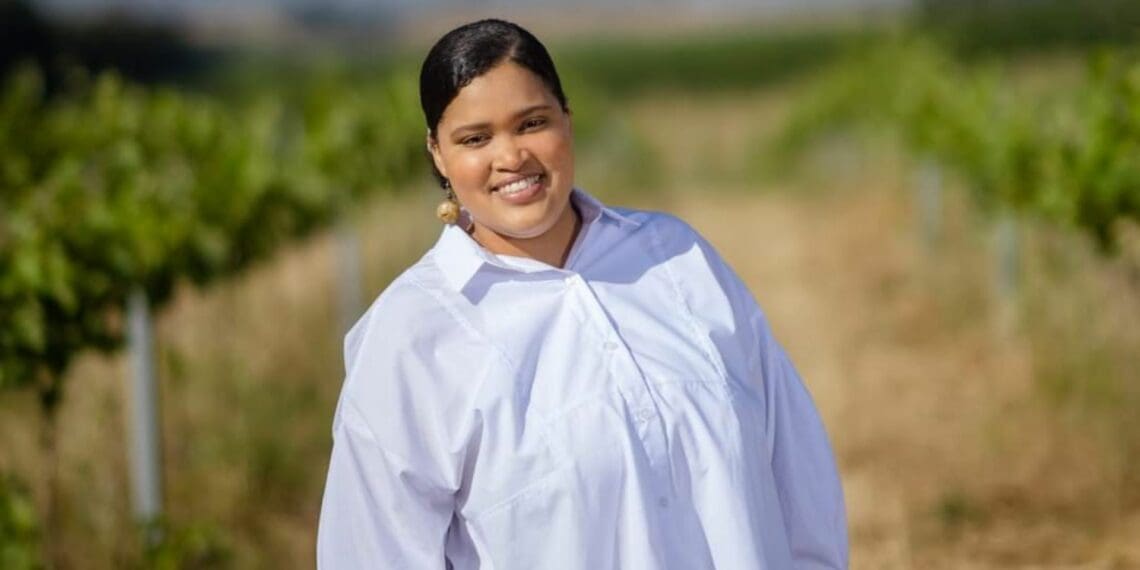
Ruth Faro works in one of South Africa’s most treasured attractions, the Cape Winelands. She loves her job as a young viticulturist for Adama Wines, a majority black-owned wine company, that is also 30% owned by women. She believes farmworkers are not always recognised for the job they do under difficult circumstances.
The wine industry stole Faro’s heart in 2014 when she started studying at the Pinotage Youth Development Academy.
In commemoration of Workers Day, Food For Mzansi caught up with Faro to hear about her passion for agriculture, the wine industry, its beautiful settings, what irritates her the most, and what she would change about agriculture in Mzansi.
ALSO READ: She’s breaking barriers on all-women winemaking team
1. How do you define your role as an agricultural worker?
I see myself and the work that I do as an essential service. My job is to manage the quality of the vineyards and grape crops. This is important in ensuring that good, quality wine is produced from the wine grapes.
The winemakers are always the stars of the show and get more recognition. But we, as the viticulturists and general workers, are actually the ones producing the wine in the vineyards. That’s where the winemaking process starts, not in the cellar.
If things do not go right in the vineyard, then quality wine cannot be produced.
2. Farmworkers are one of the most hardworking groups in the country. Do you feel recognised?
My heart beats for agriculture and it is one of the reasons why I am in this sector.
I don’t see us as invisible or as people who are just in the background. Farmworkers add so much value to the wine industry and the work that we do. We do it because we have a heart for it and because we want to help make our economy stronger.
When we work in the vineyards, I always tells the workers to remember that what they are doing is extremely important. If you do not do the job the right way, then the product will not be right.
Yes, the winemakers, the marketing, and the sales team have important roles to play, but it all starts with us in the vineyards. That’s an important role and when workers realise that, they start seeing themselves differently. At the end of the day, workers are more self-assured and this positively impacts their lives outside of the workplace.
3. What annoys you most about agriculture?
I have been fortunate to be able to develop and grow in the wine industry. What irritates me is the wages that workers have to work for.
Our people are not earning an income that they can use to spend on other things, other than the essentials. Like going out for dinner at a restaurant or going on holiday. They are living from hand to mouth. There is nothing extra for them to spend on other things.
I understand that it is not always possible to increase wages but these things need to be looked at.
4. If you could change anything in the sector, what would that be?
Equality! Equality! And Women! There’s still this stigma that agriculture is a man’s world. A lot is being done to change that but a lot more needs to be done.
If you are in meetings, and you look around the room, the majority of those top positions are filled by men. I would like to see more women in high positions in agriculture. That’s something I would change.
READ NEXT: ‘Rights of farmworkers are not respected’
Sign up for Mzansi Today: Your daily take on the news and happenings from the agriculture value chain.