 It is little secret that young people are apathetic to agriculture. Many simply do not see farming as a viable career or livelihood path. Growing crops and rearing livestock in remote rural outskirts with poor network connection just don’t pass the “lit” test.
For the most part, they perceive agriculture to be intrinsically characterized by the 3 Ds — dirty, demanding, and dangerous. On top of this, the off-farm labour market continues to be increasingly attractive, often making the choice between a tractor and an office cubicle not a very hard one to make.
This indifference to farming by the youth has resulted in the agricultural sector becoming a geriatric industry where the mean age of its participants globally is 60 years old, according to the Food and Agriculture Organisation. In South Africa, the average age of farmers is two years higher than the global mean. This, despite a recent finding by Stats SA that two thirds or 35.1% of South Africa’s total population is constituted by the youth, aged between 15-34.
As the average age of South African farmers falls within a marginal tier in the population distribution, making up only 9% of the total population, SA’s food production rests on the shoulders of an ageing minority. Next to climate change and rapid natural resource depletion, insufficient youth engagement in farming is by far the greatest threat facing agricultural sustainability.
The world population is set to grow to almost 10 billion people as early as 2050. Also, in the same period, two thirds of all people in the world are expected to live in urban areas.
The combined surge in global population and urbanization will spike demand for agricultural commodities to uncharted levels.
To meet this hike in population-driven demand, various estimates report that food production will have to increase by up to 60% above current output levels. Unless increased demand for agri-commodities runs parallel with a similar increase in numbers of new producers, this will exert enormous pressure on – and perhaps even entirely disrupt – the primary link of the food supply chain.
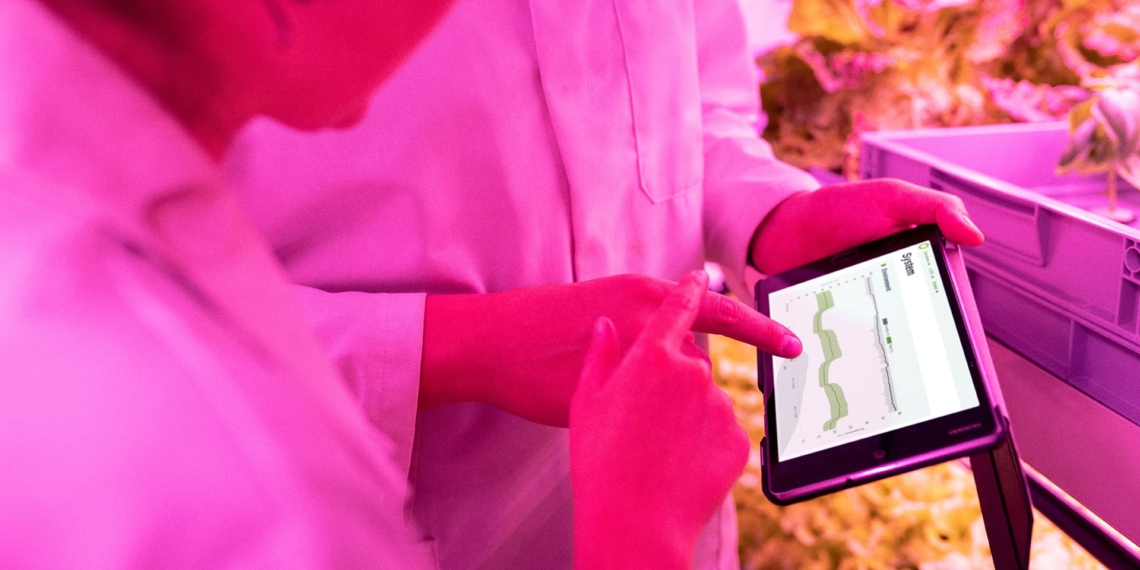
In order to attract a new crop of agricultural producers, therefore — especially in a youthful society like ours — an innovative strategic approach is required. As young people tend to have a characteristic inclination toward entrepreneurship and all things cyber, digitisation of farming systems using ground-breaking technology may hold the key to attracting a new breed of agripreneurs.
Agriculture ripe with innovation opportunities
Digitisation is a vital force in effecting change and driving development. It fosters globalisation, reduces barriers to trade, and opens a portal to previously untapped economic opportunities. In addition, it boosts productivity, profitability, and resilience to environmental volatilities. A digitised farming environment, therefore, has a potential to drive greater youth engagement in agriculture while creating employment and entrepreneurial opportunities for them in the broader agri value chain.

In trade terms, digitisation of agricultural systems presents an opportunity to expand producers’ footprint within Africa’s booming agribusiness market, which, according to the World Bank, is set to hit $1 trillion in value by 2030. This makes agriculture ripe with opportunities for innovation that will drive greater efficiency as well as sustainable increases in productivity, yield, and income.
Innovative technologies like data-collecting sensory nodes, satellite imagery, artificial intelligence, area mapping drones, and novel horticultural techniques such as hydroponics are the future of food production. Young people, therefore, should be fully capacitated to acquire the relevant skills to navigate these technologies as a strategy to steer them away from being consumers and to become producers of agricultural products.
For example, colleges and universities offering agriculture as a course could add into their curriculum a module granting students the opportunity to specialize in advanced agricultural software engineering. Thereafter, graduates could be incubated on farms to apply their newly acquired skills in a series of precision farming projects. Once they have successfully completed their training, technical and institutional support in the form of land leases, start-up capital, and input subsidies should be made available for those who wish to pursue smart farming on a full-time basis.
As we celebrate youth month, instead of narrowing our focus only to issues that confront young people, we should instead awaken them to the vast opportunities that await them in agriculture. We should dismantle the commonly held misconception of agriculture as dull and uninteresting by amalgamating farming systems with digital information technologies. This, I believe, holds the key, not only to attracting youth to agriculture, but to the long-term sustainability of food production.