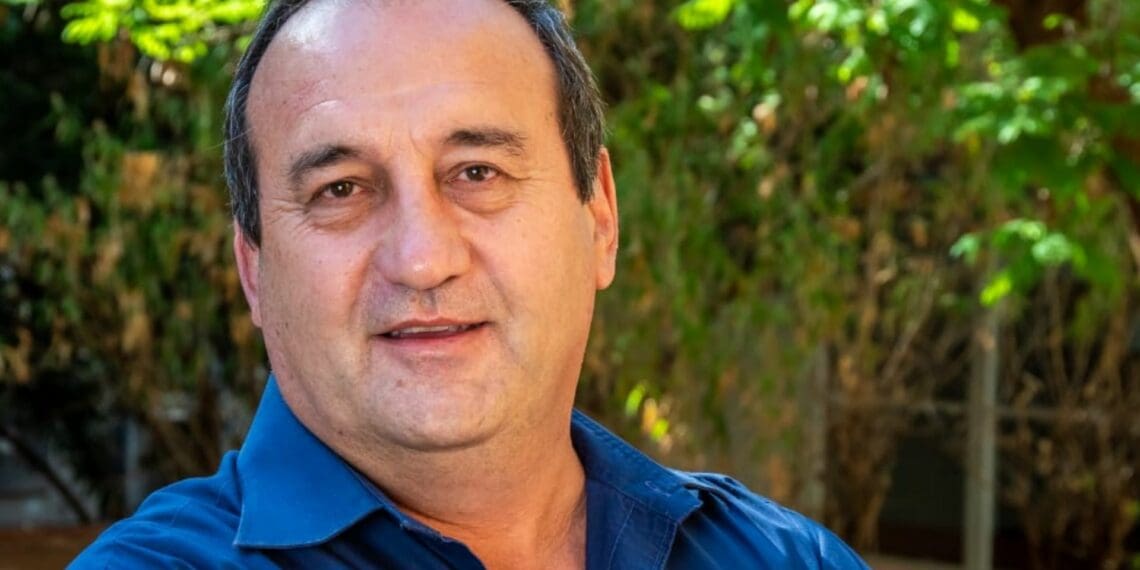
The newly appointed dean of the faculty of natural and agricultural sciences at the University of the Free State (UFS), Prof Paul Oberholster, believes that agriculture needs to be deeply rooted in South Africa and the only way to do that is to enforce it in schools with a key focus on innovation. He also weighs in on the country’s current water situation.
Oberholster will start in his new position on 01 January 2024. He is currently the director at the Centre for Environmental Management at the same university.
Food For Mzansi caught up with Oberholster to chat with him about his plans and views on the state of agriculture in South Africa, and importantly in institutions of higher learning, farmer development, and usage of natural resources.
Sinenhlanhla Mncwango: As the newly appointed dean, could you please share your view on building SA agriculture. How do you think agriculture can be improved in the new agritech era?
Prof Paul Oberholster: From a higher-education perspective, we want to deliver students who are ready for the workplace, and who are trained to understand agritech. Therefore, we work with industry to bring their technologies to the UFS experimental farm to teach our students about agritech and ensure they become employable graduates.
South African agriculture needs to showcase that our farmers can adapt to the changing environment and play a pivotal role in ensuring food and nutrition security throughout the world.
How do you think small-scale commercialising farmers can be supported in the tough economic climate that the country is facing?
Small-scale farmers can be supported through mentorship programmes. UFS is already involved in mentorship programmes for commercialising small-scale farmers.
Through the programmes, UFS lecturers are currently mentoring 120 farmers in the Free State and the Northern Cape, and this number is increasing annually. Also, there will be a focus in our curriculum on niche farming to help make farmers on small pieces of land sustainable.
Water is a critical element in farming. What would you say should be the correct usage of water in agriculture in a water-scarce country?

Agriculture should be strategic and scientific. Farmers need to consider the available water resources in their area and farm in line with water availability. For instance, farmers shouldn’t farm with water-intensive crops in areas where water scarcity is of great concern.
In dry areas, farmers should farm with drought-resistant crops that require lower water inputs. Similarly, with animal husbandry, farmers shouldn’t overstock in dry areas.
With South Africa considered a water-scare country, we must consider alternative approaches to conventional agriculture. Sustainable agricultural approaches such as regenerative agriculture and circular agriculture can be considered. Sustainable practices to improve soil quality can increase soil water holding capacity and reduce resource input requirements.
Through the application of precision technologies, water can be used more efficiently and reduce wastage. Circular practices should be considered to reuse and recycle wastewater where possible.
READ NEXT: Water is life, water is food – use it wisely
How can farmers combat challenges related to El Niño? Is there enough information and awareness about this for rural farmers?
Farmers need to plant on their best available layover lands with greater water reserves. With the predicted drought ahead, layover land can carry the crops further for longer. Agricultural fields need to be prepared correctly and suitable crops need to be selected for drought.
Farmers need to consult weather forecasts and predictions to ensure they plan and plant on schedule, avoid planting early or late, and miss rain before the dry spell. For animal husbandry, farmers need to market their stock early before the predicted drought.
ALSO READ: Soil degradation: Conservation agriculture holds the key
SA’s agriculture has been under strain. What are your thoughts on ways to improve farming conditions for commercialising farmers?
South African farmers have demonstrated resilience in the past. In the future, farmers will be faced with even more uncertainty and farmers will have to adapt quickly to the fast-changing environment. Farmers will have to take less risks and farm scientifically.
Farmers who have illustrated the ability to withstand harsh conditions often farm with nature and apply strategic approaches to adapt to their direct environment.
In South Africa, regenerative agriculture is increasingly recognised for its potential to increase resilience due to the farming system functioning like an ecosystem. Circular agriculture also seeks to reduce natural resource inputs through optimising resource use and circulating resources to increase efficiency and prevent farm waste.
Sustainable approaches have the potential to improve farming conditions for South African farmers.
ALSO READ: KZN agri MEC Zuma eager to build on a promising start
Sign up for Mzansi Today: Your daily take on the news and happenings from the agriculture value chain.