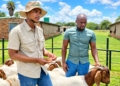
A career in agriculture is not just about tending to crops or working in the fields. Every now and then it can lead you to unexpected and fulfilling paths within academia. Just like Dr Kwame Shamuyarira, who combined his passion for plant breeding and education. Today, he passionately toils as a lecturer in plant breeding at the University of the Free State (UFS).
Hailing from Zimbabwe, Shamuyarira’s life changed with a daring leap into a foreign country to pursue an agricultural scholarship.
“I came to South Africa on a scholarship studying agriculture in 2008. But the passion truly began when I started working with students after my studies were completed upon my return home,” he explains.
Helping farmers grow sustainable food
Later, he decided that the field had so many opportunities and this was the perfect time to continue his academic journey. He had a great interest in plant breeding and developing varieties for farmers.
“The purpose was always to help farmers get higher yields and of course combat food security. If the farmers could grow resilient crops, even when climate change or drought hit, then there is always a potential to harvest something,” he passionately explains.
He left Zimbabwe to pursue his master’s degree at the University of KwaZulu-Natal, and not long after Shamuyarira knew his PhD was the next milestone to achieve.
ALSO READ: AgriCareers: Young whizz Mashlioane lights up livestock industry
Cultivating knowledge
Now, as a lecturer at the University of the Free State in the plant sciences department, he shares his passion and research in sorghum and teaches eager future agriculturalists.
“I also understand that there are other disciplines out there. My PhD co-supervisor was a soil scientist and his contributions to my training made me realise the importance of transdisciplinary research in improving sustainability,” he explains.
There is no doubt that Shamuyarira has experienced challenges. For him it was when he started with his master’s. It is independent work and the responsibility and deadlines are quite something to get used to, he shares.
“You have to learn to be active and manage your own time. There is no one spoon-feeding you and this is a journey that is difficult but worth it. Once you get the hang of it you will be able to have a great academic foundation.”


A day in the life of a lecturer
One of his important daily tasks is to check emails. If he is not in his class inspiring the young minds, you will find Shamuyarira researching some crops or in the greenhouse learning more about sorghum.
“I just make sure I make a stop at the greenhouse in the morning where I check everything. Depending on the time, I make sure the crops are watered or fertilised. Naturally, as a plant breeder, you would like to understand how your plants grow and identify superior plants during the process,” he explains.
For Shamuyarira the agricultural industry is a place of hope, one that is about learning, unlearning, and relearning, but also a space to contribute to education.
Tips from a lecturer:
- You need to be disciplined; consistency is important.
- It would help if you are a curious individual and passionate about your subject area.
- Ask questions, debate, and be confident.
- Read, read, and do more reading; it helps you understand your research.
- Always know what is going on around your science world.
READ NEXT: Agripreneur: Moringa business changes lives of vulnerable villagers
Get Stories of Change: Inspirational stories from the people that feed Mzansi.