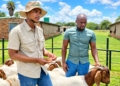
For Yongama Skweyiya, becoming an entrepreneur was a lifelong dream. At the age of 7, he had already picked out a name for his future business, Skweyiya Inc. By 20, he had, along with a group of friends, started his first business venture called IsimoSethu Logistics.
These days, the 36-year-old occupies the role of venture builder and investor at Origins Foods Holdings (OFH), a company he started in 2016. It was under the OFH umbrella that he and cofounder Francois Bezuidenhout, created Pimville Gin, a gin infused with locally grown plants.
Speaking to Food For Mzansi via email, Skweyiya outlines his journey in entreneurship and gives aspiring agripreneurs tips on how to achieve success.
WATCH: Navigating life as a black entrepreneur
Nicole Ludolph: Can you tell us a bit about your Pimville Gin journey? How did the company get started?
Yongama Skweyiya: This was a co-creation between the co-founders, Francois and myself. We deciding to work together and went about to find opportunities within the craft alcohol industry. What we found was that most spirits products took a few years of maturation to be able to trade. The two that did not need maturations were gin and vodka. In the market, gin was the most lucrative from a consumer perspective. We therefore decided on gin as the natural spirits to go into.

Now, at this stage, we did not have a clue as to the kind of product, but knew that we wanted something that was uniquely South African. [We were] adamant that it only be in one colour, clear, unlike some of the gins available on the market. We went on emulating the success of the Diageo product Gordons Dry Gin, which is a staple.
After three months of formulations and tests, we had achieved a taste profile that we liked. We were very lucky to find great distillers to join us on this process.
We now had a product, with a great taste, but no brand or name.
After a month or two went by, we came across the name of a gentleman who was pivotal in progressing the rights of black people in the Johannesburg area, and we adopted his name. It is a name that was European like our spirit but had developed the start of South Africa’s biggest township, Soweto. We therefore settled on the name of James Howard Pim and the settlement he helped pioneer in Johannesburg South, Pimville.
Can you outline your gin making process for us? What is the most difficult or cumbersome part of your process?
I think the most challenging thing was finding the best possible brand name to embody our desired market positioning and our expression of the business to the world. The whole market suffers from the same issues around importing juniper from Europe, so we were not unique. Our taste profile also gave rise to the procurement of our botanicals; the wild ginger, marula and baobab.
In your opinion, what are the most important things an aspirant agripreneur needs to know when they take on the gin making industry?
- Know your target market.
- Understand the value chain to get your product to market and all the intermediaries involved in the process.
- Understand your financials, know what your full cost per unit is versus the selling price, as well as the retail rebates and listing fees associated.
What kind of challenges have you faced since starting the brand? As an agripreneur, have you found yourself facing any difficulties that you would not have found in any other industry?
It is important that, as an entrepreneur, you understand your value chain. Sometimes, the person you sell a product to is not the end user. We typically sell to owners of bars, shebeens, restaurants, and liquor stores. They are merely the access point for the consumer to purchase the product. They are not the buyer. We have to advertise to the buyer to buy the product, and articulate where they will get the product from.

What keeps you motivated or inspired to continue the work you do?
I enjoy creating new things and being part of teams that are creating. So, I think on that basis, I am kept quite interested and always looking at great opportunities to serve the market more.
Even in my new role of venture builder and investor, I get to interact with some awesome entrepreneurs that we are trying to assist to get to market and grow their business.
All businesses need money to get going. What advice would you give to aspiring agripreneurs around the securing of financing?
Finance is essential in starting any business. As I mention to my colleagues nowadays, there are essentially three types of capital:
- Financial capital – the money needed, which is quite crucial.
- You also need social capital, which is the access to the market. [You need to] network with key players in any market to allow you access and assistance.
- Lastly you will need sweat capital. This is essentially help from lawyers, accountants and business developers who are able to assist you for free, or for a very small equity stake in the business, while you are not yet making money.
All these give you a better chance of competing in a market that you have defined well and that you have access to, with a product and a brand that is desirable, at a price point that is acceptable.
Do you have any other general tips for businesspeople aspiring to be agripreneurs?
Starting is the best thing you can do for yourself. Get out of your head and [get out of] the endless planning, talking or hoping. Just do it, embark on your plans.
Do the research, find the key people to assist you, and more than anything, find co-founder(s) who will help carry the load and bring in skills that you do not have in order to develop the business.
Business is fluid. You will need to roll with the punches. Some days you will make great strides. Other days you will be down in the dumps. If you do not have a personality that can take the uncertainty, do not get into entrepreneurship.
ALSO READ: ‘Tenacity’ is the master of craft gin entrepreneur Yongama Skweyiya