Agritech funding across Africa has stabilised, with approximately $1.5 billion logged in over 600 transactions since 2014. This trend reflects the growing digital agricultural landscape, with 745 active agritech companies on the continent – more than half of which have secured funding.
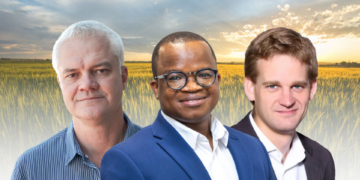
These insights were shared by David Saunders, director and AgBase programme lead at Briter Bridges, during the 8th Annual Learning Event (ALE) hosted by Mercy Corps AgriFin in Nairobi, Kenya this week.
Themed “Enabling rural economies: Creating lasting impact for the digital ecosystem in Africa,” the event brought together over 400 participants, including digital farmer service providers, policymakers, investors, and donors.
Agritech overview and Africa’s position
In his keynote, “Burst bubble or new baseline?”, Saunders highlighted the stability of agricultural technology investment in Africa.
“As of the third quarter of 2024, there are at least 745 active ag-techs across Africa, with over half having secured funding,” he noted.
AgBase, a Breiter Bridges initiative developed with the support of the Bill and Melinda Gates Foundation and Mercy Corps AgriFin, highlights South Africa as one of the “big four” agritech funding hubs.
However, Saunders warned that investment is increasingly shifting toward other regions.
More agritech funding is now flowing beyond the “big four” countries, with Morocco, Ghana, and Côte d’Ivoire gaining traction. Additionally, Ethiopia, Zambia, and Mozambique are receiving a larger share of agritech funding compared to other markets.
Agritech funding has largely focused on a few “on-farm” products, Saunders said.
“Sixty-five percent of funding has gone to ‘on-farm’ ag-techs over the last decade. The second-largest category, in terms of total funding volume, consists of ‘retail’ ag-techs offering food delivery and retail solutions. Startups in this category have received nearly 20% of all funding and account for most late-stage deals and acquisitions.”
Despite promising developments, Saunders highlighted a decline in commercial agritech funding in Africa, noting that it is shrinking faster than other funding sources.
“From 2019 to 2022 commercial funders grew by more than 300% and accounted for nearly 50% of all deals in 2021,” he explained. “By 2023, commercial funders only accounted for a third of dealsto ag-techs in Africa, with two-thirds of deals coming from accelerators, semi-commercial and non-commercial funders.”
Saunders also stressed the importance of gender diversity in agritech funding. He noted that mixed-gender founding teams saw their share of funding increase from 7% in 2023 to 15% currently.
However, all-women-founded teams still account for only 2% of total funding. This disparity remains particularly relevant in South Africa, where achieving gender equity in agriculture remains a critical goal.

Shift toward smaller investments
Saunders’ keynote furthermore revealed significant trends in deal sizes, particularly highlighting a shift towards smaller investments. The data indicates that transactions below $100 000 now represent 59% of all deals, a notable increase from just over a third in previous periods.
This trend underscores a broader movement within the agritech sector toward early-stage funding and smaller ticket sizes, reflecting changing dynamics in investor behaviour and market conditions.
The increase in smaller deals suggests that many investors are becoming more cautious, opting for lower-risk investments as the market stabilizes after a period of rapid growth.
“The two most common publicly disclosed ticket size ranges for deals to ag-tech startups were below $100,000 and more than $1 million,” Saunders noted.
While larger investments (over $1 million) have remained stable at around 20%, the rise in smaller deals indicates a significant shift in funding strategies. This could be attributed to various factors, including economic uncertainties and a desire to support a broader range of startups with innovative solutions.
Implications for startups
For agritech startups, this trend presents both challenges and opportunities. Smaller funding rounds can limit the capacity for rapid scaling, which is often necessary in the competitive agricultural technology landscape.
However, they also allow for increased participation from a wider array of investors, including accelerators and non-commercial funders who may be more willing to support early-stage ventures. The decline in average deal sizes reflects a decrease in collaboration among funders, Saunders pointed out, noting that the average number of investors per deal has fallen from nearly 2.5 in 2021 to just over 1 in 2024.
He highlighted that while commercial funding has seen a steep decline, non-commercial sources are stepping up to fill the gap.
Deals from commercial funders have dropped significantly, while semi-commercial and non-commercial funders remain more resilient, Saunders explained.
This shift indicates that while traditional venture capital may be pulling back, there is still robust interest from impact investors and development finance institutions (DFIs) looking to support agritech innovations that align with their social impact goals.
Saunders closed by emphasising that while some air has escaped the agritech funding bubble, a complete burst can still be avoided. The sector has shown greater resilience than others, thanks to the support of semi-commercial and non-commercial actors.
This shift has fostered a more inclusive and innovative funding landscape across Africa. However, he warned that without the continued drive of commercial incentives, the ecosystem risks deflating further. To sustain momentum, he urged stakeholders to adopt a holistic approach – one that balances innovation with sustainability and ensures tangible, lasting impact for farmers and agricultural ecosystems.
READ NEXT: Kgodiso Fund backs Khula! to empower Mzansi farmers
Sign up for Mzansi Today: Your daily take on the news and happenings from the agriculture value chain.