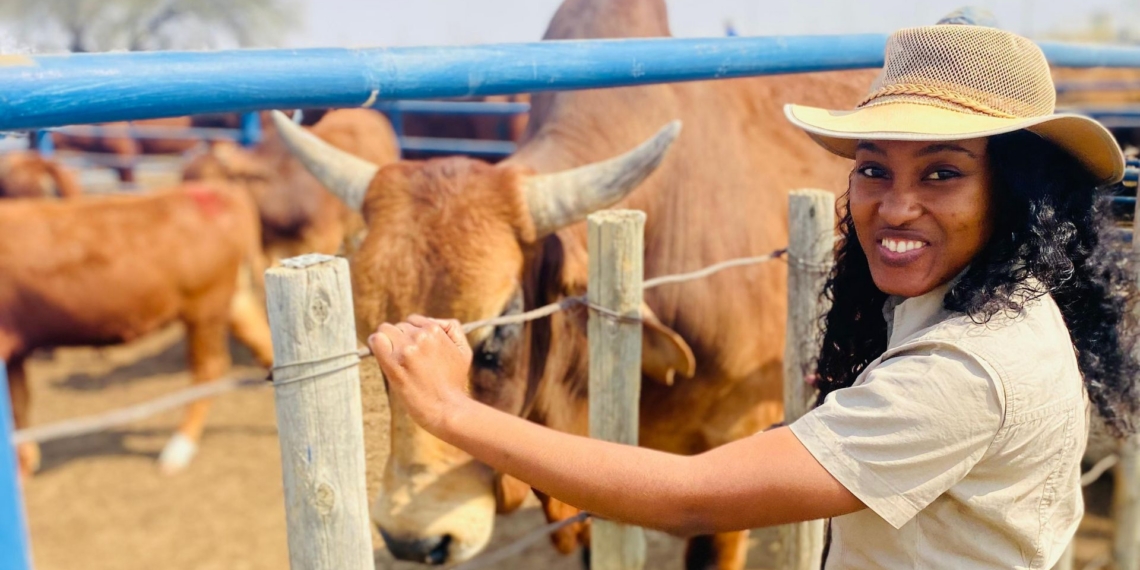
Growing up in Naledi village, a small mining community near Middelburg in Mpumalanga, Fellistus Sekgale was surrounded by mines and families whose livelihoods depended on them. However, she found herself drawn to the farms surrounding her community.
Her father and older siblings worked in the mines, making mining the familiar career path for many young people around her. She, on the other hand, admired the vast fields and the quietness she associated with them.
From mining roots to agricultural ambition
Her growing interest in agriculture eventually led her to pursue it academically. Sekgale completed a diploma in animal production cum laude at Tompi Seleka College of Agriculture in 2018, followed by a BTech in agricultural extension and development from Tshwane University of Technology in 2019.
Although she did not come from a farming family, she got a first-hand experience in 2006 when her grade 4 Afrikaans teacher, Mrs Curlewis, took her class to visit her farm.

“That day I got the opportunity to get inside and experience what I always see at a distance,” Sekgale recalls. She remembers the smell of fresh cow dung, pigs playing in the mud, green maize fields and tractors and harvesters working across the fields.
At the time, Sekgale imagined becoming a lawyer who owned a farm, inspired by her teacher, who balanced teaching with farming. As she grew older, her interest in agriculture became a career choice.
Related stories
- Limpopo rising star grows success from school garden lessons
- Cultivating crops is second nature to Morodi
- Unemployed EC graduate builds booming village poultry business
- Unstoppable: Double-amputee farmer sets sights on commercial success
Building an enterprise from the ground up
In 2018, while completing a two-year unemployed graduate programme with the Limpopo department of agriculture, Sekgale was already planning how she would establish herself in agriculture.
She saved more than 45% of her monthly salary, using the money to secure land at her homestead in Limpopo. She also registered her business, QueenAgri, that year, although she only started trading actively in 2020.
The land was bare when she acquired it, with no infrastructure in place for farming, Sekgale explains. She started in the backyard of her home in Mphanama, keeping a few animals, planting crops and building two small chicken houses, one for broilers and another for layers.
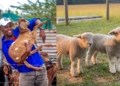
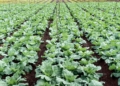
The operation has since grown to include cabbage and butternut, with plans to venture into grain production. Her livestock enterprises include cattle, goats and sheep, while her poultry operation has grown from an initial 500 birds to about 6 000 layers.

She also sells point-of-lay pullets, bulk table eggs and broiler chickens, both live and slaughtered.
Sekgale has built a customer base stretching from her community to retailers, wholesalers and resellers, with Spar among her retail customers.
She supplies cash crops and eggs to outlets including SuperSpar Lebowakgomo and Spar SaveMor Diphagane, as well as Choice Supermarket in Mokopane.
Cracking the formal retail market
Getting into formal markets was not as difficult as she expected, she says. While still farming on a small scale, she approached retailers with samples and focused on building relationships.
“I never struggled with retail in my first year of farming because I was already in the formal market with the cash crops.”
Her move into crop production was also gradual. She initially bought produce from other farmers to supply retailers before increasing her own production.
The business has since grown to a point where she relies on a team to help manage the crop and livestock enterprises.
Sekgale also credits the practical training she received at Tompi Seleka College of Agriculture with helping prepare her for the realities of farming.

Empowering communities, navigating communal realities
Sekgale’s work in agriculture extends into accredited training. Through AgriSETA, she offers training in mixed farming, plant production and animal production. Services SETA covers business venture creation, entrepreneurship, business and financial management, while MICT SETA focuses on computer literacy.
She sees digital skills as increasingly important for farmers and rural communities as technology becomes a bigger part of agriculture.
Her farming operation also comes with the realities of working on communal land. The land at her homestead is held under a permission to occupy (PTO), which allows her to use it for as long as it remains in use. If she stops using it, the traditional council can reclaim and reallocate it for community use.
Livestock sales are guided by the market she serves, with Sekgale mainly selling animals for slaughter through auctions and to buyers in her community.
“We don’t necessarily have the best breed. The weight of the animal is what matters the most because I’m not a stud breeder. I sell mostly animals for slaughter, so I prioritise weight.”
Animal health is also a key consideration, with livestock required to meet the necessary health requirements, including clearance for foot and mouth disease.
Sekgale’s journey highlights the transformative power of vision, disciplined planning, and continuous learning in South African agriculture. By bridging the gap between small-scale production, formal retail markets, and community skills development, she not only secures her own business future but also inspires the next generation of agripreneurs across Mzansi.
READ NEXT: Limpopo youth grows grain business from social grant savings