Who really gets to define the future of African farming: donors, researchers, or farmers themselves? That question is taking centre stage at the Conference on the Development of Agroecology in Southern Africa, where serious debate and vision-setting are underway.
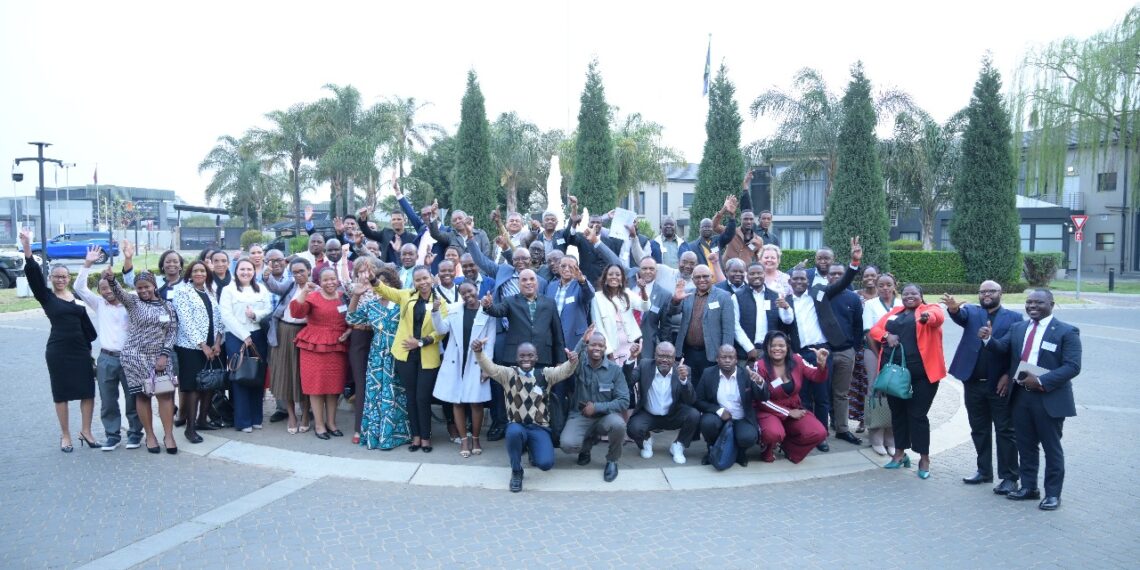
Hosted by the Southern African Confederation of Agricultural Unions (Sacau), the two-day gathering in Johannesburg has brought together farmers, policymakers, and researchers to explore how agroecology can drive resilience, sustainability, and prosperity. However, there is a strong call that farmers must not be sidelined, but fully included in shaping the path forward.
Setting the tone on the first day, Sacau CEO Ishmael Sunga issued both an invitation and a caution to attendees. He urged that agroecology in Southern Africa must begin with the lived realities of farmers rather than external prescriptions.
“A farm-centred approach to agroecology must directly address the pain points and ambitions and aspirations of farmers,” he said.
Sunga emphasised that a farmer-centred approach means farmers themselves must set the agenda, not have it imposed from outside. While recognising that the needs of large-scale and subsistence farmers may differ, he stressed that their right to shape the definition of agroecology remains fundamental.


He also cautioned farmers about oversimplifying the journey ahead. “Farmers beware. It takes a whole village to raise a child. In the same concept, it is going to take many players to bring this to life.
“If we deal with it on our own without ensuring that we are going to get everything and everyone on the table, we are not going to go anywhere.”
The evidence for agroecology: What does the research say?
Delivering a research-driven perspective, Professor Joachim von Braun from the Centre for Development Research in Germany, outlined the global and African evidence base for agroecology.
“There is a rapid increase in the number of publications on agroecology. In Africa, quite a number of agroecology research programmes have emerged over the last decade. So agroecology has arrived in Africa, including in Southern Africa.”
Von Braun highlighted that studies on agroecology in Africa have been most detailed in Kenya and parts of West Africa, with a focus on soil health, biodiversity, recycling, and input reduction.
Related stories
- Agroecology: Transforming agriculture with nature’s wisdom
- New book highlights agroecology success
- Small-scale farmers show the way to sustainable agriculture
The results, however, have been mixed. “We see mixed evidence on the impact on yields. The changes vary by practice, crop, climatic factors, soil characteristics, and the type of control group,” he said.
Still, the evidence is strongest when agroecological practices are compared to poorly managed monocultures, he shared.
Von Braun also urged caution about donor-led agendas. “Most projects are led by national NGOs and predominantly funded by international donors. That should give us some pause. Agroecology must not be pushed on African farmers. It should be demand-led… guided by you rather than by external forces.”


Agroecology: An opportunity for profitable, modern farming
For Dr Tobias Doyer, CEO of Grain SA, agroecology represents both a practical necessity and an economic opportunity. Africa’s twin challenges of food insecurity and climate stress, he argued, demand new approaches.
“Conventional commercial agriculture has boosted yields, but it has also created environmental costs. Agroecology offers sustainability and resilience. Donors can support overlapping priorities that strengthen both systems.”
Crucially, he emphasised that agroecology is not in conflict with modern farming, noting that it is not a rejection of commercial farming, but rather an evolution.
“Agroecology should not keep farmers poor and busy, but instead make them efficient, profitable, and competitive. It offers potential for economic growth, job creation, and food security.”
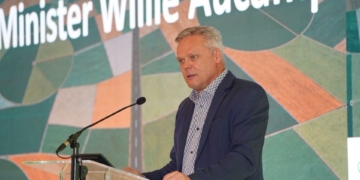
Tobias Doyer
Shifting perceptions: From subsistence to industrial agroecology
Meanwhile, the farmer’s perspective was vividly illustrated by Alida Matsa, a Lesotho-based farmer and participant in the Young African Leaders Initiative. For her, the day’s discussions shifted her perception of what agroecology means.
“What stood out for me today was the conversation, or rather the presentation on agroecology that farmers need – not the kind that is studied, or what funders and donors require us to practice as farmers,” Matsa said.
Matsa admitted that her view of agroecology had been limited. “Initially, when agroecology was mentioned, we thought of subsistence farming, we thought of backyard farming. But today the perspective has changed. Agroecology can also be industrial, and that is what we have to advocate for as youth farmers.”
As the conference unfolds, it is clear that successful agroecology in Southern Africa will depend on actively involving farmers, fostering collaboration across stakeholders, and securing strong investment support.


READ NEXT: Prescribing a farming legacy: EC pharmacist finds his calling