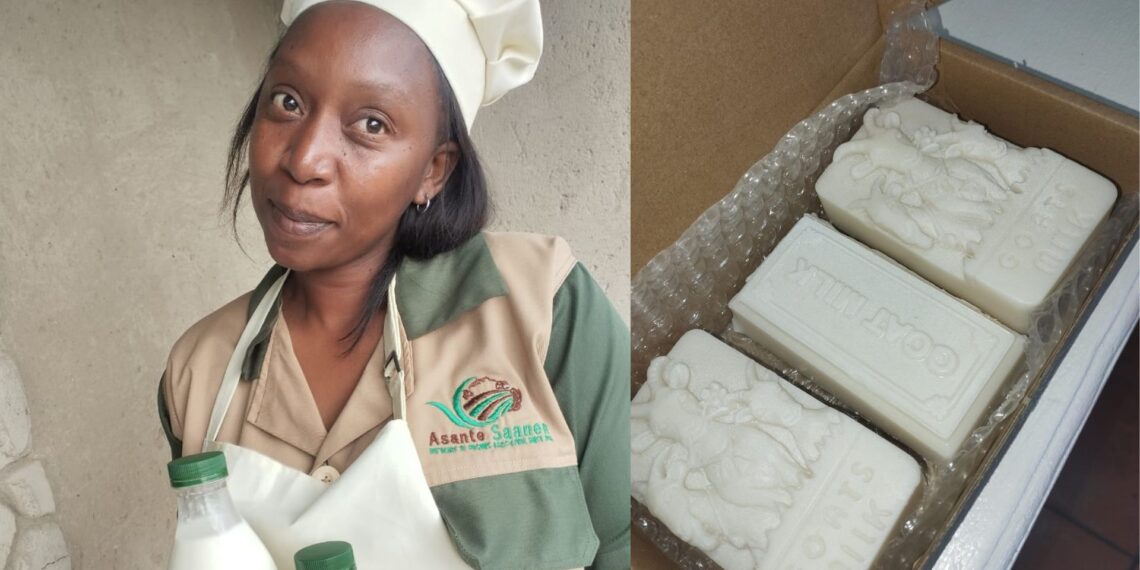
Special dietary needs can be a real challenge for families. This was the case for Nonkululeko Ximba a few years ago with her son, Asante. Finding a solution led to the creation of Asante Saanen, a business producing goat milk products that is slowly carving out its place in South Africa’s growing value chain.
In 2017, Ximba from Ladysmith in KwaZulu-Natal faced a challenge when her son, Asante, needed specialised nutrition. At the time, the only suitable milk she could find was from a major retailer, and the cost quickly became overwhelming.
Two years later, she began searching for a local and more affordable solution. Her research led her to goat milk and eventually to farming goats. That journey gave birth to Asante Saanen, an agribusiness rooted in both agriculture and health, shaped by her personal experience.
Starting a goat milk business
Ximba tells Food For Mzansi that having excess frozen milk pushed her to think beyond selling raw milk.
In 2024, she began producing goat milk products after noticing growing interest from people asking about availability and health benefits.
“I didn’t know the business side of it. I bought a goat to get goat milk for my son, but the goat needed to give birth to produce milk. I ended up with more milk than I needed,” she says.
That same year, Ximba attended soap and cheese-making courses to make use of her frozen milk.
“While doing the cheese course, we were also taught how to make yoghurt and kefir, and our kefir recently won an agricultural award.”
The business currently uses five ewes, with plans to scale up to 1 500. Ximba adds that Asante Saanen also collaborates with local farmers who supply some of the ingredients used in their products.
“Our target market is health-conscious consumers. We produce goat milk cosmetics as well as a range of cheese and yoghurt,” she says. The product range includes a goat milk face bar, night cream, face cream, lip balm, raw goat milk and goat milk kefir.
Marketing is largely driven by word of mouth and social media, with orders delivered through digital channels, while the business works towards accessing formal markets.
“Most of our clients have skin conditions. One woman who struggled with acne told us that her skin improved after using our products.”
She adds that production currently takes place at her home in Ladysmith, but the long-term goal is to relocate to the Midlands, known as a dairy hub. Limited access to water and electricity in their current location remains a challenge.
Related stories
- Goat meat: From inyama yesiko to menu must-have
- Why Kalahari Red goats are winning over SA farmers
- Farmers cash in as goat meat gets gourmet makeover
- Ximba turns hardships into goat milk goodness
Building a goat milk brand from scratch
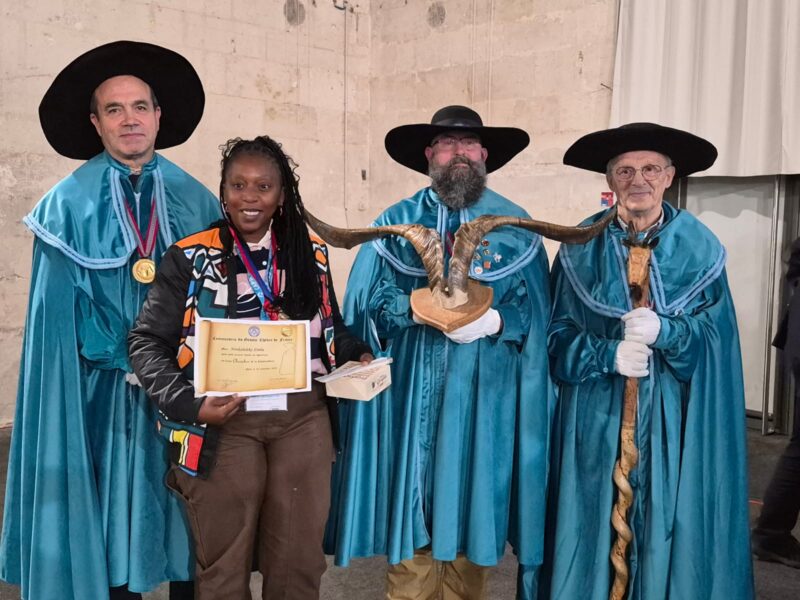
Ximba says one of the most important steps she took was educating herself about both the opportunities and challenges of the dairy industry. In 2025, she travelled to France, where she spent a week with dairy farmers from different parts of the world while attending a goat dairy genetics workshop.
“This was very educational. Meeting farmers at different scales and learning from a variety of techniques was far beyond what we expected,” she says.
During the visit, they toured several farms and were exposed to different goat management systems. “One farm had everything fully automated, which was very interesting to witness.”
Ximba says the experience helped her identify areas where Asante Saanen can improve, especially in maintaining premium quality.
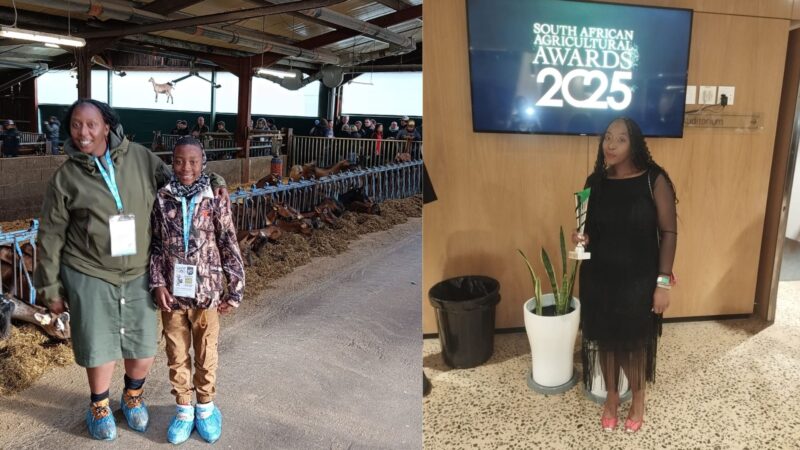
“It is a long journey and requires significant investment. For hygiene purposes, some farms use automated milking machines with built-in filters to ensure no impurities pass through,” she explains, adding that the systems also clean themselves after every milking session.
She notes that the exposure confirmed the Saanen breed as a high milk producer, with some farmers getting up to six litres per goat per day, although feed quality plays a major role. “When goats eat well, they produce better milk.
“Our kefir is made from goat milk produced on our farm. For now, it is available in plain and strawberry flavours,” Ximba says. The product recently won the Agri-based Fermented Products category at the South African Agricultural Awards, a milestone as the business prepares to enter retail markets.
However, she points out that certification costs remain a major barrier for newly established and small-scale farmers.
Asante Saanen also received recognition in France for its focus on creating access to dairy products for children like Asante, who need alternative nutrition options.
Looking ahead, Ximba hopes that this year, the business will have all the required food safety and cosmetics certifications to approach retail stores.
She shares the following advice for aspiring agripreneurs:
- Be willing to learn about the products you make.
- Expect losses and failures along the way.
- Be visible and promote your products.
- Research your brand thoroughly before starting.
- Focus on quality, starting with good raw materials.
- Take short courses and keep building your skills.
READ NEXT: Goat meat: From inyama yesiko to menu must-have