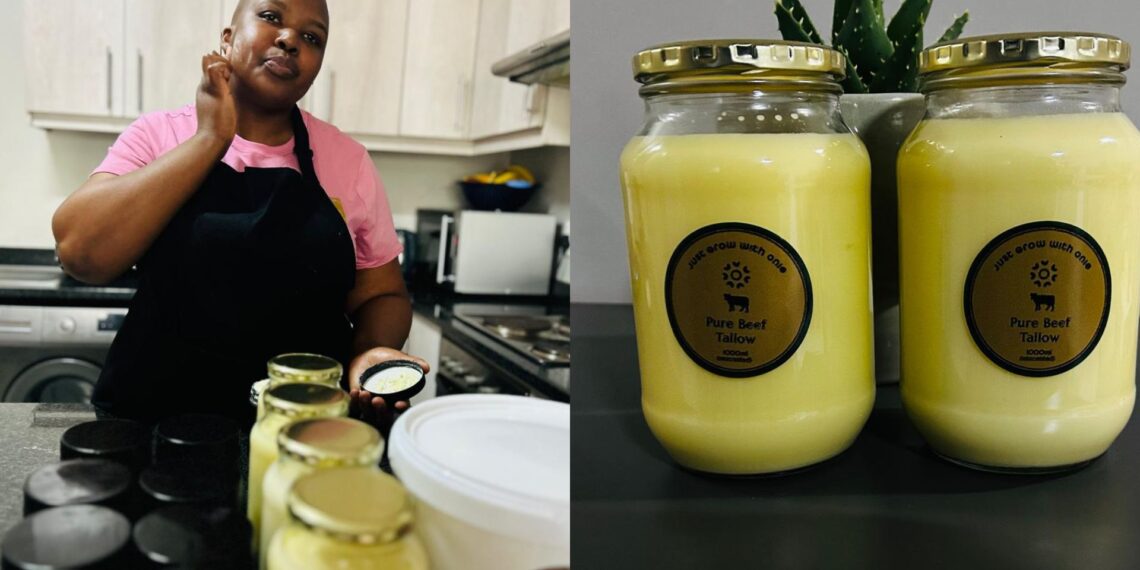
Home, for Oneziwe Jackson, once meant picking food straight from the garden in eMcwangele Village, Tsolo in the Eastern Cape. Later, in Cape Town, planting again became her way to find herself. Just grow with Onie was born: a brand born from love, soil, and the belief that nature can still nurture and sustain us.
Jackson grew up knowing the rhythm of self-sufficiency. In Tsolo, food came from the fields and the garden, from maize and sorghum to a mix of vegetables, and they even raised their own livestock.
“It was a simple life, but it gave us freedom,” she recalls.
“Our survival didn’t depend on money; it rested in the work of our hands and the generosity of the earth.”
Oneziwe Jackson
That freedom slipped away when she moved to Cape Town in 2001. She was met with the reality of commercial living.
“The first thing I noticed was how dependent city life was on shops. If you don’t have money, you don’t eat,” she says. For a while, she adjusted, filling her trolley with shelf goods like everyone else. But inside, she knew something was missing.

Her turning point came in the northern suburbs, where she started container gardens on her balcony. The moment her first vegetables sprouted, she felt a piece of herself return. “It grounded me, it freed me. And whenever I had space, I even kept chickens for eggs and meat.”
When Covid-19 hit, those small choices became her family’s lifeline. Days went by without needing the shops, and she realised how fragile the food system really was.
From then on, she carried a conviction that every household, no matter the size, should grow something for itself.
READ NEXT: Homemade animal fats: Tasty but not so good for your heart
A brand is born
Jackson’s journey into action was followed by writing an e-book on container gardening, with the intention of showing people that food can be grown anywhere. Soon, her audience, mainly her Facebook family, called it the “famous garden”.
“As I shared gardening tips, I also began showing how I simplified life in my kitchen. I made my own tomato paste, all-purpose sauces, and stock cubes from vegetable scraps. Then, I shared how I render beef fat ‘tallow’ for cooking and skincare.”
She tells Food For Mzansi that the methodology includes slowly cooking raw beef fat over low heat, allowing the fat to melt and separate from any impurities. Triple purified with sea salt and water, she adds, “Once strained and cooled, it becomes a clean, creamy fat that is stable, nourishing, and versatile.”
Tallow, she says, is rich in fat-soluble vitamins A, D, E, and K. Its high smoke point adds depth of flavour and keeps you fuller for longer.

For skin, she explains, its structure closely mirrors human skin biology, making it easily absorbed. “It helps with dryness, eczema, acne, stretch marks, and overall skin health.”
These products, she says, are free from harmful chemicals and made from what was once considered waste.
Jackson also adds flavours for those who prefer an added aroma to the natural option. One of the flavours is an herb and spice infusion, perfect for cooking, such as garlic, herbs, and chilli. For scented whipped balms, she blends essential oils like lavender, citrus, or vanilla for skincare.
Building the clientele
Her clientele has grown through word of mouth and social media. Now, she has people buying bulk pure tallow to make their own skincare products, especially soaps.
“These are people who are already in the skincare/homecare business and want to extend their range.”
She explains that she has been teaching how the whole fat-handling process works. She also has people making their own and selling to their communities.
“Some are even making the sauces and selling them.”
Her bigger vision for the tallow business, Jackson says, is to have a fully running production facility. “I also want those who cannot afford the products to be able to make them at home.”

She says it is difficult to operate on a small scale as her clientele grows and demand increases. Having a bigger space would help meet her clients’ needs.
“Most of us cannot go back to the rural areas for many reasons, but we can bring the things we learnt from rurals right here, right now.”
She adds, “I have now been in the food industry for 15 years, a journey that not only gave me technical skills, but also deepened my passion for food security, food processing, and quality.”
Jackson says what she learned back home is that if you can grow, cook, and preserve food, you will never go hungry. That lesson is her inheritance, something she wants to pass on. And she is doing just that.


Photo: Supplied/Food For Mzsnsi


ALSO READ: Gogo’s fat in a jar! Duo turns tallow into treasure