Saturday, October 10, 2026
SUBSCRIBE
22 GLOBAL MEDIA AWARDS
Food For Mzansi
  • News
  • Changemakers
  • Lifestyle
  • Farmer’s Inside Track
  • Food for Thought
No Result
View All Result
  • News
  • Changemakers
  • Lifestyle
  • Farmer’s Inside Track
  • Food for Thought
No Result
View All Result
Food For Mzansi
No Result
View All Result
in Lifestyle

Farmers cash in as goat meat gets gourmet makeover

Goat meat is trending for all the right reasons – flavour, nutrition, and profitability. Experts say it’s time to ditch old myths and embrace goats as a high-potential agricultural asset

by Vateka Halile
16th May 2025
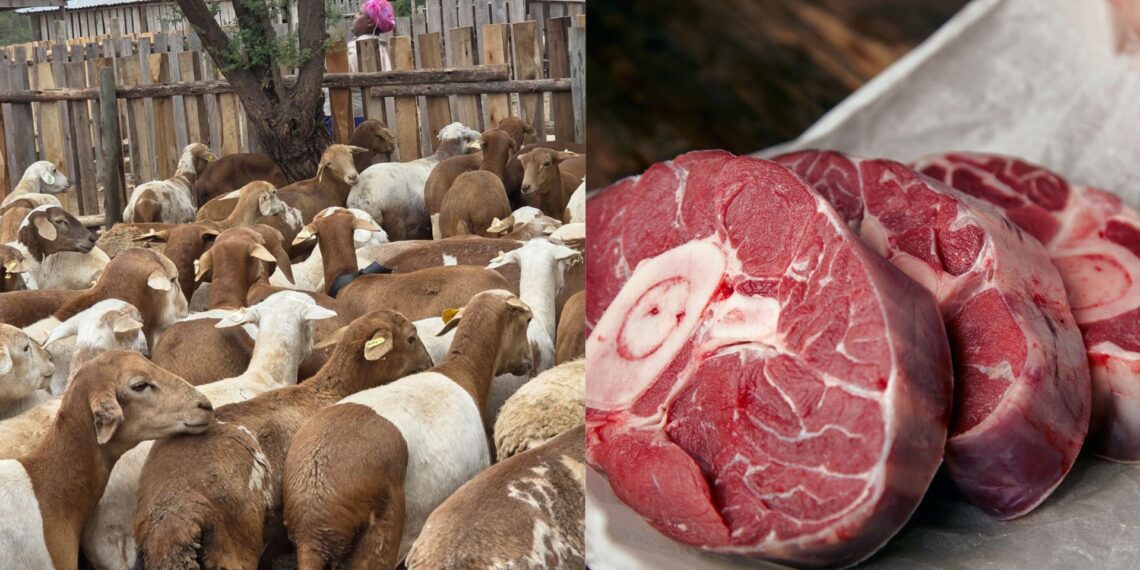
Goat meat is gaining popularity in the farming industry due to its lean nature and high demand in both local and international markets. Photos: Mathuba Genetics/Freepik

Goat meat is gaining popularity in the farming industry due to its lean nature and high demand in both local and international markets. Photos: Mathuba Genetics/Freepik

Share on FacebookShare on TwitterShare on WhatsApp

In South Africa, goats have always held a sacred space in tradition, whether for weddings, initiations, or ancestral ceremonies. And step into some of Mzansi’s trendier restaurants today, and you’ll find something unexpected on the menu: goat meat, reinvented for the modern palate.

No longer reserved only for rituals, goat meat is being savoured for its flavour, texture, and even its health benefits. And behind this culinary trend is a deeper change, one that’s opening doors for farmers across the country.

From culture to cuisine

From Ha Ravele, in the heart of Limpopo, Emmanuel Mudau of Mathuba Genetics has spent over 16 years perfecting the art of goat farming. His focus? Raising quality meat goats like the Savanna and indigenous breeds, animals that thrive on communal land and offer more than just tradition.

“Savanna goats grow quickly and reach a large size, producing a good weaning weight. When you wean them, you can see the difference within just two months; they’re ready for market,” Mudau says. “They also produce high-quality meat.”

Natural resistance to disease, a strong grazing instinct, and access to protein-rich vegetation like sekelboos make his goats not only hearty but also high in meat quality.

As demand grows locally and abroad – especially in Middle Eastern export markets – Mudau knows he’s not just farming goats. He’s farming for flavour, quality, and the future.

Olwethu Laho urges farmers to see goat farming as a market-driven business, not just a cultural practice. Photo: Supplied/Food For Mzansi

Rethinking the goat’s worth

For animal scientist Olwethu Laho from Cofimvaba in the Eastern Cape, this evolving market is also a chance to correct old misconceptions.

“A lot of people believe black farmers don’t view goats as a serious commercial asset,” he says.

“Goat meat also suffers from a poor reputation because it’s usually sourced from older animals, and people tend to view goats as a fallback for financial emergencies.”

Olwethu Laho

However, that’s changing. With an estimated 7.8 million goats in South Africa, the untapped potential is hard to ignore. Most are still raised in informal systems, but Laho sees opportunity in breeds like the Boer, Kalahari Red, and Savanna, all known for their resilience and strong meat characteristics.

He highlights their ability to thrive on limited resources, endure harsh climates, and even birth twins or triplets in tough conditions, all traits that make them ideal for South Africa’s diverse farming landscapes.

Goat and sheep farmers breed smarter to beat climate stress

Related stories
  • Lack of policies and pricing structures hurts goat farming industry
  • Goat farming: Key steps to get you started and grow

More than a trend

For Johannesburg-based agricultural economist Conce Moraba, the numbers speak for themselves. The Boer goat, she says, has exceptional fertility rates and can reach 100kg in males, a dream for meat producers. Kalahari Reds and Savannas also stand out for their adaptability and efficient feed-to-meat conversion.

“From an economic perspective, their reduced dependency on supplementary feeding translates to lower input costs, enhancing profit margins for producers.”

Conce Moraba

She also sees enormous potential in indigenous veld goats, which offer genetic diversity, hardiness, and lower veterinary costs, a critical benefit in communal systems where inputs must be tightly managed.

Even from a nutritional standpoint, goat farming checks all the boxes. With modest protein and energy requirements, goats are a smart fit for grazing systems. And with varying carrying capacities between sweet and sour veld, smart stocking strategies can ensure long-term sustainability.

Conce Moraba says South Africa still relies on imports because local goat meat production doesn’t meet the demand. Photo: The AgriDuo

Farming that fits

Goat production isn’t one-size-fits-all, and that’s part of the appeal. Whether it’s the ceremonial markets of KwaZulu-Natal, cross-border trade in Limpopo, or export-ready herds in the Northern Cape, different provinces offer different pathways to success.

Still, challenges linger: limited access to formal markets, the absence of a standardised grading system, and gaps in disease management and breeding support. However, the opportunities, particularly for smallholders, are undeniable. Goats offer low start-up costs, strong returns, and resilience in a changing climate.

With local production still unable to meet rising demand – and an annual shortfall of up to 20 000 tonnes – the call is clear: there’s room for more goat meat at the table.

Whether you’re a restaurateur chasing new flavours or a farmer looking for your next big venture, goats might just be the answer. After all, they’ve been here all along – we’re just seeing them with fresh eyes.

READ NEXT: Unlock the secrets to growing nutritious peanuts

Get Stories of Change: Inspirational stories from the people that feed Mzansi.
Vateka Halile

Vateka Halile grew up in rural areas of Cofimvaba in the Eastern Cape. She was raised in a traditional family setting and found writing to be a source of comfort and escape. Vateka participated in an online citizen journalism course through Food For Mzansi, and her passion for health and medicine-related stories was born. Her dedication to community work and love for social justice and solidarity spaces is evident in her quality time with the community when she isn't working.

Tags: Commercialising farmerConsumer interestGoat farmingInform meRed meat
Unlocking the economic and nutritional power of the fifth quarter
Advertorial

Unlocking the economic and nutritional power of the fifth quarter

by Lisakanya Venna
8th October 2026

PARTNER CONTENT: Maximising the fifth quarter – offal, cheeks, and trotters – is a vital strategy for South Africa’s red...

Read moreDetails
Prepare your livestock for a drier 2026/27 breeding season

Prepare your livestock for a drier 2026/27 breeding season

8th October 2026
NW government boosts Taung lucerne farmers with new packhouse

NW government boosts Taung lucerne farmers with new packhouse

8th October 2026

Veggie prices: Rising supply could bring relief to SA shoppers

7th October 2026
SADC Plant Nutrition Symposium tackles long-term soil health and farm viability

SADC Plant Nutrition Symposium tackles long-term soil health and farm viability

7th October 2026

Farm for margin, not just yield, says Pannar’s Meyer

Got an agribusiness ready to grow? Agda wants to hear your pitch

Agri Skills Transfer: Where agriculture meets opportunity

Crucial management habits every livestock farmer must practice

Sustainability must pay off for smallholders, say food experts

Join Food For Mzansi's WhatsApp channel for the latest updates!

JOIN NOW!
Next Post
The Ashton factory reopens under Langeberg Foods (Pty) Ltd, promising jobs, growth, and community investment in the heart of the Western Cape’s Breede River Valley. Source: Langeberg & Ashton Foods corporate video

Tiger Brands sells fruit canning unit for R1 to growers

THE NEW FACE OF SOUTH AFRICAN AGRICULTURE

With 21 global awards in the first six years of its existence, Food For Mzansi is much more than an agriculture publication. It is a movement, unashamedly saluting the unsung heroes of South African agriculture. We believe in the power of agriculture to promote nation building and social cohesion by telling stories that are often overlooked by broader society.

Crucial management habits every livestock farmer must practice

Energy shock, weather risks drive operational costs for SA farmers

Hope restored as Land Bank secures R500m to end funding freeze

Young Lady Grey farmer diversifies from broilers to shisanyama

Four major risks SA farmers can’t afford to ignore

Scrap sugar tax to save farmers and jobs, SA Canegrowers plead

  • Awards & Global Impact
  • Our Story
  • Contact Us
  • Cookie Policy
  • Privacy Policy
  • Copyright

Contact us
Office: +27 21 879 1824
News: info@foodformzansi.co.za
Advertising: sales@foodformzansi.co.za

Contact us
Office: +27 21 879 1824
News: info@foodformzansi.co.za
Advertising: sales@foodformzansi.co.za

  • Awards & Global Impact
  • Our Story
  • Contact Us
  • Cookie Policy
  • Privacy Policy
  • Copyright

Chat Options

I'm Lerato, your AI assistant!
No Result
View All Result
  • News
  • Changemakers
  • Lifestyle
  • Farmer’s Inside Track
  • Food for Thought

Copyright © 2024 Food for Mzansi