Monday, April 20, 2026
SUBSCRIBE
21 GLOBAL MEDIA AWARDS
Food For Mzansi
  • News
  • Changemakers
  • Lifestyle
  • Farmer’s Inside Track
  • Food for Thought
No Result
View All Result
  • News
  • Changemakers
  • Lifestyle
  • Farmer’s Inside Track
  • Food for Thought
No Result
View All Result
Food For Mzansi
No Result
View All Result
in News

Backing women farmers can boost Africa’s agrifood systems

Women in agriculture do far more than farm. From unpaid care work to feeding households and communities, they keep local food systems running. A new FAO report says real progress now depends on policy reform, investment and equal opportunities

by Tiisetso Manoko
20th April 2026
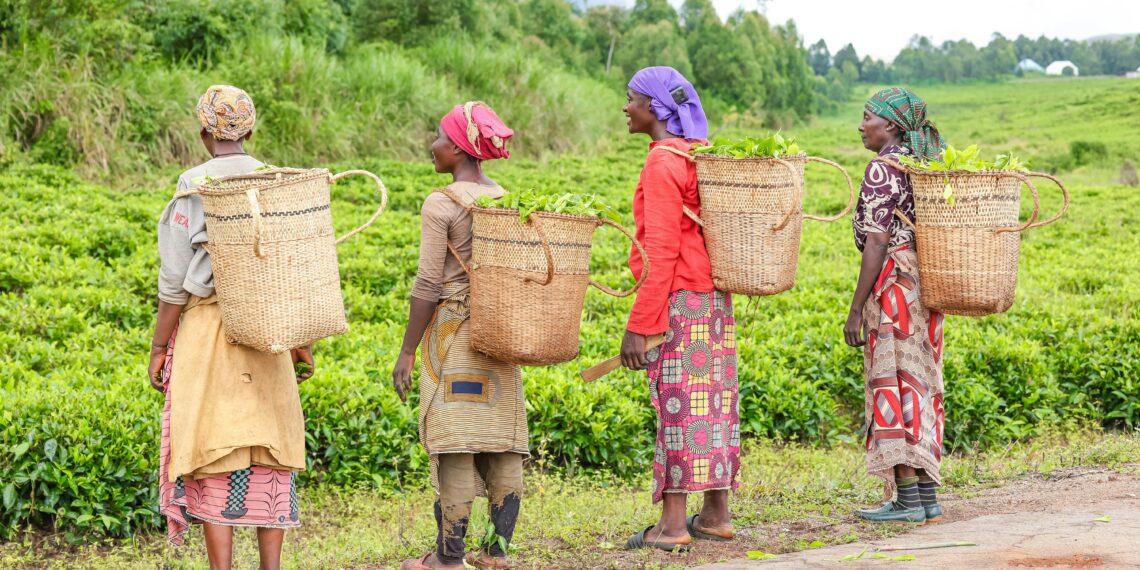
A new FAO report reveals 76% of working women in sub-Saharan Africa are employed in agrifood systems. Investing in women farmers could boost GDP and improve food security. Photo: Pexels

A new FAO report reveals 76% of working women in sub-Saharan Africa are employed in agrifood systems. Investing in women farmers could boost GDP and improve food security. Photo: Pexels

Share on FacebookShare on TwitterShare on WhatsApp

New data by the Food and Agriculture Organisation of the United Nations (FAO) shows that 76% of working women in sub-Saharan Africa are employed in agrifood systems, the largest share worldwide.

The report, “The status of women in agrifood systems in sub-Saharan Africa”, was launched recently in Mauritania. It stated that in off-farm segments, this share is even higher and in rural areas, women are four times more likely than men to engage in off-farm work. In addition, women’s contribution to agrifood systems extends well beyond formal employment.

“Their unpaid care work at community and household levels, from fetching water to caring for children and elders, is indispensable for the protection of local food systems and food and nutrition security,” the report stated.

Developed by FAO, the Natural Resources Institute of the University of Greenwich (NRI) and African Women in Agricultural Research and Development (Award), the report is released during the International Year of the Woman Farmer, an opportunity to galvanise global support for gender equality and women’s empowerment in agrifood systems.

Challenges faced by women in Africa’s agrifood sector

“This international year is more than a celebration. It is an invitation to do more, better, and more consistently for women who are sustaining agrifood systems and feeding the world from their households to communities and entire continents. And this report provides the evidence and the roadmap of what needs to be done and how,” said Beth Bechdol, FAO deputy director-general at the launch.

The report highlights significant challenges faced by women across the agrifood sector, including limited access to and control over natural resources and a greater probability than men of experiencing food insecurity.

Women in the region also have limited access to social protection, with only 13% receiving cash benefits and less than 7% able to access pensions.


Related stories
  • CGE: Women farmworkers still trapped in systemic exploitation
  • Women in agriculture tackle markets, finance and climate risks
  • Women gain ground in agri careers, but pay gaps remain
  • Eastern Cape citrus study reveals women farmers still left behind

Nevertheless, women continue to navigate and overcome these obstacles through resilience, adaptability and innovation. This is done by diversifying their livelihoods, establishing community savings and credit associations, and implementing agro-ecological practices, among others.

Clara Park, FAO senior gender officer, said women’s capacity to cope is often a response to structural failures rather than a choice, and it must not serve as a substitute for meaningful policy reform

“Our focus must shift from celebrating individual endurance to implementing the collective solutions that drive systemic change,” she said.

Based on the evidence, the report presents policy, programme and investment recommendations for more gender-just agrifood systems in sub-Saharan Africa. The proposed roadmap focuses on tackling the root causes of gender inequalities for lasting change.

Specifically, it calls for gender-transformative approaches to challenge discriminatory social norms, the scaling up of social protection for formal and informal workers, and the establishment of stronger legal frameworks to prevent and address gender-based violence across agri-food systems.

Investing in women improves food security

The FAO report also highlights that closing the productivity and wage gaps in Africa could increase the regional GDP by 2.58% (approximately $53 billion) and reduce food insecurity by 3.79%.

Tsholofelo Mosesane, a female crop farmer based in Taung in North West, said women farmers should be prioritised because they carry more than crops; they carry families, communities, and resilience.

“Despite doing a large share of agricultural work, they often lack access to land, funding, tools, and training. Supporting them isn’t charity, it’s fairness and smart investment.

“When women farmers thrive, food security improves, children are better nourished, and local economies grow,” she said.

Fatmata Binta, FAO regional goodwill ambassador for Africa, said investing in women farmers is not a side conversation, but is central to ending hunger, building climate resilience, and creating a more just and inclusive Africa.

“If this International Year of the Woman Farmer is to mean anything, it must be the moment we move beyond words into action, into impact, and into transformation,” Binta said.

READ NEXT: Why insurance brokers must speak the ‘language of the farmer’

Sign-up for the latest agricultural news delivered straight to your inbox every day with Mzansi Today!

Tiisetso Manoko

Tiisetso Manoko is a seasoned journalist with vast experience in community media. He possesses diploma in media studies majoring in journalism, certificate in civic leadership. He loves news from all angles with particular interest in local government, agriculture and politics. He is a staunch Mamelodi Sundowns Football club supporter.

Tags: African Women in AgricultureFood and Agricultural Organisation (FAO) of the United NationsInform meWomen in Agriculture

Related Posts

The new nanobubble aquaponics pilot plant at De Grendel School of Skills, unveiled by the Technology Innovation Agency and Fine Bubble Technologies. Photo: Supplied/Food For Mzansi

This week’s agri events: 20 – 24 April

20th April 2026
Biosecurity is now a make-or-break for pork producers

Biosecurity is now a make-or-break for pork producers

18th April 2026

Updated plant health protocols open doors for SA citrus in China

Why insurance brokers must speak the ‘language of the farmer’

SA’s apple industry marks 364 years with rare tree planting

Farmers urged to embrace agroprocessing for growth

Quota errors leave small-scale fishers fighting for survival

SA farmers resist switching to biological fertilisers – this is why

Why insurance brokers must speak the ‘language of the farmer’
News

Why insurance brokers must speak the ‘language of the farmer’

by Tiisetso Manoko
17th April 2026

Young farmers are building businesses in an uncertain environment. Experts say insurance offers stability, improves access to finance and protects...

Read moreDetails
SA’s apple industry marks 364 years with rare tree planting

SA’s apple industry marks 364 years with rare tree planting

17th April 2026
Agri economist Vuyisani planted a seed and changed his future

Agri economist Vuyisani planted a seed and changed his future

16th April 2026
Farmers urged to embrace agroprocessing for growth

Farmers urged to embrace agroprocessing for growth

16th April 2026
Quota errors leave small-scale fishers fighting for survival

Quota errors leave small-scale fishers fighting for survival

16th April 2026

Beyond the oil: How value addition saved a geranium farm

Farmers urged to embrace agroprocessing for growth

Biosecurity is now a make-or-break for pork producers

Four lessons from Colombia to fix South Africa’s land reform

Updated plant health protocols open doors for SA citrus in China

Join Food For Mzansi's WhatsApp channel for the latest updates!

JOIN NOW!
Next Post
Books and broilers: Student builds poultry dream from scratch

Books and broilers: Student builds poultry dream from scratch

THE NEW FACE OF SOUTH AFRICAN AGRICULTURE

With 21 global awards in the first six years of its existence, Food For Mzansi is much more than an agriculture publication. It is a movement, unashamedly saluting the unsung heroes of South African agriculture. We believe in the power of agriculture to promote nation building and social cohesion by telling stories that are often overlooked by broader society.

Books and broilers: Student builds poultry dream from scratch

Backing women farmers can boost Africa’s agrifood systems

This week’s agri events: 20 – 24 April

Beyond the oil: How value addition saved a geranium farm

Biosecurity is now a make-or-break for pork producers

Updated plant health protocols open doors for SA citrus in China

  • Awards & Global Impact
  • Our Story
  • Contact Us
  • Cookie Policy
  • Privacy Policy
  • Copyright

Contact us
Office: +27 21 879 1824
News: info@foodformzansi.co.za
Advertising: sales@foodformzansi.co.za

Contact us
Office: +27 21 879 1824
News: info@foodformzansi.co.za
Advertising: sales@foodformzansi.co.za

  • Awards & Global Impact
  • Our Story
  • Contact Us
  • Cookie Policy
  • Privacy Policy
  • Copyright
No Result
View All Result
  • News
  • Changemakers
  • Lifestyle
  • Farmer’s Inside Track
  • Food for Thought

Copyright © 2024 Food for Mzansi

This website uses cookies. By continuing to use this website you are giving consent to cookies being used. Visit our Privacy and Cookie Policy.